Families ‘crucial’ to research into brain injury and sport

Research to highlight the lived experiences of athletes and their families who are affected by brain injury and neurodegenerative disease is “crucial to shifting the narrative” around safety in sport.
As evidence continues to build around the cumulative effect of head impact sustained through sport, action to protect players now at all levels of participation in football and rugby is not being taken as swiftly and decisively as many would like.
While the FA have introduced guidance around heading in training sessions for players from professional through to grassroots and youth levels, and the RFU have recommended a limit on full contact training, the fact it is not binding means that players are not afforded any greater guaranteed protection than before.
Recently, Dr Matthew Smith, senior lecturer in sport and exercise psychology at the University of Winchester, led a study which highlighted the impact of neurodegenerative disease on the families of deceased athletes, and laid bare the trauma an entire family experiences.
Research into the family perspective of brain injury or neurodegenerative illness is scarce, but Dr Smith believes is crucial into helping both to deliver better and more tailored support to families, as well as making change which will positively impact future generations.
“In sports psychology, you have lots of research around injuries or mental health, but you rarely hear stories from the family’s perspective,” says Dr Smith.

“I’ve written a paper on the mental ill health in cricket players, which is from the perspective of the cricketers, this is a further example of where it would be interesting to hear from the family members of the cricketers who are also deeply affected in this instance.
“In the current study, many athletes were larger than life characters, the life and soul of the party, whose brains basically stopped functioning properly. This has a huge affect on them, obviously, but it’s having a massive effect on the people in their lives – wives, partners, children. Such severe decline is very difficult for families to manage.
“So we need to look at these different perspectives of how families are coping. We’re in an interesting point in time currently in the UK, where governing bodies are having to process the emerging compelling evidence of the dangers in their sport.”
Dr Smith’s research into the impact of CTE on families was carried out in the United States in conjunction with the Concussion Legacy Foundation, a charity led by Dr Chris Nowinski which is widely credited with helping to revolutionise safety in sport in the United States, since Dr Nowinski’s 2006 exposé of the lack of safety protocols in NFL.
In the UK, many fans, players and parents of aspiring sports stars have spoken of their desire not to lose participation in ‘proper’ sport through restrictions on heading or contact – but while opinions are certainly changing, some readily admit to not seeing the need.
And at the root of altering such opinions, which will ultimately force the need for change, is research, says Dr Smith.
“One of the broader purposes of this research is to create greater understanding and awareness of head injuries in sport, how it affects both the athletes and their families, and to try and shift the narrative in the right way,” he says.
“There’s still a cultural debate about safety in sports, but research is crucial to shifting the narrative here. As an example, in the UK, among under 12s playing football, heading in training has been banned.
“Yet, anecdotally, my understanding by talking to friends who have children who play football is that coaches are basically saying that heading is part of football and are asking parents whether they want their children to be playing ‘proper’ football. Or in rugby, suggesting whether they want their children to play ‘proper’ rugby with tackling. Using this argument, parents will likely say yes to that.
“In a lot of cases, this is happening these attitudes are prevalent because people don’t understand the dangers of head injuries, particularly for children who are even more susceptible as their brains are not fully developed.
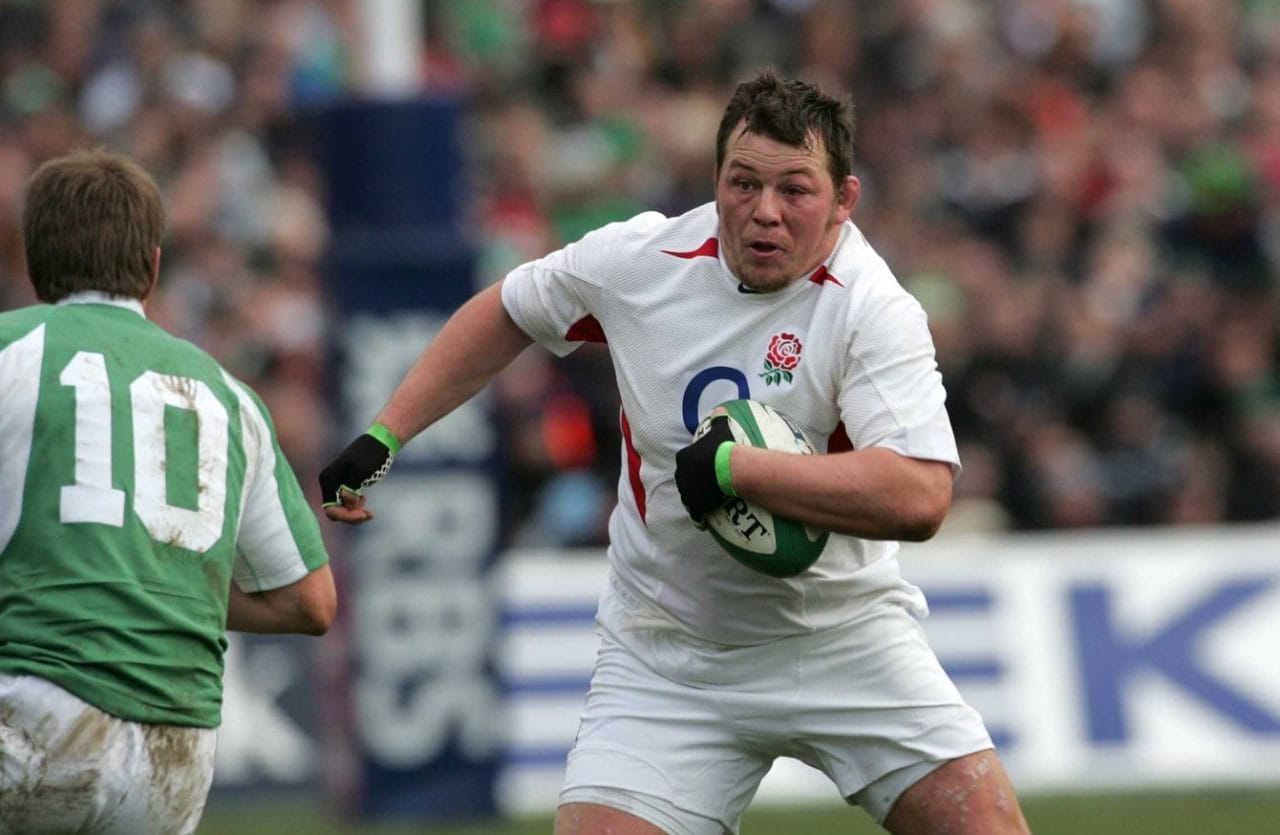
England Rugby World Cup winner Steve Thompson
That’s why research is needed, which can explain it from different perspectives and shift that culture.
“Over the next ten, 15 or 20 years, I’m sure this will change, but research is needed to create awareness and speed up a change in perceptions – because the more people whose children are playing football and heading the ball regularly, the more likely they are to be affected later in life by neurodegenerative conditions.
“Steve Thompson (England Rugby World Cup winner recently diagnosed with early-onset dementia and probable CTE) said his illness is probably having a bigger impact on his family than it is on him, which I think shows exactly why we need to look more at the experiences of the family.”
To continue the focus on lived experiences as a means of changing views within society, Dr Smith is hoping to embark on further research projects to highlight the devastating impact sport continues to make on whole families.
“In terms of where this research might go next, I’d really like to speak with athletes who are still alive who are going through this, who are still functioning enough to take part,” he says.
“But to extend this, I’d like to do multiple interviews where we interview the player, and also their partner, their children, their parents. This would allow us to tell the story from the different perspectives, and explore how neurodegenerative conditions affect the whole family in different ways..