‘Music therapy should be a frontline resource’
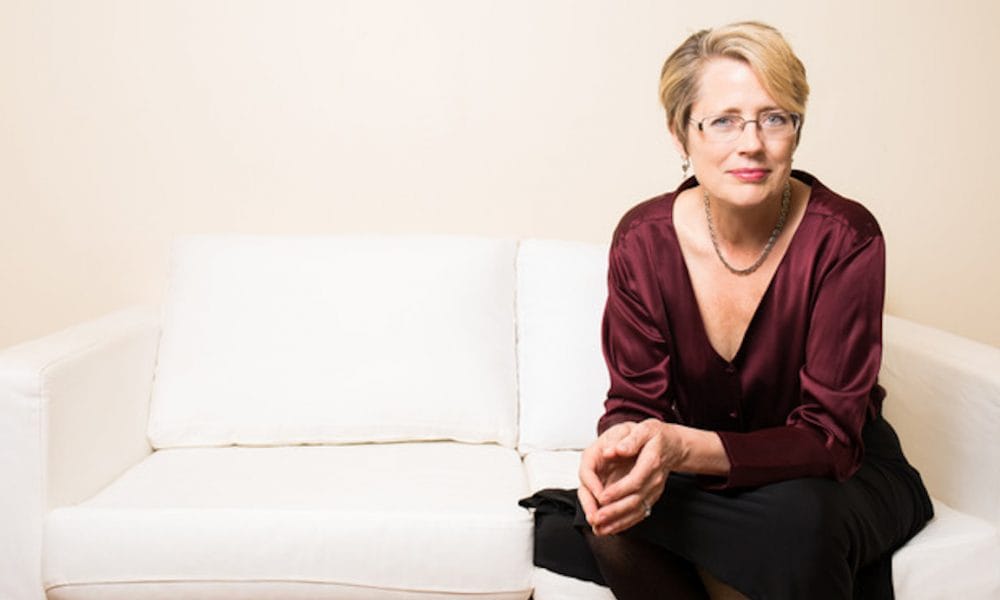
Music therapy should be commonplace in frontline care, particularly during the times of isolation brought about by the pandemic, a leading clinician and teacher has said.
Professor Kathleen Howland says the power of music can have an immeasurable impact on patients, from those in recovery through to those at the end of their lives.
“I absolutely contend that music should be a frontline resource. For someone dying in isolation, music is the sound of love. It can help with grief in a way that nothing else can touch,” says Kathleen, who has practiced in music therapy for over 35 years.
As one of only five dual-qualified music therapists and speech language pathologists (CCC-SLP) in the United States, Professor Howland has worked widely with patients at all stages of recovery during her career, particularly those with neurological conditions.
And while the benefits of music in rehabilitation are widely known, Professor Howland – also a music therapy tutor at Berklee College of Music and founder of Music Therapy Tales – is keen to point to its impact for patients in hospital settings.

“When people are socially isolated from their loved ones, music can be very powerful,” she says.
“In a hospital, it can be a very saturated environment with the noise of medical machines and alarms, but what can be very aesthetically pleasing is to take someone’s musical preferences and balance them with silence.
“I’ve been working with a hospital in Connecticut and their cardiac care patients, and music can provide a sense of order and hope.
“There is also the work of Brian Schreck in his creation of Music of Heartbeats, which is spreading like wildfire in the United States in its popularity. It takes the heartbeat of a loved one who is going to pass away and uses that as the bass to some music they loved.
“This is recorded by therapists with the nursing staff, and can then be sent to their family as something they can keep and treasure forever. As well as having their heartbeat, their music will be with it.
“The power of music is such a powerful thing – it is the sound of love.”
Professor Howland has worked extensively with neuro patients during her career and is hugely passionate about the impact it can have on their rehabilitation.
“Music is a brain-based intervention for brain-based disorders – period,” she says.
“In the United States, the changes in insurance have limited access to the proper therapy they need, which is absolutely shameful. It can be a choice of whether you want to walk or talk, because you can’t afford both, and often it’s the walking that happens as that’s easier to achieve.
“But in my work as a speech therapist, the power of music can help so much. There was one man who had a stroke, he came to me three times a week for a year and a quarter – I worked him good!
“If people have the opportunity to rebuild their neural circuitry and rebuild their speech capability, then we can vary that with gait work so they don’t get fatigued. But I’m always looking to use really functional motivation to force their neurological hand and push through that damage.
“There was once I was accompanying the man on a trip, I was his companion, and my daughter had to travel with us. We were at the airport having dinner and my daughter wanted dessert. I said she couldn’t have it, but he wanted her to. I said to him ‘If you want her to have it, then you order it for her’.
“So through using melodic intonation therapy (MIT) techniques we’d been working on, I sang ‘Key Lime Pie’ and he repeated it, he ordered the dessert for my daughter.
“The brain doesn’t have to work very hard if it knows what to do – something so familiar as Happy Birthday can come easily even in acute cases – so I’m always looking for things that challenge and push and melodic intervention can help to provide those opportunities.”