News ›
News
The latest news from across neurorehabilitation.
 Opinion11 Aug
Kate Allatt, stroke survivor and GripAble ambassador, unpicks the concept of social prescribing, explains why it is an important part of the stroke and brain injury recovery process, and describes how GripAble is working to connect people and facilitate peer-to-peer support to help them flourish. Being discharged from hospital following a life-changing event such as a stroke [...]
 Tech & industry11 Aug
Could extra body weight impact the brain? New research sheds new light on the topic.
 Tech & industry11 Aug
New tech backed by £1.2m in funding could be a potential game-changer.
 Parkinson's9 Aug
Scientists have long known that living cells are master recyclers, constantly breaking down old parts and building them back up into new molecular machines.
Now, researchers have taken a closer look at the life cycle of energy-generating cellular power plants—called mitochondria— inside brain cells, and how they might be recycled. They showed that genes associated with Parkinson’s disease play key roles in this process. News5 Aug
The UK’s leading supplier of home delivered ready meals has introduced 100 per cent recyclable trays, alongside a recycling collection service for its customers, as part of its commitment to protecting the planet.
Healthcare professionals can be assured that, in recommending Wiltshire Farm Foods to their service users, they are also advocating the reduction in food packaging as well as protection of the environment. The trailblazing initiative involves collecting washed, used trays directly from customers and sending them back to a specialist recycling facility in Durham, where they are broken down to create brand new trays which are then redistributed to customers. It is this closed loop nature of the recycling process which makes Wiltshire Farm Foods the first company in the world to adopt the scheme on an industrial scale. Case management5 Aug
A University of Southampton student has launched a new AI-driven health analytics platform. The platform aims to make it faster, simpler and safer for patients who need chronic care.
CareIQ will save time and money for clinicians while improving patients' daily lives while making them feel more in control. It will help them to find better solutions for their needs. It is just one of eight promising start-ups from the University of Southampton aimed at making the world smarter, safer and more unsustainable. The start-ups were unveiled at the Future Worlds Virtual Demo Day. It pitched the platform to several investors to help launch the idea into the global market. News4 Aug
Less than one in 20 COVID-positive children who are still experiencing symptoms are symptomatic beyond four weeks.
It is one of the first studies to offer a detailed description of COVID illness in symptomatic school-aged children suggesting that long term symptoms are rare in this age group. It is published in the journal, The Lancet Child & Adolescent Health. The study consisted of data on 1,734 children aged between five and seventeen years old. Researchers found that the children’s symptoms lasted for five days in the younger age group (five to eleven) and seven days in older children (twelve to seventeen).
Reflective gardens and ‘memory trees’ installed at hospitals in the North Midlands to mark the death of colleagues and loved ones during COVID.
The tree contains the names of those who have died in the past year. The reflective gardens will offer staff at Royal Stoke University Hospital in Stoke-on-Trent, and County Hospital in Stafford, a place to spend their breaks in quiet contemplation. Five staff members have passed away due to COVID-19 and their names have been engraved on the commemorative trees. Research3 Aug
Motivation depends on how the brain processes fatigue, new research has revealed.
Willingness to undertake tasks is not static and depends upon fluctuating rhythms of fatigue, researchers from the University of Oxford and University of Birmingham have discovered. Fatigue – the feeling of exhaustion from doing effortful tasks – decreases motivation and makes people want to take a break. Although scientists understand the mechanisms the brain uses to decide whether a given task is worth the effort, the influence of fatigue on this process is not yet well understood. The research team conducted a study to investigate the impact of fatigue on a person’s decision to exert effort and found that people were less likely to work and exert effort – even for a reward – if they were fatigued.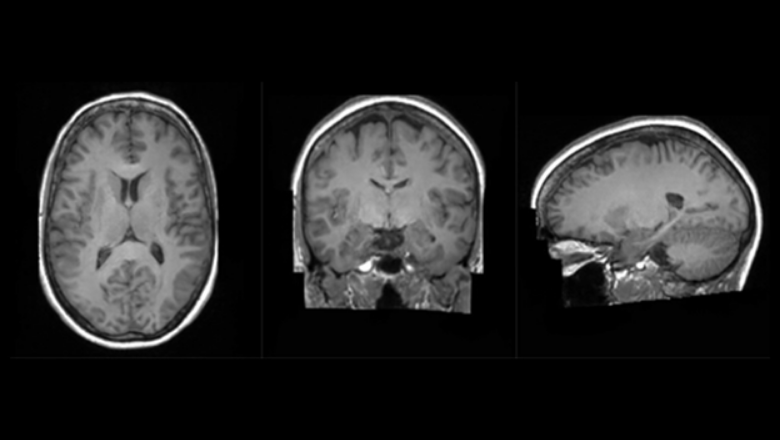 Tech & industry2 Aug
Securing new levels of insight into the human brain through AI-led 3D image creation is one of the first projects to be pioneered by the UK’s recently-launched most powerful supercomputer.
The Synthetic Brain Project focuses on building deep learning models that can synthesise artificial 3D MRI images of human brains. These models can help scientists understand what a human brain looks like across a variety of ages, genders, and diseases. The aim of developing the AI models, using the Cambridge-1 supercomputer, is to help diagnose neurological diseases based on brain MRI scans, but it may also be used to predict diseases that a brain may develop over time and enable preventative treatment. The use of synthetic data has the additional benefit that it can ensure patient privacy since the images were generated, enabling the research to be opened up to the wider UK healthcare community.