



News ›
News
The latest news from across neurorehabilitation.
 News22 Jan
A specialist neurophysio service to support people with Post Polio Syndrome (PPS), believed to be the only programme of its kind in the country, has been created.
PhysioFunction has established a dedicated offering for people who have had polio earlier in life, but for whom some effects have returned years later with the onset of PPS. The programme, which incorporates aquatic and land-based physiotherapy, has attracted a number of people from around PhysioFunction’s base in Northampton, but through the addition of telerehab during lockdown, has involved participants from a much wider area. PhysioFunction engages members of the British Polio Fellowship in its programme and has also secured funding from Rotary International in recognition of its innovation.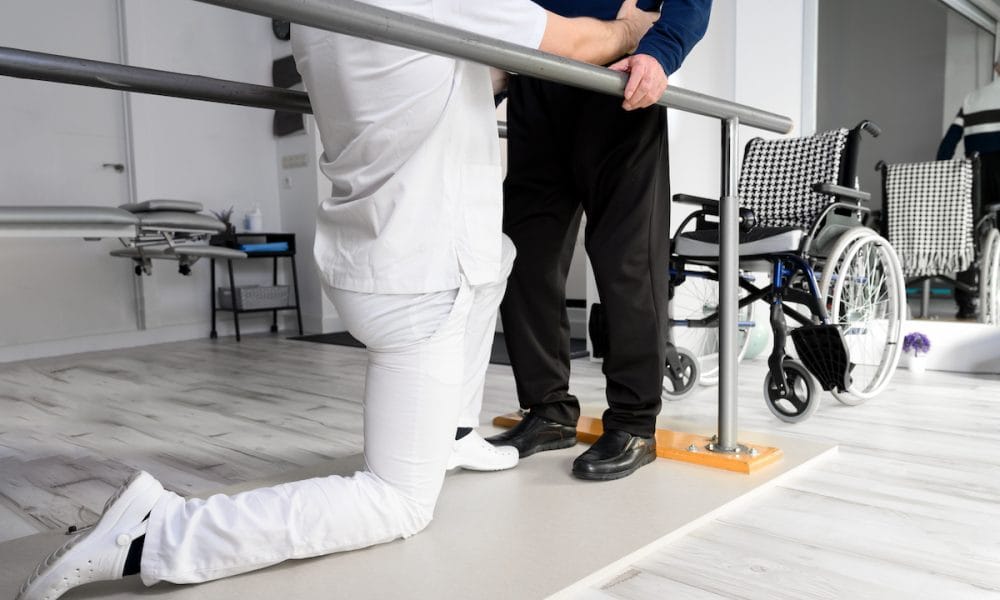 Community neuro rehab21 Jan
Katie Pinn, Senior Cognitive Rehab Assistant at BIS Services.
My week really starts on a Sunday as this is when I plan my upcoming week, I check to see if any clients have appointments during the week, what goals we are working on, where we are in each and make sure there's lots of variety within sessions. My first client on a Monday I must check in on their well being, ascertain level of productivity over the weekend and schedule the new week. This particular client I've had to provide with much support due to shielding during both the 1st and the second lockdown. Multiple sclerosis21 Jan
The types of nerve cells which are lost through developing Multiple Sclerosis (MS) have been identified for the first time, in a breakthrough which could yield the development of new nerve-protecting treatments.
In a new study, researchers found that the inhibitory interneurons are lost in people who have MS. Previously, it was only known that myelin, the protective coating around nerves, is damaged in MS - but pinpointing the selective loss of specific nerve cells has now been established. The research, from the MS Society Edinburgh Centre for MS Research, could now lead to steps forward in the development of treatments to help protect the nerves most at risk. News21 Jan
Two major players in rehabilitation technology are to join forces, in a move which is set to transform the global sector.
Fourier Intelligence has formed a global strategic partnership with maxon Group, which combines the expertise of both businesses into a venture which will drive the development of new technologies for patients. The businesses have entered into a Memorandum of Understanding to advance their common purpose of creating transformative technology to support patients’ needs. With technology playing an increasingly critical role in every aspect of rehabilitation services and healthcare, there is increasing need to devise and accelerate the development of technological solutions to ensure the needs of patients around the world are met. Research20 Jan
Brain cells vulnerable to Alzheimer’s Disease have been identified for the first time, in a breakthrough scientists hope could lead to targeted treatments to boost the brain’s resilience.
It has so far remained unknown in Alzheimer’s research why some brain cells succumb to the disease years before symptoms first appear, while others seem unaffected by the degeneration surrounding them until the disease’s final stages. Now, in a groundbreaking study, the neurons that are among the first victims of the disease - accumulating toxic ‘tangles’ and dying off earlier than neighbouring cells - have been identified for the first time. Case management20 Jan
Two new Recovery Facilitation Programmes (RFP) designed to empower people to take greater control of their recovery and enable them to better manage their conditions have been launched.
Energise Health’s six-week programmes, Energise Recovery and Energise Recovery 4Life, equip both recently-diagnosed people and those living with long-term conditions with the knowledge and skills they need to make beneficial and lasting changes. Energise Recovery - for those at an early stage of recovery - and Energise Recovery 4Life - for those at least six months into their recovery journey - are online programmes that offer live teaching sessions on a range of topics, alongside practical activities and guided coursework. Brain injury20 Jan
Years of campaigning for concussion substitutions to be introduced into football look set to deliver some success, with Premier League clubs preparing to adopt the policy to help address the need to protect players from the effects of head injury.
In a trial move, expected to take effect from fixtures next week, teams can use up to two substitutes in the event of head injuries, which will be in addition to the usual three substitutions that can be made in a normal match. The substitutions - which will be permanent and not for 10-minute durations as in rugby, to allow for players to leave the pitch for medical assessment and return if deemed able - are expected to be approved at a meeting of the Premier League tomorrow. Brain injury19 Jan
Two significant events in neuro practitioners’ calendars have been delayed until later in the year, as the effects of the COVID-19 pandemic continue to be felt.
The National Paediatric Brain Injury Conference, which was already revised from an in-person to online event, will now not go ahead as planned in February due to the continuing demands on frontline healthcare professionals as COVID-19 cases continue to rise and the country is plunged back into lockdown. Research19 Jan
Arm and hand function could be regained following spinal cord injury through new pioneering research
Treatment could be developed for arm and hand dysfunction in people living with spinal cord injury through a pioneering new research project.
A pilot study of new therapy for improving upper extremity function is now underway, following funding from BrainQ Technologies - an Israel-based startup which is working widely in precision medicine to reduce disability following neurodisorders - to the Kessler Foundation. The study is titled ‘The safety and effectiveness of the use of a brain-computer interface-based electromagnetic field treatment in the management of patients with chronic spinal cord injury: A pilot study’ and is seen as a potentially significant breakthrough in researching possible treatment. Patient stories19 Jan
After years spent in pain and struggling for a diagnosis, Karl Johnston felt relief when he was confirmed as having a little-known condition where the brain effectively slips into the spine. Here, he shares his story.
"Some dads get to put their children on their shoulders, but I've never got to do that.” That is just one of the day-to-day realities facing Karl Johnston, whose condition, Chiari Malformation Type 1, means his brain is effectively slipping into his spine. For eight years, Karl had experienced a catalogue of symptoms, including intense and debilitating neck pain, light-headedness, fatigue and numbness in his arms, but without securing a diagnosis of his condition. But now, the 35-year-old admits he feels some relief at the knowledge he has Chiari Malformation Type 1, as devastating as the diagnosis was to receive.


