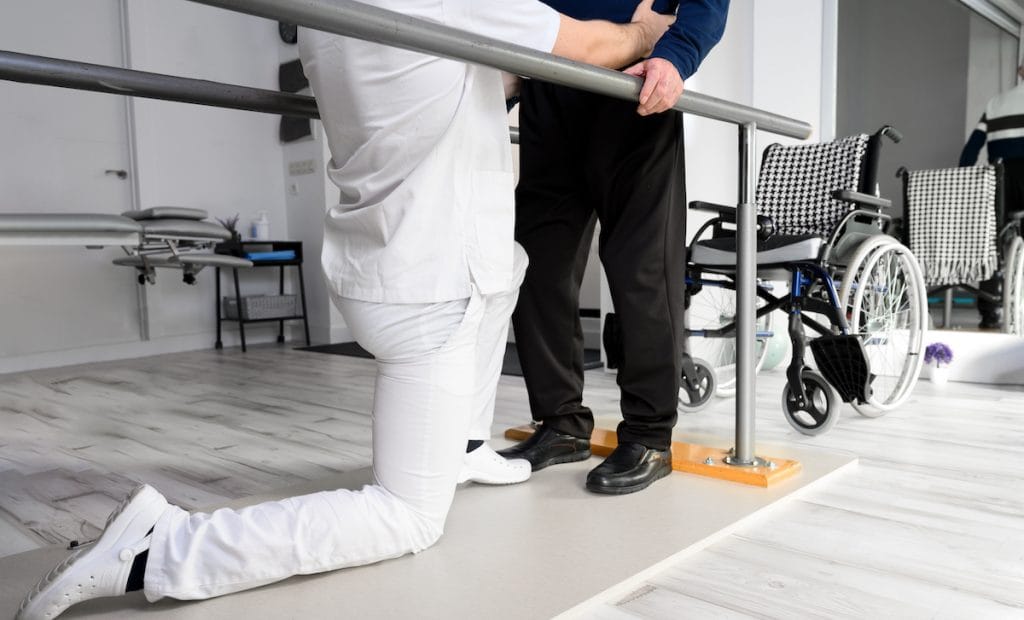
A specialist neurophysio service to support people with Post Polio Syndrome (PPS), believed to be the only programme of its kind in the country, has been created.
PhysioFunction has established a dedicated offering for people who have had polio earlier in life, but for whom some effects have returned years later with the onset of PPS.
The programme, which incorporates aquatic and land-based physiotherapy, has attracted a number of people from around PhysioFunction’s base in Northampton, but through the addition of telerehab during lockdown, has involved participants from a much wider area.
PhysioFunction engages members of the British Polio Fellowship in its programme and has also secured funding from Rotary International in recognition of its innovation.
Led by neurophysiotherapist Kirsten Good, the specialist service was created in response to the needs of one client initially, but expanded once the demand for such bespoke therapy was realised.

PPS is estimated to affect up to 50 per cent of those who have had polio in younger years, and its symptoms can include decreasing muscular function or acute weakness, pain and fatigue.
“Initially, it started with one client who had a hip replacement after a fall, but wasn’t recovering as expected, he went to St Thomas’ Hospital in London and was diagnosed with PPS. He had polio as a child, but the effects of the fall, combined with the operation and the recovery process, had triggered PPS,” says Kirsten.
“Having developed something very specific in response to his needs, involving our hydrotherapy pool for aquatic physiotherapy, as well as land-based physio which includes the use of our Alter-G treadmill, we saw how well this approach worked.
“I had never worked with anyone with polio or PPS previously, but it has many symptoms in common with neurological conditions I regularly treat, and working with this client inspired me to develop an interest in this area.”
From there, PhysioFunction devised a programme built to the exact needs of people with PPS, incorporating sessions of up to 30 minutes involving hydrotherapy and equipment-based exercise.
“We have a number of polio survivors attending our groups every week, and the funding we have had to subsidise the programme has made it very affordable for them,” says Kirsten, who was named a Paul Harris Fellow by the Rotary Foundation of Rotary International for her work in developing the initiative.
“It has been very warmly received and our participants have such a fantastic ‘get up and go’ attitude. Perhaps because many had polio in childhood , they have always grown up with the long lasting effects and have learned to get on with their lives – but when we say ‘Have you tried this?’ they’re really keen to give things a go. It’s a very positive group.
“Some people initially aren’t confident in getting in and out of the pool, and the adversity to temperature changes is another big factor caused by polio, so we can vary it between land and water-based as is required.
“We also have some fitness and endurance sessions, which we offer more widely at PhysioFunction, but overexertion in exercise can exacerbate PPS symptoms, so again, this has been tailored and developed to the requirements of this condition.”
The addition of telerehab to the PPS programme during lockdown was initially greeted with some scepticism, but has now been embraced.
“I’m not sure everyone was 100 per cent keen on it initially, but it has worked well. We are able to involve new participants from some distance away, who may not have travelled to our sessions, and it has continued to build our community,” adds Kirsten.