



News
The latest news from across neurorehabilitation.
 Tech & industry13 Feb
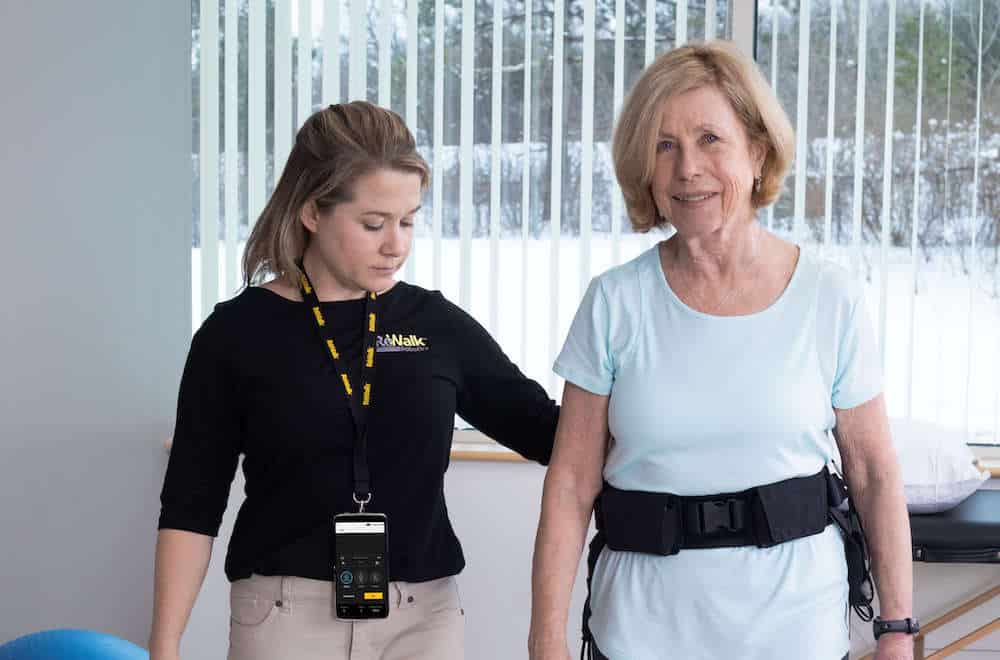
Part of the funds will be used to boost research and development resources related to its lightweight exo-suit technology for various lower limb disabilities. The device is designed for use after stroke and in other indications affecting the ability to walk. Alongside other purposes, the funds will alo support the continued development of its spinal cord injury device.
 Research13 Feb
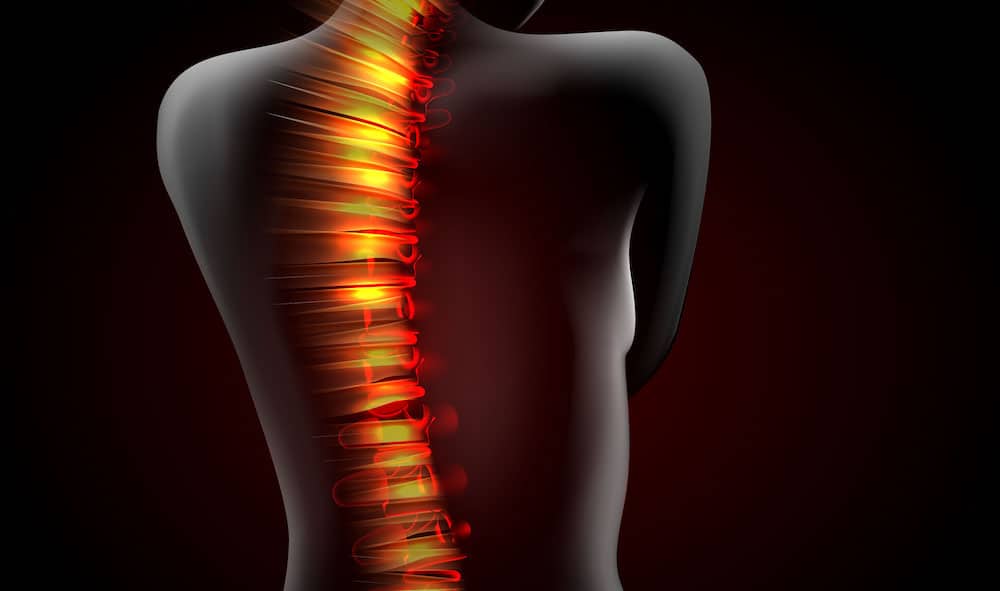
NSCs hold great potential for treating a variety of neurodegenerative diseases and injuries to the spinal cord. The stem cells possess the ability to differentiate into multiple types of neural cell, depending upon their environment. As a result, there is great interest and much effort to use these cells to repair spinal cord injuries and effectively restore related functions.
 Tech & industry12 Feb
Daily exposure to blue wavelength light each morning has been linked to enabling people to sleep better by ‘re-entraining’ their circadian rhythm. And researchers at the University of Arizona have now demonstrated that it may be particularly useful in people recovering from mild traumatic brain injury (mTBI). In a randomised clinical trial, adults with mTBI used a cube-like device that shone bright blue light at participants for 30 minutes early each morning for six weeks. Control groups were exposed to bright amber light.
 News11 Feb
The company is evaluating the use of tavapadon in patients with Parkinson’s disease. Tavapadon is a potent, orally-bioavailable, selective partial agonist of the dopamine D1 and D5 receptors. It is being evaluated as a once-daily symptomatic treatment of Parkinson’s disease.
 News11 Feb
Australian medicinal cannabis company Zelira Therapeutics is working with America’s Parkinson’s Foundation to gather insights from people with PD about their understanding of and use of medical cannabis and hemp-derived therapies. Zelira is assisting in the development of a survey to understand the current use and perceived benefits of medical cannabis among people with PD. The results will be reviewed, and will possibly pave the way for a future clinical trial on the safety and efficacy of medical cannabis use by people with PD. Zelira will also incorporate survey insights to inform future development of clinically validated medical cannabis and hemp-derived CBD medicines for people with Parkinson's disease.
 News11 Feb
The PrecisionMed Traumatic Brain Injury Registry (TBI) is a biological sample bank of DNA, longitudinal CSF, RNA, serum and plasma linked to clinical data. Driving the project is PrecisionMed Inc, which supplies human cerebral spinal fluid (CSF) and is a leader in clinical data procurement and sample management. The registry is expected to help discovery and validate biomarkers for neurological disease. It aims to enroll up to 2000 well-characterised participant donors who will be recruited, evaluated, clinically studied, and sampled from up to 10 investigative sites in the US. Key aspects of donors’ clinical status will be evaluated every four months with simultaneous biological sampling.
 News10 Feb
Formed in 2017, NEURAM (the Neurehabilitation Action Mauritius Foundation) focuses on the management of neurological conditions due to stroke, brain injury and spinal cord injury. It works in a region that faces a high incidence of accidents leading to catastrophic injuries, a lack of understanding of the complex nature of such injuries and their repercussions, insufficient support to patients and families, and a dearth of supportive devices. It also works to improve regional standards of neurological rehabilitation through ongoing education.
 News8 Feb
The recent explosion of neuroscience techniques has proven to be instrumental in understanding the healthy brain, and in the development of neuropsychiatric treatments. One of the key techniques available to us is functional magnetic resonance imaging (fMRI), which allows us to examine the human brain non-invasively, and observe brain activity in real time. Through fMRI, we are beginning to build a deeper understanding of our thoughts, motivations, and behaviours. As neuroscientists unravel the regions of the brain involved in reward and motivation, we are likely to develop the capacity to influence emotional responses, such as love, using drugs. fMRI studies have also been used to indicate that many people who would not regard themselves as racist show a racial bias in their emotional responses to faces of another racial group.
 News7 Feb
Nick Alderman, a prominent figure in UK neuro-rehab, has received the ‘Award for Distinguished Contribution to Practice’ from the British Psychological Society. This is an annual mid-to-late career honour recognising an outstanding and lasting contribution to a particular area, for the benefit of people and organisation. In this case the award was made for his contribution to neurobehavioural rehabilitation, and was presented at the British Psychological Society Division of Neuropsychology Annual Conference in Manchester. Alderman represents Elysium, which is soon opening The Avalon Centre in Swindon, a purpose built neurological centre for men and women over the age of 18 years, who have an acquired brain injury.
 News6 Feb
A UK stroke unit which was facing closure has been saved amid soaring demand from patients.


