



News
The latest news from across neurorehabilitation.
 Care & services31 Jan
The specialist provider of rehabilitation and residential care for adults with acquired brain injury or learning disabilities in Northampton will now be known as Richardson Care. Laura Richardson-Cheater, managing partner, says: “We believe that social inclusion, community participation, dignity and respect, combined with tailored therapeutic input are key to enabling service users to fulfil their potential.” She continues: “After celebrating our 30th anniversary last year, we felt the time was right to update our identity. “We realised that over the years, ‘Richardson’ has become the name of our extended family and includes all of the service users and staff within the organisation.
 Legal & policy31 Jan
Research by Calvert Reconnections and Exchange Chambers examined the effectiveness of the brain injury recovery process through a series of interviews with the country’s most senior brain injury solicitors. While 71 per cent said the NHS is unable to provide effective support for brain injured patients, the vast majority (97 per cent) expressed concerns about the lack of residential-based brain injury rehab units in the UK. Delays and early resistance continue to be claimant lawyers’ main concerns with insurers handling brain injury cases. Positively, however, solicitors believe greater cooperation by insurers has been the greatest advance over the past three years.
 News31 Jan
Askham Village Community, in Cambridgeshire, is enabling patients to share their own experiences of care and help to shape examples of best practice.
Family-run Askham has grown from a care home for the elderly into a community of five specialist homes since being taken over by the Goga family in the 1980s.
Today it provides care and neurorehabilitation, as well as specialist dementia and end of life care.
 News31 Jan
Chroma, a provider of neurologic music therapy (NMT) is working with children, and their families, recovering from acquired brain injuries or auto immune conditions. York-based charity Jessie’s Fund originally funded the yearlong feasibility study and following independent evaluation has agreed with the hospital’s trust to extend the project for another year. Chroma’s music therapist will work as part of the multi-disciplinary team to support paediatric in-patients at Great North Children’s Hospital.
 News31 Jan
The UN Convention on the Rights of the Child (UNCRC), an international human rights treaty, released General Comment 24, in which it recommends that more effort should be made to divert children with developmental difficulties away from criminal proceedings. The guidance asserts that these children “should not be in the child justice system at all”, but when they are, “should be individually assessed” to enable appropriate safeguards to ensure the protection of their rights without discrimination.
 Interviews16 Jan
Byron Konizi wants to do away with the word ‘rehabilitation’. He believes he has a better term for brain injury recovery. But this is no lexical whimsy. His conclusion comes after a decades-long journey into the world of neurological treatment, to the brink of death and back again. It started with a bike ride at age six that sent him freewheeling onto another life trajectory. He fell off, sustaining a head injury - the first in a series of traumatic brain experiences in his life. These dark chapters have shaped a new organisation that wants to bring about a post-brain injury revolution in the UK.
 News16 Jan
When a music therapist first came to Karima Collins’ stroke ward, her NHS- issue sceptic alert fired up. “We’re trained to be quite critical and to focus on the evidence,” she says. “When someone makes grand claims about what the therapy can do, like improving attention, communication and reducing neglect, I was sceptical. How on earth could it do all these things?” Then she saw the video evidence – and heard more about how neurologic music therapy (NMT) can transform outcomes in stroke patients.
 Tech & industry16 Jan
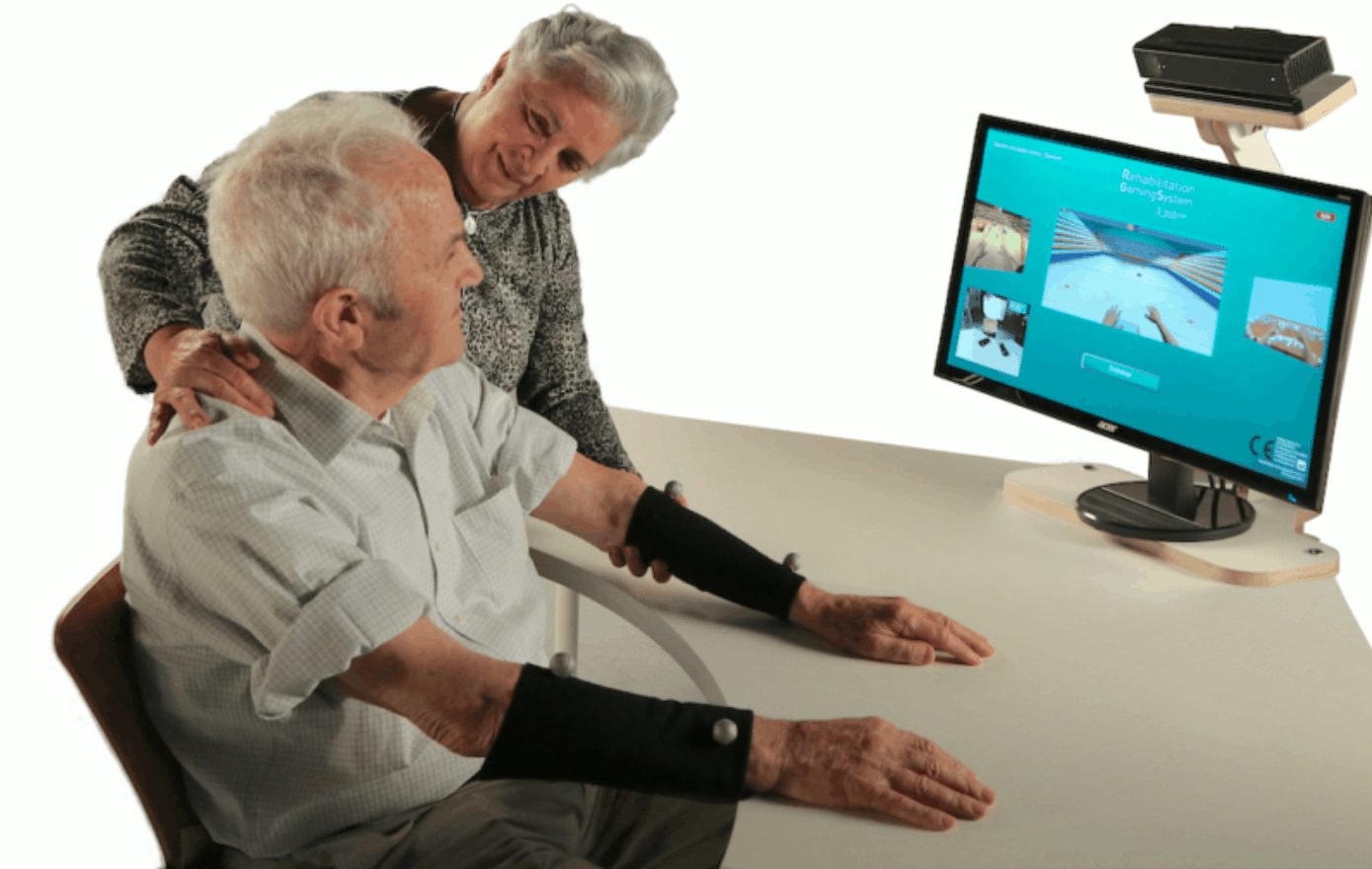
When “combined with conventional rehabilitation” it has the potential to improve motor and cognitive performance in neurologic patients alongside “additional benefits” (Maier M et al, 2019). New tests of its efficacy continue to emerge, while technological advancement is blurring the lines between the real and virtually real. Few VR rehabilitation systems can boast as much clinical evidence as that developed by Barcelona tech firm Eodyne in partnership with SPECS-lab, part of the Institute for Bioengineering of Catalonia (IBEC).
 Tech & industry16 JanNew York-based Spine Care Technologies, launched in March 2018, believes it has the answer in the Extentrac Elite; which enables non-surgical, drug free, disc and spine care treatment.
The device is a multidirectional decompression device used to aid the treatment of spinal injuries, mostly from the thoracic (mid) to the lumbar (lower) spine.
It is used in in the treatment of minor degenerative disc disease, through to drop-foot and serious neurological impingement.
 Tech & industry16 Jan
>It will affect around one in two stroke survivors, according to the Stroke Association, and roughly at least a third of people with MS. Meanwhile, over 80 per cent of people with Parkinson’s may be affected (Suttrup et al, 2016). Speech and language therapists and other rehab professionals may employ a range of techniques aimed at triggering swallowing reflex and strengthening muscles needed for chewing and swallowing.


