



News
The latest news from across neurorehabilitation.
 Spinal injury17 Mar
A brain implant has enabled two people with paralysis to communicate through rapid, accurate typing using attempted finger movements. The device was tested in two BrainGate clinical trial participants, one with advanced amyotrophic lateral sclerosis, or ALS, and the other with a spinal cord injury. A QWERTY keyboard was displayed in front of [...]
 Spinal injury17 Mar
A trial will compare three stimulation approaches to restore touch in people with quadriplegia after spinal cord injury. Quadriplegia, paralysis of all four limbs caused by spinal cord injury, can leave people unable to feel objects they are trying to grasp or the sensation of holding another person's hand. A US$3.1m grant from the Eunice [...]
 MND / ALS16 Mar
A forthcoming study will test whether statins, a cholesterol drug, could help people with MND live longer. There is no cure for MND, which causes muscle weakness, can lead people to lose the ability to walk and gets worse over time. People with the progressive neurodegenerative disease usually die within three to five years after [...]
 Spinal injury16 Mar
Spinal stimulation may restore movement and sensation in people paralysed by spinal cord injury, a trial suggests. The clinical trial involved three people who had lost the use of their legs following complete spinal cord injuries. Participants received electrical stimulation of the spinal cord from electrode arrays implanted above and below their injury sites. [...]
 Stroke16 Mar
Protein changes after stroke could help identify people at risk of later memory and thinking problems, new research study suggests. The study also suggests smoking may increase the risk of memory and thinking problems alongside ongoing inflammation after a stroke. The research, published in Alzheimer’s & Dementia, is part of the Stroke IMPaCT study, a [...]
 Parkinson's13 Mar
A US$6.92m grant from the Michael J. Fox Foundation will help prepare OPM-201 for clinical studies in people with early Parkinson's disease. Oncodesign Precision Medicine has been awarded the research grant to prepare its LRRK2 inhibitor. A Phase 1b trial, along with a Phase 2 study, is expected to start in 2027. The funding follows OPM's [...]
 Spinal injury12 Mar
Neurokinex Charitable Trust, the UK’s leading provider of activity-based rehabilitation for people living with paralysis, has opened a dedicated children’s space at its Bristol site. The purpose-built space is designed to transform rehabilitation for children with spinal cord injuries, neurological conditions and other causes of paralysis. The expansion has been made possible thanks to the [...]
 Dementia12 Mar
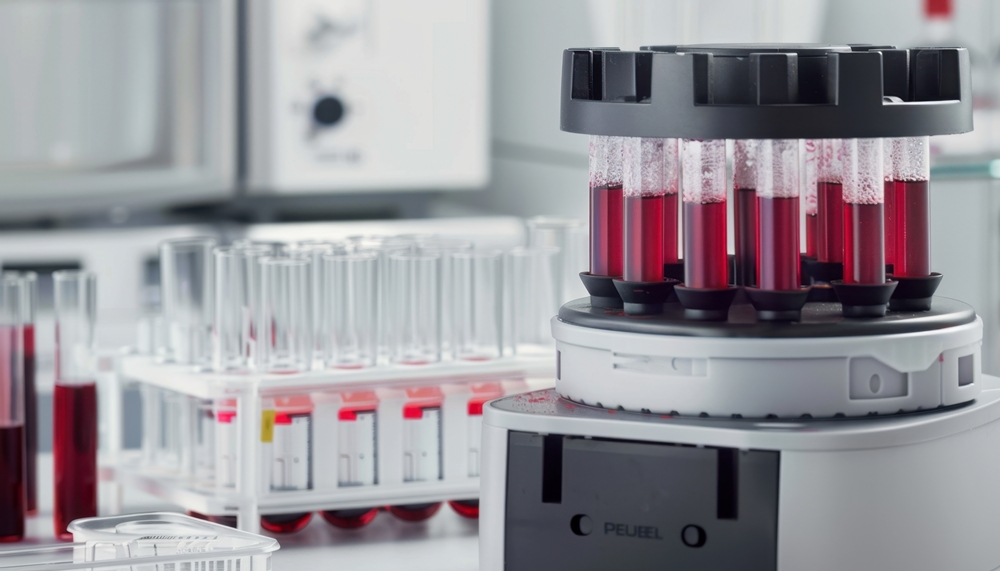
A blood test that tracks protein shape could help detect Alzheimer's earlier, research suggests, by spotting disease-linked changes missed by current methods. Current tests usually measure levels of two proteins, amyloid beta and phosphorylated tau, in the blood or spinal fluid, but these markers may not fully capture earlier biological changes linked to disease progression. [...]

NR Times catches up with Victoria Holness-Waud, specialist neurological occupational therapist and founder and clinical director of 360 Rehab, to find out more about her approach and the current climate for occupational therapy in neuro-rehabilitation. The many roles we play in life, says Victoria Holness-Waud, are central to our identity. When those roles are threatened [...]
 News10 Mar
People from South Asian, African and European backgrounds share many of the same genetic risk factors for MS, a UK study has found. MS affects around 150,000 people in the UK and more than 2m worldwide, yet most genetic research so far has focused on people of white European ancestry. The new study, one of [...]







