Tech & industry
Rehab technology, assistive tech, equipment and the companies behind them.
 Tech & industry19 Jul
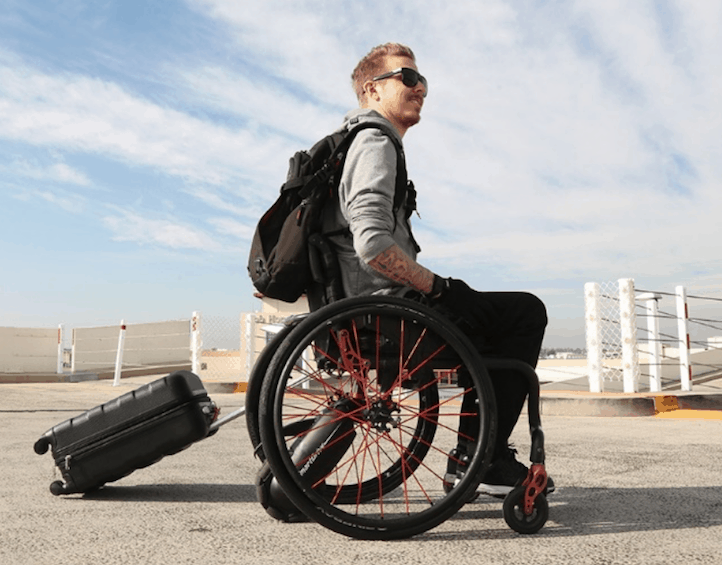
The use of Bluetooth, LED lights and phone charging points are no longer the sole domain of the executive car - these are the types of technology being installed into state-of-the-art mobility aids, to help people who rely on them to explore the world. Major breakthroughs in accessibility in recent years have seen power wheelchairs, manual wheelchairs, power assists and seating and positioning products developed to help empower users, giving them freedom to travel and discover new places and experiences. In addition to mobility and wellbeing, lifestyle is now a key feature in the development of new products going to the market, with modern technology helping to redefine the traditional view of wheelchairs.
 Tech & industry19 Jul
Robot pets
We have robot pet dogs and cats, and even a monkey and a horse. They respond to touch/voice commands, carry out movements and vocalise. They are primarily used to promote engagement by the patient, encourage pleasant feelings which helps set them in a good mood to participate in therapy, promote positive bonds with staff, and as a source of distraction should the patient start engaging in disruptive behaviours. For selected patients who have favourite smells, we can spray specific odours on the pets, so that all of the sensory modalities are engaged for a pleasant experience. Tech & industry1 Jul
An Austrian start-up is using mobile devices and the brain’s inability to separate the real from the imagined to help stroke patients. NR Times meets Rewellio CEO and founder Georg Teufl to find out more.
 Tech & industry4 Apr
An IBM training manual from 1991 reads: “For people without disabilities, technology makes things easier. For people with disabilities, technology makes things possible.” But for a long time, much of the technology widely used by people with disabilities was distinct from the sleek gadgetry of the mainstream. Occupational therapist Keith Norman says: “It used to be that the only technology we would prescribe for people with disabilities would look odd. Other people would wonder ‘why has that person got that device?’
 Tech & industry24 Jan
The brain injury technology University College London has been working on for eight years looks decidedly unremarkable. Barely noticeable in the neonatal skyline of equipment is a trolley housing a laptop and what looks like a projector. Yet the data it offers clinicians could accelerate improved care for brain injured babies in their crucial first [...]
 Tech & industry24 Jan
Anna Khan woke up in February 2016 adamant that it was still 2015, but the date was correct - she had ‘lost’ almost two months of her life. The Sheffield lass had been walking home from college with her twin sister and best friend Lauren when a car hit her; she was thrown over the [...]
 Tech & industry6 Jan
iReadMore provides computer-based reading therapy using written and spoken words and pictures, and aims to improve word-reading speed and accuracy. It was developed by the Aphasia Lab, part of the UCL Institute of Neurology. Stroke patients typically need around 100 hours of speech and language therapy (SaLT), to see a marked improvement. The NHS, however, provides [...]
 Tech & industry5 Jan
The lightning speed of games technology development in recent decades has unearthed a multitude of opportunities in healthcare Yet for all the headway made since the dawn of the home computing era, a gaping lack of knowledge about the true impact of games on the body and brain remains. Behind the mind-blowing graphics, Hollywood soundtracks [...]
 Tech & industry5 Jan
Since a computer defeated world champion Garry Kasparov in 1997, chess has been a continual marker of AI’s progress. In December, the world marvelled at the latest machine-driven victory on the chequered board, which underlined just how far the technology has come in the last 20 years. AlphaZero - Google Deep Mind’s gaming AI – [...]
 Tech & industry30 Dec
The power of exoskeletons was shown to the world earlier this year when Simon Kindleysides became the first paralysed man to complete the London Marathon on foot. Simon (pictured) was paralysed from the waist down due to an inoperable brain tumour. Thanks to an exoskeleton, and sheer perseverance, he crossed the line after 36 hours. This [...]