



Proving what works

Participants at ground-breaking neurorehabilitation centre Calvert Reconnections are already realising the benefits of the centre’s unique approach.

Ischemic stroke patients treated on a mobile stroke unit (MSU) received anti-clot medication faster and ended up with less disability at 90 days, according to a US study. Study results showed that patients treated on an MSU were more likely to receive the clot-busting drug tissue plasminogen activator (tPA) – 97 per cent compared to [...]
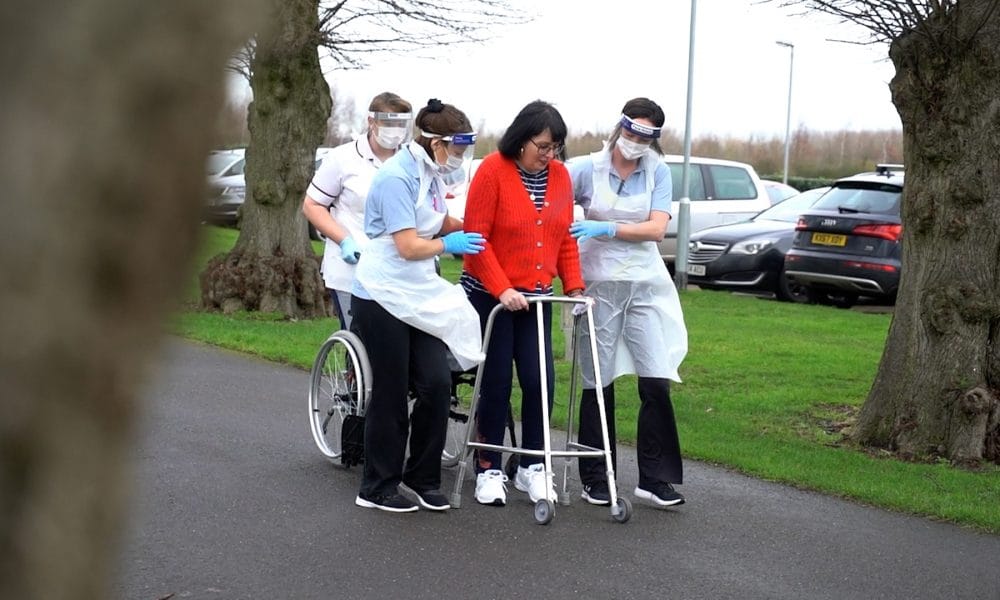
When Hayley Trotman walked out of Askham Rehab into her husband’s arms, having been able to move only a couple of her fingers four months earlier after being struck by Guillem-Barre Syndrome (GBS), her recovery marked a huge achievement.
As well as the remarkable progress made by Hayley, who had exceeded all expectations for her progress in that timeframe, her journey also showed what can be possible with specialist rehabilitation, even during the COVID-19 pandemic and its stringent restrictions. While for many patients around the UK and indeed the world, their rehabilitation was paused or delayed, at Askham, if anything, the team’s work with their residents intensified, ensuring that even during some of the most challenging conditions healthcare has ever faced, their recovery was allowed to continue.
Having survived against the odds, Lisa Beaumont has used her experience to help shape Neuro ProActive, a new app-based rehabilitation platform. Here, in the first of a series of blogs, she shares the background to her involvement
Between zero and 60 per cent of people who have an aneurysm do not survive long enough to reach hospital alive. I survived mine in January 2011. I know that I survived against the odds. April is a month when nature reminds us of new beginnings.
Early intervention neurophysiotherapy can be vital in maximising outcomes for patients after stroke, new research has found.
Following ischaemic stroke, researchers found that the capacity of the human brain to recover and rewire itself peaks after around two weeks. And it is during those crucial early stages, when the brain has a greater capacity to modify its neural connections and its plasticity is increased, when neurophysiotherapy can deliver optimum impact. “It is during this early period after stroke that any physiotherapy is going to be most effective because the brain is more responsive to treatment,” says Dr Brenton Hordacre, lead author of a study conducted in London and Australia.
The use of ‘telestroke’ is improving outcomes and survival chances for stroke patients, new research has concluded.
A newly-published study shows that people who receive stroke care at facilities that offer consultations via stroke telemedicine, known as telestroke, fare better than patients who get stroke care at places without such services. The study is the first analysis of telestroke patient outcomes. It shows that those who get care at hospitals that offer telemedicine for stroke assessment receive superior care and are more likely to survive strokes than patients who went to similar hospitals without telestroke services.
A pioneering physiotherapy service for children and young people which engages them in rehab through horse riding has marked its 10th anniversary.
The Children’s Therapeutic Riding Service was the first of its kind in Scotland, and remains the largest hippotherapy service in the country. Hippotherapy is a specialist horseback form of physiotherapy, which can deliver life-changing consequences to children with disabilities, including brain injuries. The service, delivered free of charge, attracts young people from across Scotland to its base in Muirfield and has helped hundreds of families during its time in operation.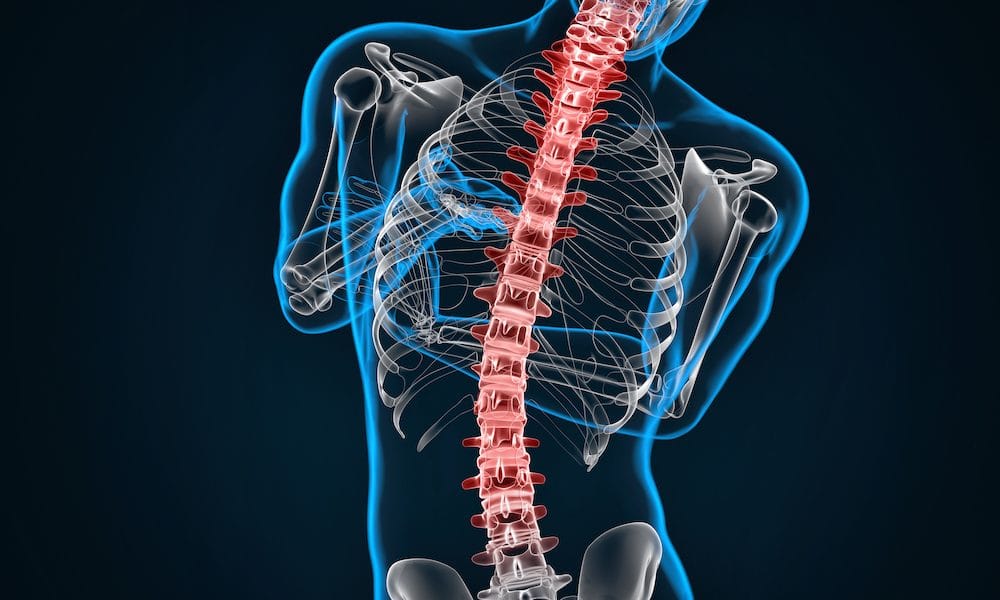
When the spinal cord is injured, it swells, which restricts blood flow and can cause permanent motor, sensory, and autonomic function damage.
Preventing initial swelling, therefore, is key to minimising damage. But the only treatment available for this is a steroid therapy that has minimal effects. But a team of researchers have devised a new therapy device that removes fluid from the spinal cord using osmosis to reduce swelling. While the device has only been tested on injured rats, they’re confident it will soon be applied to humans. The researchers, from the University of California’s Department of Bioengineering, found that spinal fluid can increase in the area within one hour of the injury happening, and levels can remain elevated for 28 days.
In years gone by, the relationship between rehabilitation professionals and law firms perhaps wasn’t always the easiest.
But having been a physiotherapist for over 20 years before moving into serious injury law, I have seen from both sides of the fence how relations have improved over time; benefitting patient outcomes in the process.
Historically, healthcare professionals could be somewhat defensive in their dealings with serious injury solicitors.

Order of evidence is important because it ensures that the nature and extent of the claimant’s injuries and their short-term rehabilitation requirements are identified and that the deficits are subsequently forensically analysed to ensure the appropriate damages are recovered. Every lawyer is different and they will have their own approach. Although this article identifies my own personal views, there will always be different approaches and the particular context of a case may necessitate a different approach too. Every lawyer is different and they will have their own approach. Although this article identifies my own personal views, there will always be different approaches and the particular context of a case may necessitate a different approach too. An example might be where there is a clear accommodation need at the outset of a case, a lawyer may instruct an architect at an early stage to comment on immediate adaptation works, rather than wait for the totality of the medical framework to come through.


