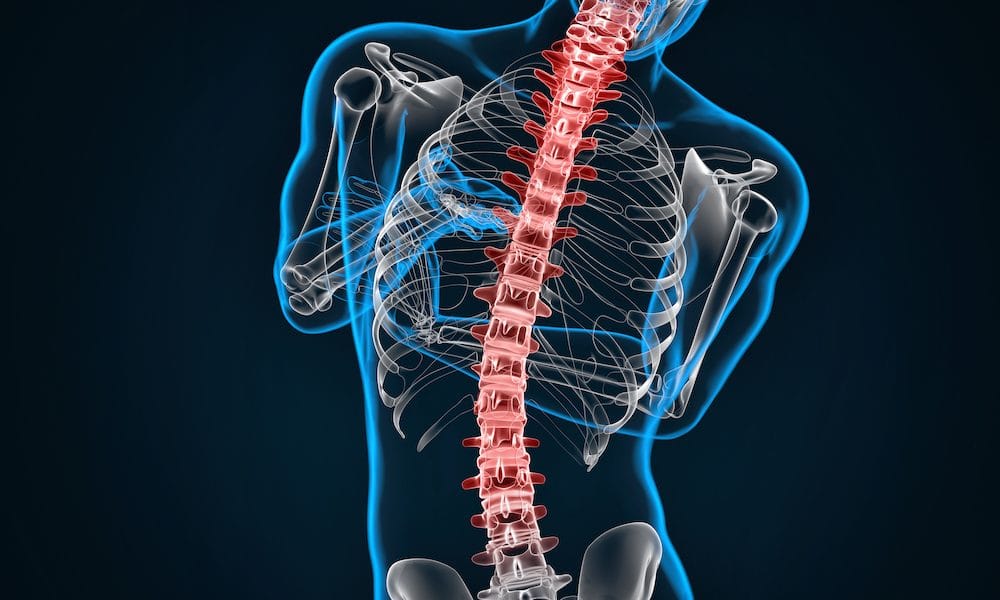
When the spinal cord is injured, it swells, which restricts blood flow and can cause permanent motor, sensory, and autonomic function damage.
Preventing initial swelling, therefore, is key to minimising damage. But the only treatment available for this is a steroid therapy that has minimal effects.
But a team of researchers have devised a new therapy device that removes fluid from the spinal cord using osmosis to reduce swelling. While the device has only been tested on injured rats, they’re confident it will soon be applied to humans.
The researchers, from the University of California’s Department of Bioengineering, found that spinal fluid can increase in the area within one hour of the injury happening, and levels can remain elevated for 28 days.
In their paper, published in Frontiers in Bioengineering and Biotechnology, the researchers explain that the device rests on the exposed spinal cord, while artificial cerebrospinal fluid containing the protein albumin, which initiates osmosis, passes across the membrane, transporting water molecules from the spinal cord. This process is repeated, removing more water.
They found that their device removes more than enough water to prevent brain swelling, and that removing this excess water quickly enough improved neurological outcomes.
The researchers are confident their findings apply to humans, and they aim to carry out more experiments on rats, before moving onto trials with humans.