Smarter rehab
Technology such as VR, robotics, apps and brain implants, adopted where it helps.
 Dementia14 Mar
The development of an AI companion is also set to boost confidence and combat depression, say National Robotarium researchers
 Smarter rehab14 Mar
An AI skin patch that monitors patients for heart rhythm disorders such as atrial fibrillation (AF) cuts NHS electrocardiograph (ECG) waiting times from six weeks to just days, according to a recent trial. The Liverpool hospital trust trial found that the Zio XT patch detected more than 99 per cent of arrhythmias compared to 46.5 [...]
 Spinal injury10 Mar
Researchers have successfully stabilised an enzyme able to degrade scar tissue from SCI and promote tissue regeneration
- Smarter rehab10 Mar
Video game-based therapy can improve patient outcomes and reduce therapist hours and treatment costs, according to a new study. Traditional stroke rehabilitation is expensive and time consuming, with patients having to make their own way to appointments. A team of researchers in the US utilised motion sensor game Recovery Rapids to allow stroke survivors to [...]
- Commissioning8 Mar
NHS Shared Business Services (NHS SBS) has introduced a procurement framework agreement for AI stroke-detection software. The framework enables NHS organisations to access the innovative, evidence-based, cost-effective technology to provide rapid treatment where required. The software uses AI algorithms that can speed-up both thrombolysis and thrombectomy clinical decision-making, potentially improving patient outcomes and increasing patient [...]
 Brain injury8 Mar
Brain stimulation technology from NRNRS is helping people with paralysis from brain injury regain movement
 Smarter rehab28 Feb
Israeli start-up CVAid Medical has raised $4million in a Series A funding round to support its AI-powered stroke platform, CVAid. The company received investment from Philips and Sanara Capital while Rad Biomed led the capital raising. CVAid enables clinicians to perform neurological examinations based on audio and video captured via smartphone. The AI algorithm compares [...]
 Stroke18 Feb
Summit Medical and Scientific supplies innovative biomechanics systems and rehabilitation devices throughout the UK. Sara Brammall is the company's co-founder and managing director. She reveals how the state-of-the-art technology is helping to improve patient outcomes, support therapists and reduce strain on the NHS. How and why was Summit Medical and Scientific established? I co-founded Summit [...]
 Stroke14 Feb
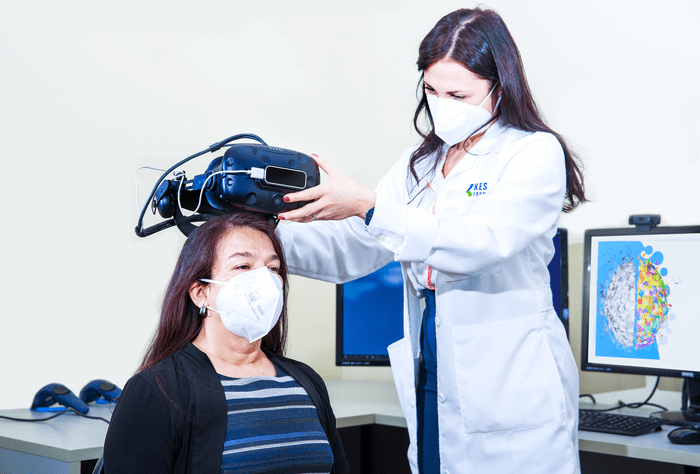
A new programme which uses a head-mounted display and hand-tracking technology is widening options in recovery post-stroke
 Brain injury7 Feb
A biosensor which can detect biomarkers linked to traumatic brain injury (TBI) has been successfully tested in the lab, its creators have announced. Scientists said its tiny sensor includes an “unprecedented combination of features” that may allow it to detect changes in the concentrations of various chemicals in the body and send the results to [...]