News
The latest news from across neurorehabilitation.
 News5 Jul
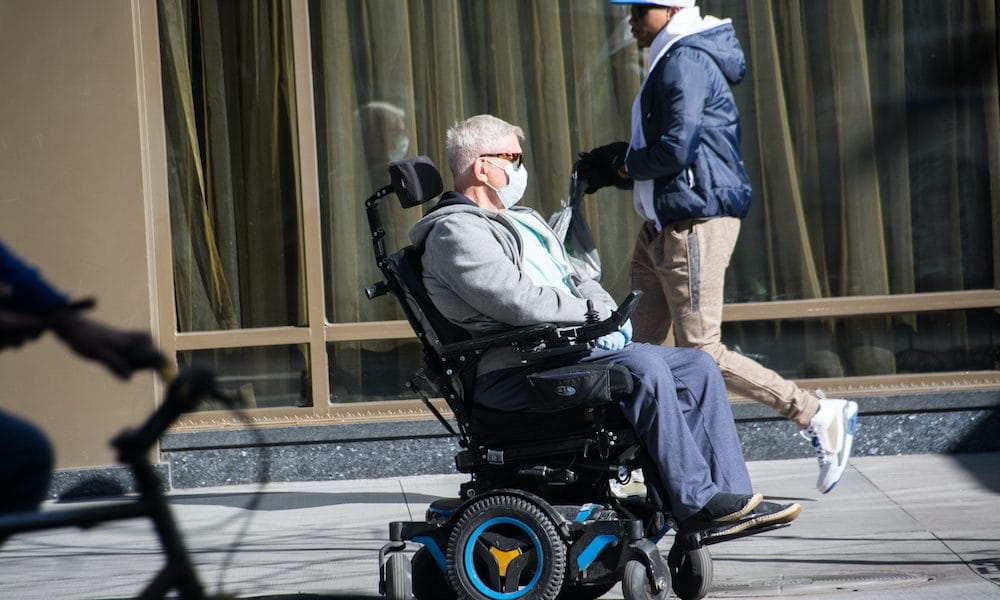
More than half of wheelchair users with spinal cord injury need repairs at some point every six months, a US study suggests.
Researchers surveyed 533 wheelchair users at nine Spinal Cord Injury Model Systems Centers across North America.They aimed to determine how often people require wheelchair repairs, and what the consequences were of needing a repair; how long these consequences were experienced; and whether any trends emerged regarding which users, or which types of wheelchairs, are more likely to need repair. News5 Jul
Scientists believe they have discovered a new class of neurons that links face perception to long-term memory. Researchers have long searched for a class of brain cells that explains the visceral flash of recognition that we feel when we see a very familiar face, like that of our grandmothers. But the proposed "grandmother neuron"- a single [...]
 Tech & industry2 Jul
The official opening of the Chinese Medicine Rehabilitation Centre marks a historic moment in the integration of traditional and modern concepts and methods of rehabilitation therapy.
The Centre features a wide clinical application base of intelligent rehabilitation robots in collaboration with Fourier Intelligence. Traditional Chinese Medicine (TCM) rehabilitation therapy has been in practice for thousands of years and has endured the test of time. This discipline enters a new paradigm in the digital age combining advanced robotics through modern rehabilitation equipment. Established in 1988, the Second Affiliated Hospital of Nanjing University of Chinese Medicine (Jiangsu Province Second Hospital of Traditional Chinese Medicine) is a public provincial-level hospital providing medical treatment, medical education, scientific research, preventative health care, and rehabilitation.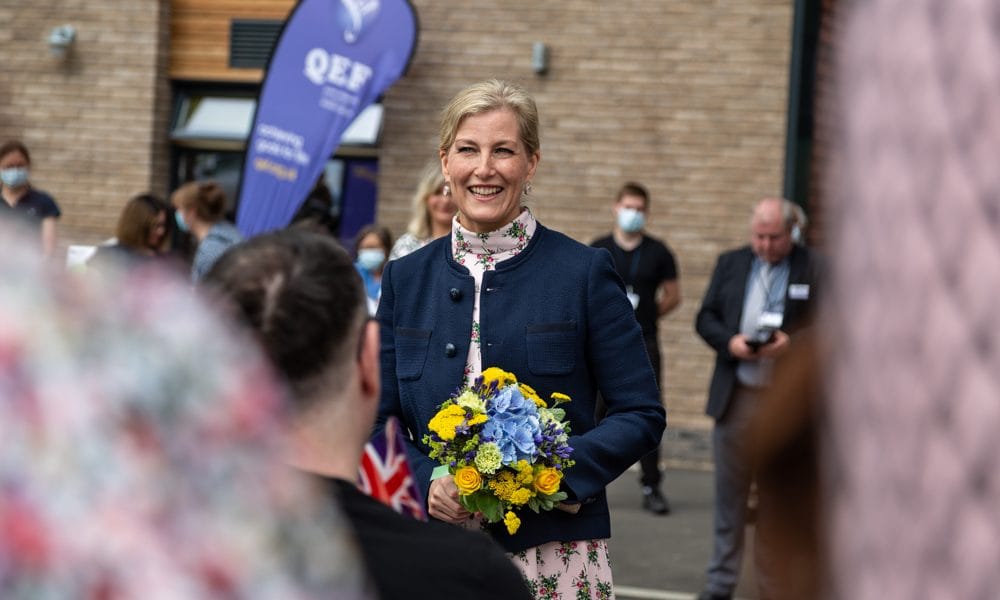 Care & services30 Jun
A state-of-the-art neurorehabilitation centre has been officially opened by HRH The Countess of Wessex.
The Care and Rehabilitation Centre (CRC), operated by disability charity Queen Elizabeth’s Foundation for Disabled People (QEF), offers specialist expertise to support people to rebuild their lives after an acquired brain injury, stroke, incomplete spinal injury or other neurological condition. The service opened during the pandemic in July 2020 and Her Royal Highness was keen to speak to staff about their experiences of the last year and the challenges of providing person-centred therapy and care to people straight from hospital and sometimes straight from Intensive Care. The team at the CRC have worked tirelessly during the pandemic, expanding the number of NHS Trusts and Clinical Commissioning Groups the service supports, so they were able to accept patients directly from hospitals across the South of England. Parkinson's28 Jun
Music lover and folk artist Duncan Whitehurst has been in the music industry for a number of decades now.
He spent much of the 90s enjoying a lot of success with his band The Rain Kings and now plays in his family band Lucky 12. Duncan performs with an acoustic guitar, while his wife Rebecca plays the violin with their son Harry on the drums and friend Jack Deere-Jones on double bass. The group has enjoyed a lot of success in the UK folk scene in recent years, but only came about after Duncan took an extended absence from music. Tech & industry25 Jun
Leading UK innovation experts have outlined a new roadmap for how the country can help develop groundbreaking treatments for brain disorders through technology.
KTN is calling for a number of million of pounds to be invested into the neuro technology sector to make the UK a world leader in this industry. Those at the company have spent the last two years developing the roadmap which aims to see innovative ideas and devices brought to the market to help alleviate symptoms of conditions like Parkinson’s, stroke, depression and brain injury. Through the use of both pharmaceutical giants and start ups, the plan is aiming to accelerate new technologies to the market and scale them up to make them readily available. Long COVID25 Jun
Natural daylight could be a “highly effective” treatment in supporting recovery from Long COVID, having shown benefit in people living with other debilitating conditions.
With cases of the post-COVID syndrome rising continually, uncertainty persists around the best way to treat and support people with the condition due to the developing knowledge and lack of data on the topic. But sunlight could play a significant role in supporting people in their recovery, says psychologist and sleep specialist Dr David Lee. “One of the core symptoms of Long COVID is fatigue, and natural daylight could be a potential intervention,” says Dr Lee, clinical director of Sleep Unlimited, who has been teaching, researching and disseminating findings from his own research into sleep and the psychobehavioural treatment of insomnia for over 15 years. MND / ALS22 Jun
Olympic fever will be hitting the UK soon as the postponed Tokyo games finally get underway next month.
With athletes from around the globe competing in various sports, one couple from Bristol are looking to emulate this in the name of motor neurone disease (MND). Charlotte Nichols and Stuart Bates have set themselves the enormous challenge of completing every event that will take place in this year's games while it is on. From archery to boxing, javelin to hockey the pair will try their luck at every sport this summer to raise money for the MND Association. Stuart had a close connection to this cause, having lost his brother Spencer to the disease. Brain injury21 Jun
Teachers and support staff already play an essential role in a child’s development, but their importance is increased tenfold when dealing with a child who has endured a brain injury.
Their return to school is one of the biggest steps of the rehabilitation process, so it is crucial this is done properly. To make sure all education staff are properly trained in how to do this, the National Acquired Brain Injury in Learning and Education Syndicate (N-ABLES) have launched a new set of resources. Created in partnership with The United Kingdom Acquired Brain Injury Forum (UKABIF), the information will be used to help children from ages four to 18. From inclusion to understanding, the resources highlights a number of steps teachers can take to make sure these children are not left behind. Dementia21 Jun
More than 50,000 people have signed a petition to ask the UK government to double its funding for dementia research and keep the promises it made two years ago. Boris Johnson initially said there would be £160 million invested into the sector in the 2019 Conservative manifesto, but there has been a lack of movement in this area since. This has spurred the Alzheimer’s Research UK charity to launch the petition, calling on Number Ten to help fund possible treatments for dementia. The pandemic has been particularly hard for those with the disease, with a quarter of COVID-related deaths coming from this group.