



News ›
News
The latest news from across neurorehabilitation.
 Research10 Mar
The loss of ‘white matter’ and myelin in the brain has been identified as a central factor in age-related brain deterioration, new research has revealed.
In a new study, it was found that the cells that drive myelin repair become less efficient as we age and identified a key gene that is most affected by ageing, which reduces the cells’ ability to replace lost myelin. The loss of myelin results in cognitive decline and is central to several neurodegenerative diseases, such as Multiple Sclerosis and Alzheimer's disease. Case management9 Mar
The new body being created to help shape the future of case management is moving closer to its accreditation ambitions through the creation of a new role within the team.
The Institute of Registered Case Managers (IRCM) has been in the planning for several years and will set a host of stringent technical and professional standards, which will enable the organisation to be accredited by the Professional Standards Authority (PSA). Tech & industry9 Mar
A suite of apps to support people with brain injuries in developing their cognitive skills has seen a surge in demand globally during the COVID-19 pandemic.
Brain Education Strategies Technology (BEST) developed the first of its five apps six years ago, with a new app or major update every year since. Patient stories8 Mar
While Vasili Kalisperas was born a healthy baby, his undetected jaundice has left him with cerebral palsy and needing round-the-clock care. Here, his mother Elena shares her story and calls for action on kernicterus to ensure such heartbreak does not happen to more families “When Vasili was born, he was a perfect, healthy baby. I [...]
 Parkinson's8 Mar
Immune cells in the blood influence the brain during early development of Parkinson's disease, new research has found.
Until now, Parkinson’s disease has always been considered a brain disorder, but through new research into a sleep disorder, a close link has been established between the disease and certain immune cells in the blood. News8 Mar
A multidisciplinary team approach to rehabilitation has the patient at its centre. Surrounding that patient is a team whose respective roles and expertise combine to fulfil the best possible rehab outcome.
 When people think ‘rehab’ they tend to think ‘physio’ and there is a clear and defined role for these skills. Another key player in the multidisciplinary team contributing to successful rehabilitation from spinal cord injury is the Accredited Exercise Physiologist.
 News5 Mar
Women with multiple sclerosis (MS) may not be at a higher risk of pregnancy complications like gestational diabetes, emergency caesarean section or stillbirth than women who do not have the disease, new research has found.
However, the study did find that babies born to mothers with MS had a higher chance of being delivered by elective caesarean section (c-section) or induced delivery, and of being small for their age when compared to babies of women who did not have the disease.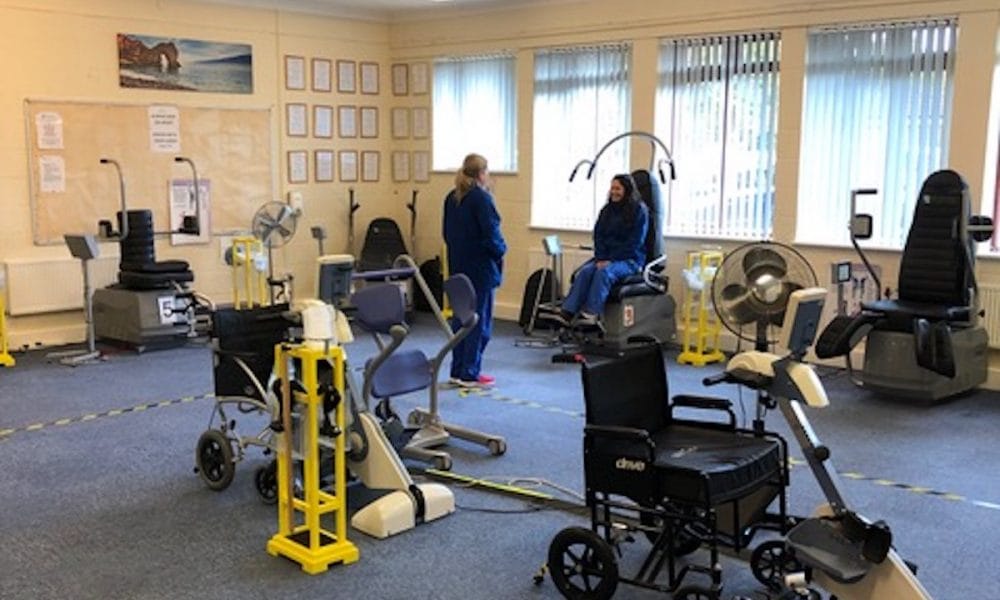 Neurophysiotherapy5 Mar
A community therapy centre which enables neuro patients access to the physio-led exercise which can support their recovery continues to expand in response to demand for its services.
West Berkshire Therapy Centre was opened in 2014 to bridge the gap in existing community resources, and initially opened for 20 hours a week with ten items of equipment. Since that time, the Thatcham centre has expanded into premises twice the size of its initial home, and now has 17 items of equipment which clients can access 35 hours each week. News5 Mar
An online brain assessment platform has secured funding to enable its work in telehealth to continue to support people as the world emerges from the COVID-19 pandemic.
Cambridge Brain Sciences (CBS) is planning to expand its operation through a funding round from Canadian Shield Capital, a Toronto-based private equity investment firm, closely aligned to Hatch, a global engineering consultancy. The investment will allow Candian-based CBS to further its work in digital health, especially around mental health, and respond to the need for accurate and reliable quantified measures of brain function and brain health - hailed as being essential to so many people who have suffered psychologically from the effects of COVID-19.
Through community speech and language therapy continuing even during the height of lockdown, many patients received a “massive boost” from the progress being made in regaining or maintaining their communication and swallowing abilities.
While many therapies were stopped or conducted remotely, speech and language therapy (SLT) continued in-person throughout the pandemic, supporting people in their recovery from brain injury or stroke, as well as working with those with progressive neurological conditions.


