A community therapy centre which enables neuro patients access to the physio-led exercise which can support their recovery continues to expand in response to demand for its services.
West Berkshire Therapy Centre was opened in 2014 to bridge the gap in existing community resources, and initially opened for 20 hours a week with ten items of equipment.
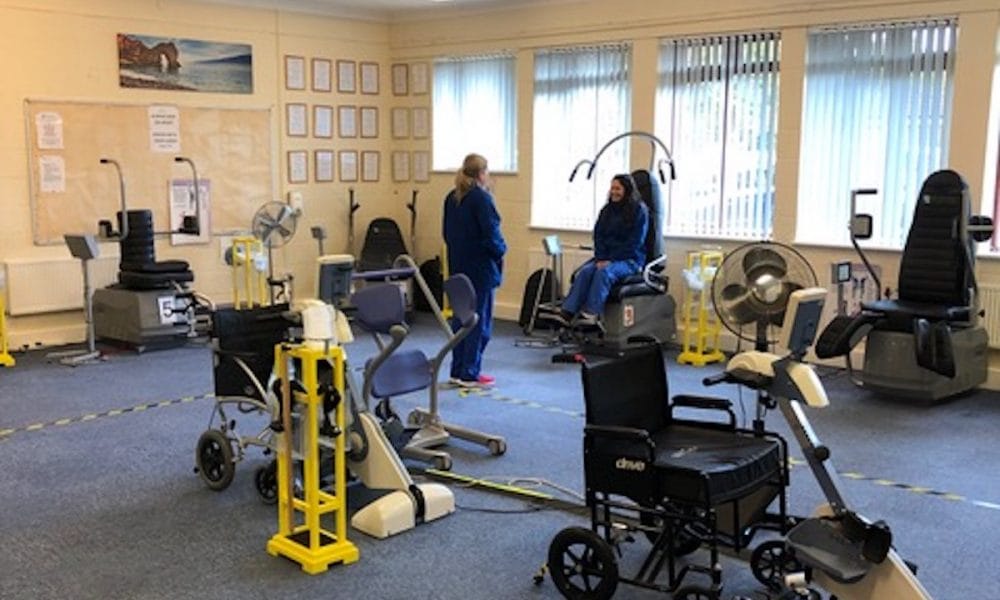
Since that time, the Thatcham centre has expanded into premises twice the size of its initial home, and now has 17 items of equipment which clients can access 35 hours each week.
While the centre has been forced to close during lockdown periods, the investment in its offering has continued, with a further £17,500 being spent to upgrade equipment.

In addition to its regular clientele of around 260 people, around 200 more will be referred to the centre from the Berkshire Long COVID Integrated Service, led by Dr Deepak Ravindran, who has worked closely with the centre for several years.
As well as the anecdotal evidence from clients who attest the positive effect West Berkshire Therapy Centre has, the centre’s work has been proven to improve client mobility by an average of ten per cent, psychological outlook by 15 per cent and weight loss by three per cent.
All clients are assessed by the centre’s physio before being prescribed an individual exercise programme. The centre prides itself on its client-centred approach and some of the equipment in the gym has been designed and built specifically in response to what clients said were important to them.
West Berkshire Therapy Centre was created by the West Berkshire Neurological Alliance, a group of 23 local neuro charities, which recognised the need for greater specialist provision for people living with neurological conditions in the area.
John Holt was instrumental to the creation of both the Alliance and the Centre. Having supported his wife in living with MS for over 40 years, he took the lead on ensuring greater provision and support was there for those who needed it.
“I’m not from a medical background, I’m a food technologist, and while I was chair of a trade association during my career, I was used to working with competitors and business enemies, that was just what happened for the greater good of us all,” he says.
“So I was rather shocked when I got involved with the local voluntary sector and found that wasn’t the case. I was very proactive in all of our charities working together as I know the importance of working as one alliance.
“People who were living with neurological conditions were often having to fend for themselves when it came to community rehab, and that’s why we wanted to create the West Berkshire Therapy Centre.”
Having been established on the back of £145,000 in fundraising, five years later the demand for its services was such it had to expand into larger premises and invest in more equipment.
The centre – which is funded by voluntary contributions for sessions and through fundraising – now has eight part-time staff and a core of volunteers to support clients with whatever rehabilitation issues they have.
While most clients have neurological conditions – including stroke, Parkinson’s, MS and Post-Polio Syndrome – the centre has broadened its reach to include large numbers of people with arthritis, heart and lung conditions, sight impairments as well as amputees.

“We’re completely pan-disability and will support anyone who needs us. Our clients talk to us and we listen and adapt,” says John.
“I think many clients come to us because we are a safe place for them and they’re among people who understand the challenges they face.
“It is very important that we talk about things openly. For example, we talk about how hard it is when you can’t get to the bathroom in time and you wet yourself.
“When you face issues like that, it can be the start of a spiral downhill, you might then stop going to work or stop leaving the house, but we share these kinds of things.
“By having this interaction, it becomes a place people aren’t afraid to open up.”
With the centre having been closed for much of the past year, John and the team are ready to welcome back regular and new clients, including the many who are recovering from Long COVID.
“Many of our clients won’t have exercised for several months, but we hear very often that people have waited 20 years for a centre like this, so a few months hasn’t been long in comparison,” says John.
“But we are very much looking forward to re-opening and supporting our clients in regaining any progress and fitness they may have lost. Hopefully we are on the right track now after three lockdowns and clients can come back to us regularly.
“Long COVID is a new condition for us, as it has only come into being in the past few months, but we are ready to support people with their symptoms and in them using exercise as part of their recovery.”