




Through community speech and language therapy continuing even during the height of lockdown, many patients received a “massive boost” from the progress being made in regaining or maintaining their communication and swallowing abilities.
While many therapies were stopped or conducted remotely, speech and language therapy (SLT) continued in-person throughout the pandemic, supporting people in their recovery from brain injury or stroke, as well as working with those with progressive neurological conditions.
“With there being a complete hold on a lot of NHS therapy during the first lockdown, speech and language therapy was very important to so many people, so to be able to progress in that area was a massive boost during a difficult time,” says speech and language therapist Jennifer Benson.
“For many patients I saw, they felt that there was so much focus on COVID they had been forgotten – but to have a voice is such a fundamental part of life, and for a lot of patients, particularly those with progressive conditions, it can’t wait.

“It’s a privilege to be able to support people with this, but particularly to be there for them during the most trying times.”
The continued intervention of SLT during lockdown helped many patients significantly – but for therapists, their role was frequently, and unexpectedly, expanded with the cancellation of many other community services.
“We were finding we’d be going to people’s houses and our role was broadening, we’d need a double appointment to help get through the other issues they had and trying to offer support,” says Jennifer, who worked in both private and NHS roles across Yorkshire and Lincolnshire during the pandemic.
“As speech and language therapists, we are very clear on our role boundaries, and we’re very keen to work with our MDT colleagues, but during those times we had to become used to dealing with things like recognising when a person needed end of life care, and supporting families when GPs weren’t coming out to see them.
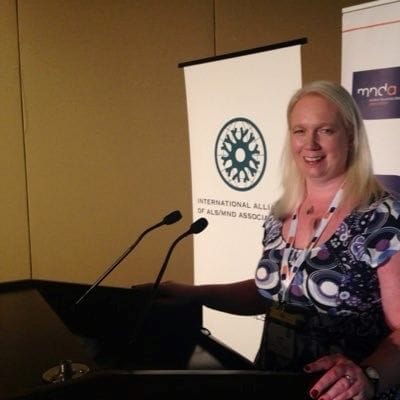
Jennifer Benson – speech and language therapist
“One case that really stands out was one gentleman with some early signs of Parkinson’s, he’d had a telephone appointment with a neurologist but nothing else.
“He’d then had a repeat prescription from his GP with some Parkinson’s medication on it. He queried it, saying this isn’t mine, but then got an email telling him he had Parkinson’s disease. He and his wife were in total shock.
“In ordinary times, there would be Parkinson’s nurses visiting to pick up on that, but in the absence of face to face appointments, SLTs were in a position of needing to offer more support and information about Parkinson’s in general. We know our stuff and we’re good at explaining things simply to people, so it was a natural extension of our skills.”
Against a constantly-changing situation during the pandemic, assessing the need for visits against the safety factor of not doing so, was a fine balance.
“All through the pandemic, face to face appointments have been risk assessed, and SLTs all over the country have risen to the challenge of using teletherapy when this has been the safer option,” says Jennifer.
“It’s a balance between reducing contact to keep people safe, and maintaining contact to keep people safe.
“Very often our swallowing assessments and interventions would be helping to prevent a hospital admission, so we were also doing our bit to keep people at home and prevent more strain on the hospital system, and keeping them out of the way of potentially catching COVID in hospital too.”
Jennifer, who has more than 20 years’ experience in the field, continued her appointments using PPE for the benefit of the patients who needed her.
“I became used to wearing a surgical face mask, plastic pinny and gloves, even though the mask made communication so much more difficult. I had a boot full of this equipment and many a day had to battle the North Sea wind while putting my pinny on!,” Jennifer recalls.
“But it was all such an unknown, and people were needing to be seen more than ever, very often I was all they had, so you just get on with it.
“It was only when I got my first vaccine that I realised what a relief it was. Working in the community, you rely on people reporting symptoms and of course many cases are asymptomatic. You have to hope your PPE really does keep you and everyone else safe.
“There were care homes I was in which had outbreaks two days later, and you maybe do think about your own safety, but I think it’s only on reflection you realise how anxiety-provoking it really was.
“I’m very pleased I have so many years of experience, I’ve seen a lot of things, so that helped me to get through that time – for those who were new to it, it must have been very hard.”


