News ›
News
The latest news from across neurorehabilitation.
 Brain injury17 Apr
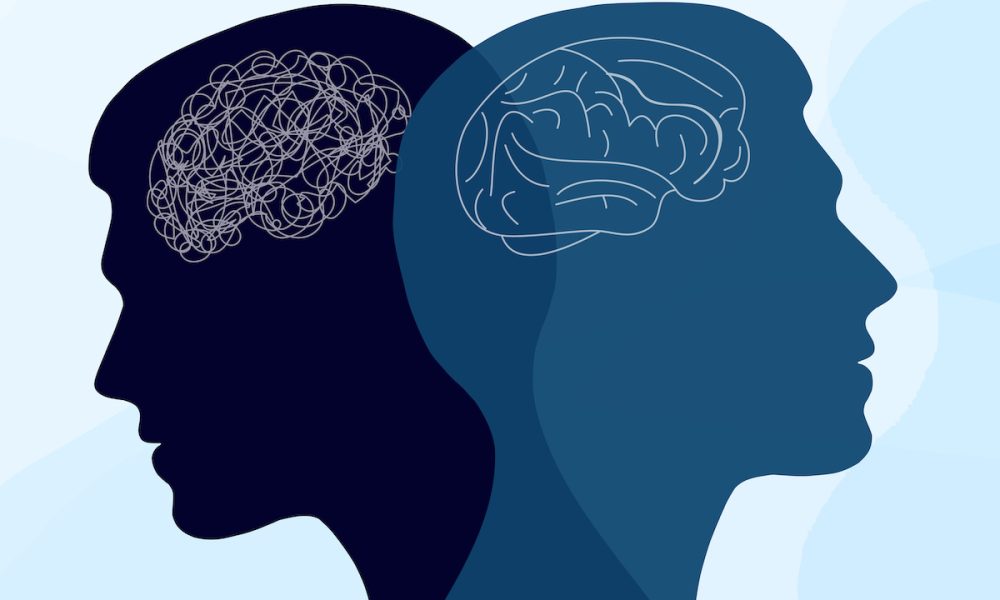
Clinical neuropsychologist Dr Lynn A Schaefer provides NR Times readers with an in-depth summary of post-brain injury and stroke behavioural changes.
When I speak to groups about the neuropsychiatric sequelae of brain injury, I always start with the story of Phineas Gage. In the field of neurorehabilitation, the tale of Phineas Gage is both compelling and memorable. Phineas Gage was a railroad foreman, blasting rock to lay track in the 19th century in Vermont, US. As the story goes, the tamping rod he was using to pack dynamite into the rock was blown through his left cheek when the dynamite exploded prematurely. The rod took out his left eye and exited through the top of his skull. Gage miraculously survived but thereafter was reportedly “no longer Gage.” His behaviour and personality were profoundly changed, although he was able to walk and his memory was unaffected. Read this article in full for an in-depth summary of the wide range of post-brain injury and stroke behavioural changes. Opinion13 Apr
Alessio Travaglia, director of neuroscience at the Foundation for the National Institutes of Health (FNIH), on the outlook for new Parkinson's treatments.
Parkinson's disease (PD) is a neurological disorder that affects a person's ability to move. When certain cells in the brain start to die, the process causes a decrease in a chemical called dopamine. As a result, individuals with Parkinson's disease may experience difficulty with everyday activities, such as walking, talking and writing, along with common symptoms, like tremors, stiffness, slowness of movement and difficulty with balance. Unfortunately, there is no cure for Parkinson's disease, and the number of patients is rising. The number of Parkinson’s patients is expected to increase to 1.2 million in the U.S. alone by 2030, posing a growing threat to public health. The disease costs the US$52 billion per year in direct and indirect costs. Although the hallmarks of Parkinson's disease are well known, and there are several genetic, epigenetic, and environmental factors associated with PD, the underlying causes are still unknown. Breakthroughs are needed to improve treatment and quality of life for patients, but no disease-modifying drugs have been approved for Parkinson's disease despite extensive research. Drug discovery is a complex and time-consuming process involving the identification of new compounds that can be used to treat a particular disease. Read on to find out how the Accelerating Medicines Partnership Program Parkinson’s Disease (AMP PD) is working to advance PD drug discovery. Research13 Apr
NR Times meets Coya Therapeutics’ founder and CEO Howard Berman as he closes in on his mission to halt ALS / motor neurone disease and other neurodegenerative conditions.
“Even if we see results that are half as good what we’ve already seen, this is going to change the way ALS is treated,” says Howard Berman, founder and CEO of Coya Therapeutics. The results he points to, which caused much excitement in the neuroscience research community last month, showed four people with ALS treated with Coya’s immune modulating therapy experienced a significant slowing of disease progression. ALS is the most common form of motor neurone disease (MND), while, in the US, it is also the umbrella term for MND. Coya's therapy has emerged from the Nasdaq-listed firm’s pursuit of treatments based on the enhancement of the function of regulatory t cells (Tregs) in the immune system. Read on to find out how Coya aims to build on its early promising results to change the outlook for people with ALS / motor neurone disease and wider neurodegenerative diseases. Also, we hear how the neuro-rehab community is helping to drive new treatment possibilities and why Tregs are becoming so important to our understanding of brain conditions. Brain injury12 Apr
A charity founded by the first disabled man to sail across the Atlantic is giving people with complex disability the chance to experience the open water.
Last year, 6000 disabled people, many of them living with severe neurological conditions and complex disability, were given a rare opportunity to experience the freedom of the open sea. The voyages were organised by Wetwheels Foundation, a charity founded in 2011 by disabled yachtsman Geoff Holt MBE. Holt was the first disabled person to sail around the British Isles and the first to sail across the Atlantic. He was already helping disabled people access the joys of the ocean as chairman of the Royal Yachting Association’s Sailability, a project that has allowed 20,000 disabled people to experience sailing. But there was a gap for people with more complex and severe conditions. News11 Apr
Specialist agency unveils ambitious plans for next 18 months to help meet vital resource issue
 Brain injury11 Apr
A new research study aims to look at the impact an acquired brain injury has on couples’ relationships in a bid to learn more about what support is needed.
 Brain injury10 Apr
Life changed in the blink of an eye for the world class professional skier following a horrific crash on the slopes. Here she shares her traumatic brain injury story with Emma Chesworth.
Jamie MoCrazy saw her life change in an instant while she was competing in the World Tour Finals in Whistler, Canada in April 2015. Aged 22, she was at the top of the slopestyle freestyle skiing world, when she suffered a massive crash at the Finals, causing her brain to bleed in eight spots and paralysis on her right side. For Jamie, skiing had been her life. She says: “I started skiing as soon as I could walk. My whole family skied so it was a lifestyle for me. I also competed in gymnastics as a young child and I dreamed of combining skiing and gymnastics. When I learned about slopestyle and halfpipe skiing, two kinds of freestyle skiing, that dream became a reality.” Jamie, from Park City, Utah, went on to be a world cup professional skier competing at international competitions including the Dew Tour, X Games and the AFP World Championships. Following her life-changing crash eight years ago, Jamie’s challenge changed from competing to surviving. Opinion6 Apr
By Dr Robert Masson, neurosurgeon and co-founder of medical AI company Expanded Existence.
There are several aspects to neurological rehabilitation after traumatic brain injury, severe brain illness, brain tumour management and spinal cord injury. They all are profoundly different and yet there is a core value which is common to all. The bottom line is optimism and hope for best possible scenario is critical to the best recovery. Parkinson's5 Apr
Rebecca Bird reports on the emerging role of whole genome sequencing in young onset Parkinson’s disease management.
Whole genome sequencing is a method used to read and interpret the complete DNA sequence of a person's genetic material, known as their genome. To sequence a genome, scientists obtain a sample of DNA, typically from blood, saliva or tissue samples. They then use special equipment and chemical processes to read the DNA sequence, which is essentially the order of the building blocks that make up the DNA molecule. The sequence data is then assembled using powerful computer algorithms to generate a complete genome sequence. The results can provide insights into a person’s physical characteristics, behaviour, drug response and susceptibility to disease. Gaynor Edwards, founder of Spotlight YOPD, believes that whole genome sequencing may play a significant role in predicting and diagnosing young onset Parkinson’s disease. “You're not going to find a cure unless you've got the cause, and you're not going to find the cause unless you've got the research,” she told Neuro Rehab Times. Brain injury31 Mar
NR Times reports on progress in unpicking the relationship between childhood TBI and struggles in education and the workplace.
The impact of childhood traumatic brain injuries on school years and working life is well documented; with behavioural, planning and learning challenges among many factors which can adversely affect young people. Often these experiences happen years after their injury, as brains develop and educational life requires ever-more independence. A spokesperson for the American Academy of Pediatrics explains to NR Times: “Mild traumatic brain injury can have an effect on how the brain functions. “If the brain isn’t functioning normal, students can struggle with learning new information, recalling information, focusing and concentrating to their normal abilities. “Communication is key in all mild TBI patients as most of the symptoms are not outwardly visible. “Since you can’t see their struggles it is important for kids and the parents to be able to communicate with the school staff and teachers as to how their symptoms are specifically causing them struggles in school.” But evidence linking TBI and specific negative outcomes, such as exclusion, absenteeism and unemployment, is lacking. This is changing, however, as NR Times reports.