News ›
News
The latest news from across neurorehabilitation.
 Brain injury21 May
Work has begun to bring a landmark neurological research and treatment centre to reality.
The UCL Neuroscience centre of excellence will be home to three bodies: the world-leading UCL Queen Square Institute of Neurology; the headquarters of the UK Dementia Research Institute, the single biggest investment the UK has ever made in dementia; and the UCLH National Hospital for Neurology and Neurosurgery (NHNN), which is the UK's largest dedicated neurological and neurosurgical hospital. Clinical work and research will take place together within the new facility, at 256 Grays Inn Road in London, enabling an active dialogue between people with neurological disorders, their doctors, and researchers. News21 May
So far the illness has affected at least 47 people and been fatal for six of these, with all cases coming from Acadian Peninsula in northeast New Brunswick, Canada.
Symptoms have been shown to vary in patients but do include hallucinations, muscle deterioration, spasms, teeth chattering as well as rapidly progressing dementia. Research21 May
The study revealed that children who recorded the highest level of deprivation generally suffered worse cognitive and mental health outcomes.
Through looking at a number of brain scans researchers could see the levels of brain activity in each child and found lower amounts of circuitry in those who scored the worst. Rather than solely looking at income levels, those involved in the study also considered a variety of factors that may be putting a child at disadvantage, such as pollution, crime, and access to lower-quality education and healthcare. After each child was scored on this, the researchers then looked at their MRI scans to measure how well each region of the brain is connected to one another. News20 May
Vicki Gilman sits down with Niall Baker, managing partner of the Court of Protection and public law teams at Irwin Mitchell, to discuss his experiences in dealing with brain injury patients.
He explains more about how the firm manages a neuro case and how the laws and regulations around this have changed over recent years. Niall shares insights from his experience as a Court of Protection appointed Deputy, looking at the big picture surrounding these complex cases. He also discussed some of the client bases they work with and how issues around mental capacity, best interests, welfare and financial management can shape a lot of these claims. As well as this Niall shares true stories from real cases, looking at how his firm deals with them and the special considerations that are needed. News19 May
Horses can have a profound impact for people looking to recover from injury or illness.
Equine rehabilitation as it is known can help improve a patients mobility, alleviate signs of illness, improve their strength and most importantly bring fun and happiness to a patient’s life. However getting an adult with motion issues onto a horse can be a struggle. Liz Morrison is launching the Happiness Horsebox to make sure those with life-changing disabilities don’t miss out on these benefits. The idea behind the community interest company (CIC) is to make horse riding much more accessible, with the group’s main attraction being the launch of its horsebox which provides all the necessary facilities to do this. Smarter rehab13 May
The world’s first Alzheimer’s disease drug candidate designed by artificial intelligence (AI) is to enter Phase I clinical trial in the US.
The study will assess whether DSP-0038 has improved antipsychotic effects in patients with Alzheimer’s psychosis and evaluate if it can improve the behavioural and psychological symptoms of dementia, including agitation, aggression, anxiety and depression. DSP-0038 is the third molecule created using Exscientia Ltd’s AI technologies and the second molecule to enter trials from the company’s partnership with Sumitomo Dainippon Pharma. The two other compounds are DSP-1181, developed in collaboration with Sumitomo and entered trials to treat obsessive-compulsive disorder in 2020, and EXS-21546, an immuno-oncology agent which began trials earlier this year. Community neuro rehab13 May
Reflecting on the recent ‘Recovery and Rehabilitation in The Community: Alcohol Related Brain Injury in Ireland’ event, senior clinical psychologist Dr Nichola Robson shares her analysis for NR Times It was a pleasure to listen to some of the leading professionals talk about alcohol related brain injury (ARBI), a condition arguably encountered in most [...]
 MND / ALS11 May
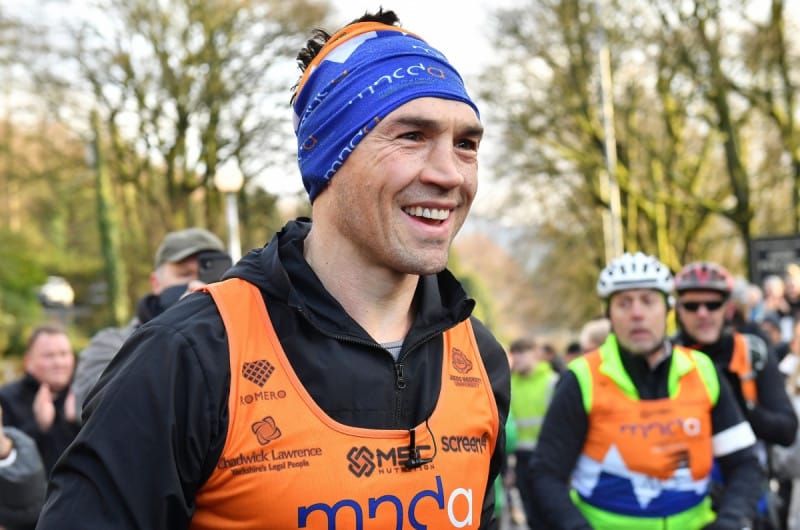
A £1million fund has been created to lead new research into potential treatments for Motor Neurone Disease (MND) through the efforts of an iconic challenge by Kevin Sinfield.
Kevin, director of rugby at Leeds Rhinos, raised over £2million through his 7 in 7 Challenge, inspired by his former team-mate and close friend Rob Burrow. Rhinos legend Rob was diagnosed with MND in December 2019, and Kevin completed seven marathons in as many days to help boost badly-needed research into the condition. Now, with £500,000 of the money raised through the 7 in 7 Challenge ring fenced for research, that sum has been matched by medical research charity LifeArc. Commissioning10 May
A new clinical video service which supports epilepsy diagnoses and management in the era of coronavirus and beyond has been launched in the UK.
vCreate Neuro allows registered patients and carers to share smartphone-recorded videos of potential seizures or unknown movements with their clinical team via a secure, NHS-trusted system.The data and footage act as a visual aid to assist clinical teams with rapid precision diagnostics, creating a digitised clinical pathway that minimises the need for face-to-face clinic appointments and invasive tests. Research10 May
Aggressive brain tumours can mimic normal brain repair processes, ‘surprising’ new research has revealed.
Scientists at the UCL have discovered that glioblastoma, an aggressive brain cancer, mimics normal brain repair in white matter, which leads to the tumour becoming less malignant. In the study on mice, funded by Cancer Research UK, researchers used these novel findings to identify drugs which could be used, or repurposed, to harness this response and treat the cancer. Using the pre-clinical mouse models, the researchers found that Pranlukast, a drug clinically approved for treating asthma in people, suppressed glioblastoma growth. “We know glioblastoma often develops and spreads in the brain’s white matter but it has been unclear why this happens or what molecules are involved in this process,” says lead author, Professor Simona Parrinello of the UCL Cancer Institute.