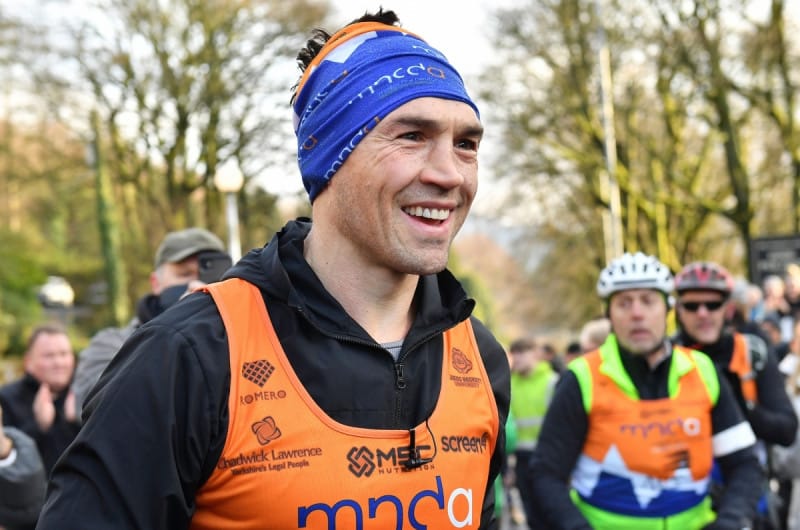
A £1million fund has been created to lead new research into potential treatments for Motor Neurone Disease (MND) through the efforts of an iconic challenge by Kevin Sinfield.
Kevin, director of rugby at Leeds Rhinos, raised over £2million through his 7 in 7 Challenge, inspired by his former team-mate and close friend Rob Burrow.
Rhinos legend Rob was diagnosed with MND in December 2019, and Kevin completed seven marathons in as many days to help boost badly-needed research into the condition.
Now, with £500,000 of the money raised through the 7 in 7 Challenge ring fenced for research, that sum has been matched by medical research charity LifeArc.
The move has created a £1million joint fund established by the MND Association and LifeArc, which will support research projects focused on developing new therapies or repurposing drugs already approved for use for other conditions.
“This is fantastic news and an amazing contribution from LifeArc,” says Kevin.
“When we set out to complete the 7 in 7 Challenge we hoped to raise awareness and funds to support the MND community but it is so wonderful to see the inspiration it has given people and organisations, like LifeArc, so they too can support the need for more research.
“Our hope, like that of everyone affected by this brutal disease including Rob, is that this money will make a real difference and help find the breakthrough we all desperately want.”
Researchers are now able to apply for a share of the funding, with the criteria that they will be expected to conclude their project within three years and be target driving with set milestones and a credible delivery plan – including a clear route to reach MND patients.
Dr Brian Dickie, director of research development at the MND Association says: “We are so grateful to LifeArc for this generous contribution and are looking forward to working with them to identify projects which have a real chance of making a difference to our community in the coming years.”
Melanie Lee, LifeArc’s chief executive, emphasised that the focus of the new funding is on boosting research around potential treatment options based on the latest understanding of the disease.
“The ambition around stimulating the search for new treatments fits with LifeArc’s approach over the last 25 years to translate early science into health care treatments or diagnostics that can transform patients’ lives,” she says.
“Our partnership with the MND Association is the latest in a series of strategic partnerships that maximise LifeArc’s expertise in translating strong discoveries from the lab into benefitting patients with conditions with few or no effective treatment options.”