



Tech & industry

NR Times explores the latest pharma and business developments in business in the world of neuro-rehab. Roche to advance Phase III development for early-stage Parkinson's disease treatment Roche has confirmed it will be advancing to the Phase 3 development of prasinezumab, an investigational anti-alpha-synuclein antibody, in early-stage Parkinson’s disease. Multiple endpoints from the [...]

Patients harmed by high-risk brain implants could receive automatic compensation under a new proposal aimed at protecting those taking part in experimental trials. The scheme would introduce a “no-fault” compensation model for people fitted with brain-computer interfaces (BCIs) – devices implanted in the brain to treat conditions such as epilepsy or paralysis. BCIs may offer [...]

A new therapy combining electrical nerve stimulation with physical rehabilitation has led to significant improvements in arm and hand function for people with spinal cord injuries. The treatment, known as closed-loop vagus nerve stimulation (CLV), uses a small device implanted in the neck that delivers electrical pulses to the brain during targeted rehabilitation exercises. Researchers [...]

A brain-computer interface has enabled a man with ALS to speak in real time by converting brain activity directly into a synthetic voice. The investigational system allows the user to communicate with family through a digital vocal tract that simulates speech, enabling him to adjust intonation and even produce simple melodies. Unlike earlier technologies that [...]

The US Food and Drug Administration (FDA) has cleared the first blood test capable of detecting amyloid plaques, one of the key signs of Alzheimer’s disease, offering a simpler alternative to current diagnostic methods. The test, which received FDA clearance on 16 May, is approved for people aged 55 and over who show signs or [...]
Smartphone assessments could help researchers more precisely detect progression in Huntington’s disease, potentially improving the efficiency of clinical trials, new research suggests. A five-minute test delivered via a custom app calculates a Huntington’s Disease Digital Motor Score (HDDMS) using five simple assessments of movement control – including balance, finger tapping and involuntary movements. Huntington’s disease [...]

NR Times explores the latest research developments impacting on neuro-rehab. Newly developed technique may improve success rates in treating strokes Researchers at Stanford Engineering have developed a new technique called the milli-spinner thrombectomy that could significantly improve success rates in treating strokes. The treatment may also improve success rates for treating heart attacks, pulmonary embolisms, [...]

A new glove-based system that uses functional electrical stimulation (FES) to activate individual fingers could offer a more effective way to support hand rehabilitation in people recovering from stroke or spinal cord injuries. The FESGlove delivers targeted electrical stimulation to specific hand muscles and nerves, offering greater selectivity than many current systems, which often cause [...]
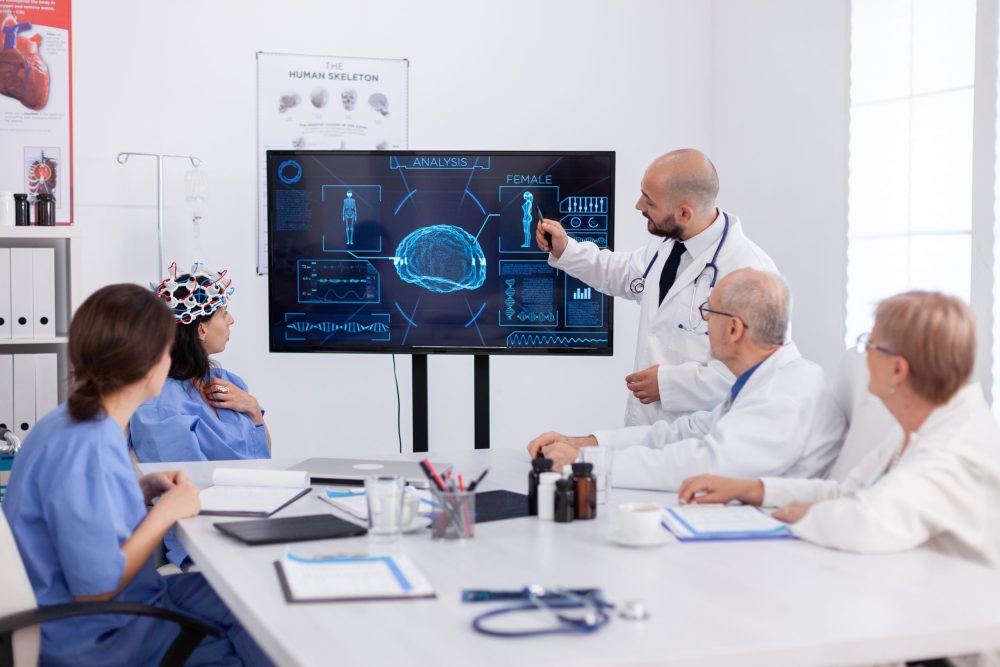
People living with brain injuries are playing a direct role in shaping how new medical technologies are developed, thanks to a programme designed to ensure innovations meet real-life needs. The initiative brings together patients, clinicians, and technology developers in online sessions where research plans are presented and refined based on feedback from those with lived [...]

A programme that connects brain injury survivors with technology developers has led to design changes in at least nine research projects, according to new findings. The initiative involves one-hour virtual sessions where innovators, including small-medium enterprises and clinicians, present their research plans to selected groups of patients with relevant expertise. More than 20 sessions have [...]


