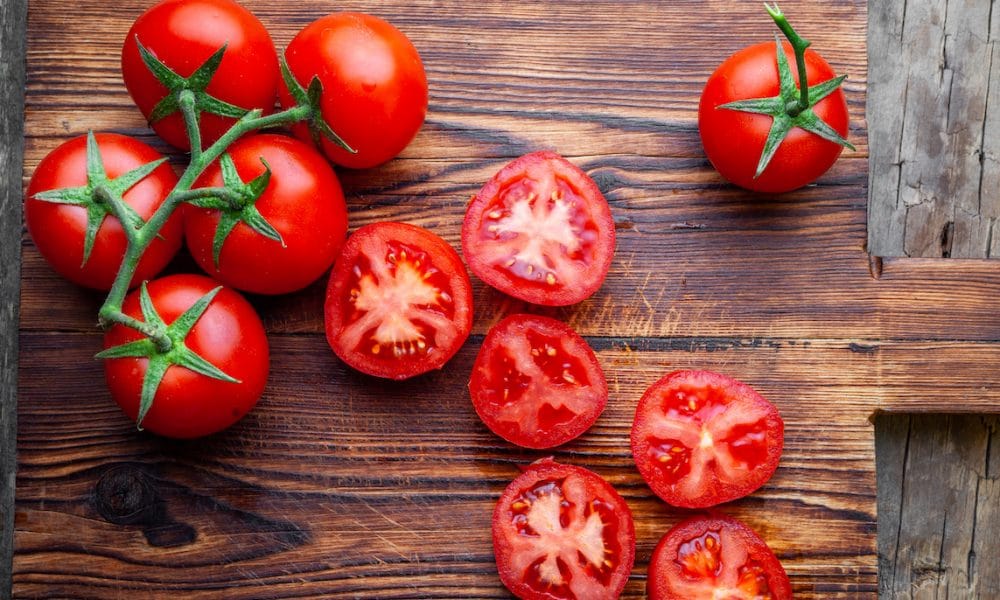
Pasta sauce, ketchup and soup are all tasty uses for tomatoes – but according to new research the fruit has the potential to help Parkinson’s patients through its unique ability to carry a critical chemical.
Scientists from the John Innes Centre in Norwich have developed a genetically modified tomato which is rich in the drug L-DOPA – one of the most common treatments for Parkinson’s disease (PD).
The medicine has been used to treat PD since the 1960s and was declared an essential medicine by the World Health Organization (WHO).
Researchers at the John Innes Centre modified the tomato by introducing a gene responsible for the synthesis of L-DOPA in beetroot, where it functions in the production of the pigments betalains.

This elevated the level of L-DOPA specifically in the fruit part of the plant and led to higher yields of the drug.
Previously the substance was chemically synthesised, but because tomatoes can be so widely grown this study opens the potential for the mass production of the chemical in an affordable and more natural way.
This could specifically help developing nations that previously may have struggled to afford the drug.
The typical cost of L-DOPA is around $2 a day, but if the findings of the study are advanced then these poorer countries would be able easily to grow the drug themselves, greatly reducing the cost.
Study author Professor Cathie Martin said: “The idea is that you can grow tomatoes with relatively little infrastructure. As GMOs (genetically modified organisms) you could grow them in screen houses, controlled environments with very narrow meshes, so you would not have pollen escape through insects.
“Then you could scale up at relatively low cost. A local industry could prepare L-DOPA from tomatoes because it’s soluble and you can do extractions. Then you could make a purified product relatively low tech which could be dispensed locally.”
The tomatoes used in the study produced around 150mg of L-DOPA per kilogram, which was similar to that of other plants rich in the substance.
However the tomato does not come with the other medical and practical issues these other plants possess and it also helps reduce its side effects which include nausea and behavioural complications.
“We have demonstrated that the use of the tyrosinase-expressing tomatoes as a source of L-DOPA is possible,” said the study’s first author Dr Dario Breitel.
“It’s a further demonstration of tomato as a strong option for synthetic biology.
“Additionally, there were surprising beneficial effects including improvement in shelf-life and raised levels of amino-acids that we can investigate.”