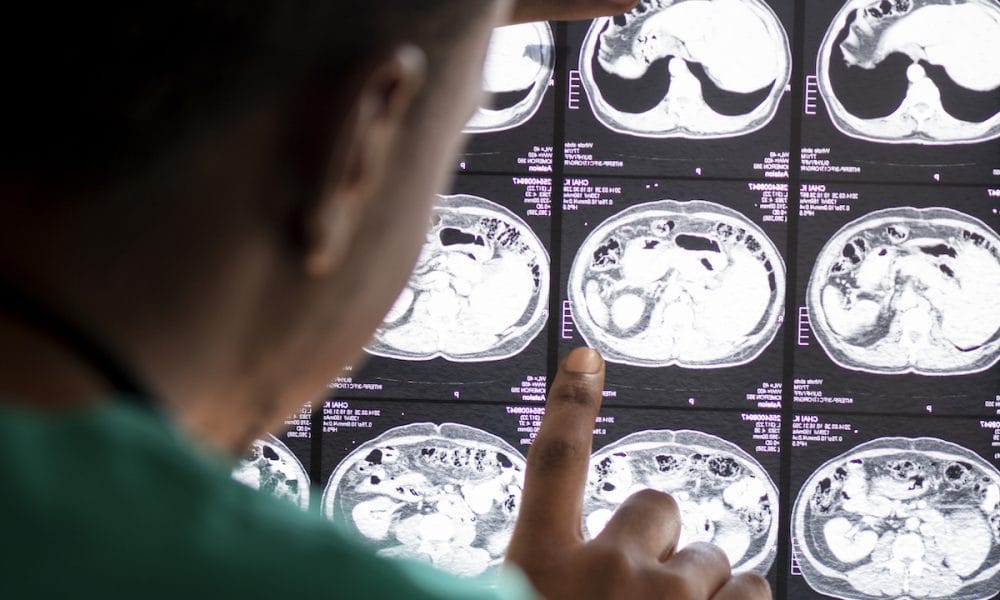
New MRI techniques to show what is happening in the brains of people with multiple sclerosis (MS) could have the potential to predict disability from the early stages of their condition, new research has revealed.
Through assessing microscopic changes in the brain at the earliest opportunity using MRI, scientists now believe this has the potential to indicate the level of disability the person may face in the future.
The study by University College London (UCL), funded by the MS Society and Rosetrees Trust, combined advanced MRI techniques to show the smallest of changes happening in the MS brain.
The team at the Queen Square MS Centre observed 42 people who had experienced their first MS symptoms in the previous three months and, compared to healthy volunteers, found their MRIs showed alterations in sodium concentration, a fundamental element for our brain function and the brain microstructure.
Crucially, the scale of these changes corresponded to subtle signs of disability, like slower walking speed and higher EDSS score, suggesting these previously undetectable changes could be contributing to such disability.
If they also prove to be related to disability build-up, they could even be used to more accurately predict how someone’s MS will affect them in the future – though further longitudinal research on the 42 subjects is still going on.
MS can cause a range of symptoms, including fatigue, vision problems, numbness, pain and mobility problems, but is unpredictable and different for everyone in its development.
The uncertainty of how the condition will manifest – both in terms of symptoms and severity – is often a major cause of concern for those affected. This uncertainty depends also on the fact that MRI, the primary tool used to diagnose and follow up MS patients, can only see a small part of the complex MS damage that occurs.
However, through the new research, published today in Brain, the potential of MRI could be exploited in much greater ways going forward.
“MRI plays a vital role in how we diagnose MS and monitor it throughout someone’s life, and that has been the case for decades. But traditional techniques don’t tell us the whole story,” says Dr Sara Collorone, a neurologist and clinical research associate at UCL and author of the study.
“This development is exciting because these new techniques go way beyond what we can do with conventional MRI, allowing us to see damage and alterations in brain tissue that we haven’t seen before in early MS.
“This approach can provide valuable information about early MS damage that previously has only been obtainable through post-mortem studies on brain tissue from people with advanced MS.
“By providing clues on how MS will progress, it is hoped these techniques will lead to a better long-term prognosis for the newly diagnosed – as well as greater certainty for the future.”
The conventional MRI findings currently used in practice are unable to show the clinical variability of MS. White matter lesions in the brain and spinal cord are visible as white spots on an MRI scan, but these white spots provide comparatively little information on the degree or scale of damage, and the study found no association between white matter lesions and disability.
Disability in MS is driven both by inflammation and nerve loss, with the latter causing the gradually worsening, irreversible disability seen in progressive forms of MS. The alterations visible using these new techniques are indicative of damage to nerves, and may prove to be a very early indication of the likelihood of progressive disease. If this is confirmed in further long-term studies, clinicians could translate that knowledge into more targeted use of treatments in early MS, improving patients’ prognosis.
Such understanding could be particularly important if neuroprotective drugs start to emerge – a goal the MS Society’s Stop MS Appeal is striving towards within the next five years.
Dr Emma Gray, assistant director of research at the MS Society, adds: “MS is incredibly unpredictable, and giving people greater certainty about their future is one of our top organisational goals. We’re really proud to have funded this research, which could help provide that certainty.
“The next step is for the team to continue the follow-up study of this group of people living with MS, and confirm whether there is a link between these changes and how someone’s MS develops.
“If the changes can predict later disability this will be a game-changer for how the condition is managed, how future clinical trials are run, and eventually give people with MS the information they need to plan for their future.”