There are a number of methods used to treat Parkinson’s, but one emerging solution could also be the simplest.
Getting Parkinson’s patients moving and active is rapidly being recognised as one of the best possible treatments available.
A number of studies have shown the benefits it can have for those with the disease, with the Parkinson’s Foundation highlighting exercise as one of the most accessible ways to help.
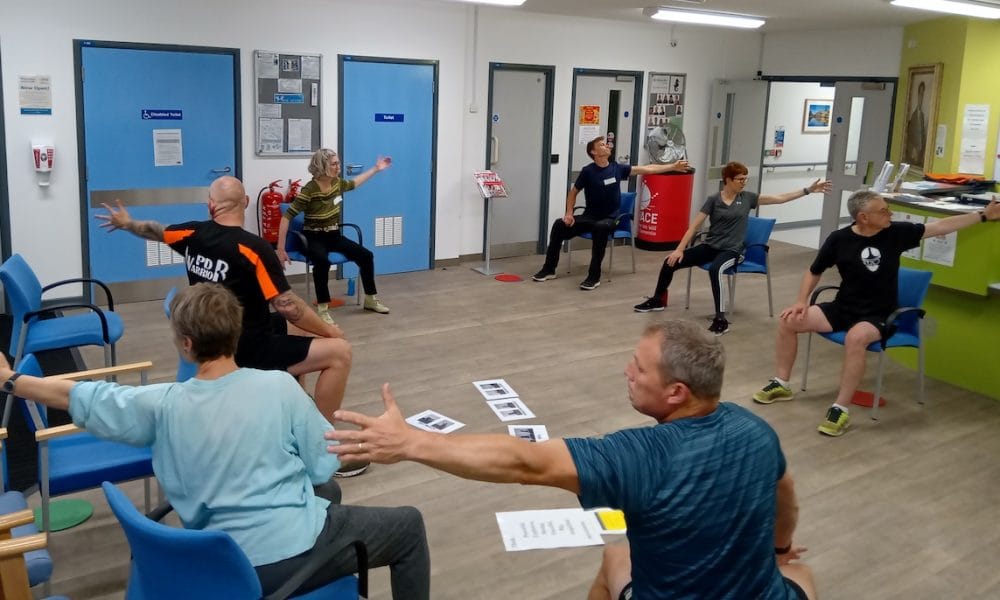
One group putting this research into practice is PD Warrior, a foundation based on offering fitness classes for those at all stages of the condition.
 From Australia to Europe, the support network is helping patients all over the world by showing them the benefits exercise can bring.
Those who get involved are introduced to the ‘10 week challenge’ where they take part in three classes a week that involves workouts specifically designed to help relieve their symptoms.
Alistair MacFarlane is an exercise specialist who got involved in the PD Warrior programme in 2016 having previously worked with patients with a variety of health conditions.
He helps run the group’s Bristol outlet and he explained to NR Times about what makes the course so unique.
“The PD philosophy is exercise which is specifically targeted, based on power, amplitude and high effort level,” he said. “That was what really attracted me to it, as it was quite different to what had been done before with Parkinson’s patients.
“When I was previously working with people with Parkinson’s, it was very much low level stuff, low intensity with just gentle movement and this was quite the opposite.
“We rely on big movements and pushing people to their limits as much as you can. The great thing about it is that they’re finding they’re able to do things they never thought they were capable of.”
Any sort of movement for these patients is always beneficial, with PD Warrior proving this in a number of forms.
The ten week challenge teaches ten specific exercises that patients can continue with, but the group also gets people moving in other ways such as dance classes and strength training.
Those that finish this course then graduate onto the group’s follow on classes where they can continue their development.
After completing the PD Warrior training course, Alistair helped bring the programme to Bristol in 2018 and has seen the impact it has had.
“We were expecting maybe a year down the line of doing the PD Warrior exercises, we may see some changes and improvements in some areas but we were seeing this after just ten weeks.
“To actually see some improvements in the speed of patients doing exercises or seeing their dexterity improve, as well as quality of life, we were just blown away by that.
“That’s why it’s such an exciting thing, it’s why I love working in this area and these improvements may be because of their physical condition or maybe because of their confidence.”
This confidence and support is another key reason why initiatives like PD Warrior receive such a good take up.
Often after a Parkinson’s diagnosis most patients are left worried and confused as to what the future holds.
The misconceptions around the condition lead a lot of people to think life is over for them, but showing them what they can do and connecting them with others who are in a similar position is vital to living a longer, happier life.
“As soon as somebody gets a diagnosis, they can tell them exercise is something you can do straight away.
 “We’re finding that helps a lot of people, especially those who are fairly young when they get a diagnosis and may not know anybody that has Parkinson’s.
“So actually they then get to meet other people who have had similar experiences and we find that support group is really helpful for them.
“The courses are run as a group of eight, so we keep it nice and small to build a really nice network, a group where they’ll get to know each other quite well.”
These results have led to large numbers taking up the scheme, with Alistair saying the ten week challenge courses are often over booked.
The events of the last year have also helped make made it more accessible, with a number of classes moving online to help people in any location.
The programme is now in eight countries, meaning the improvements exercise can bring to Parkinson’s patients is being felt across the world.
“More and more research is coming out saying exercise is so beneficial for people with Parkinson’s,” Alistair said. “So that’s music to my ears as an exercise specialist that I can work with these people and get some great results.
“It’s not a cure, we never say it is. What it aims to do is slow down the progression of Parkinson’s.
“That’s what we tell people, we aim for people to achieve that so they can live their lives longer and better with their Parkinson’s diagnosis rather than being affected in that way that comes to be quite debilitating.”