



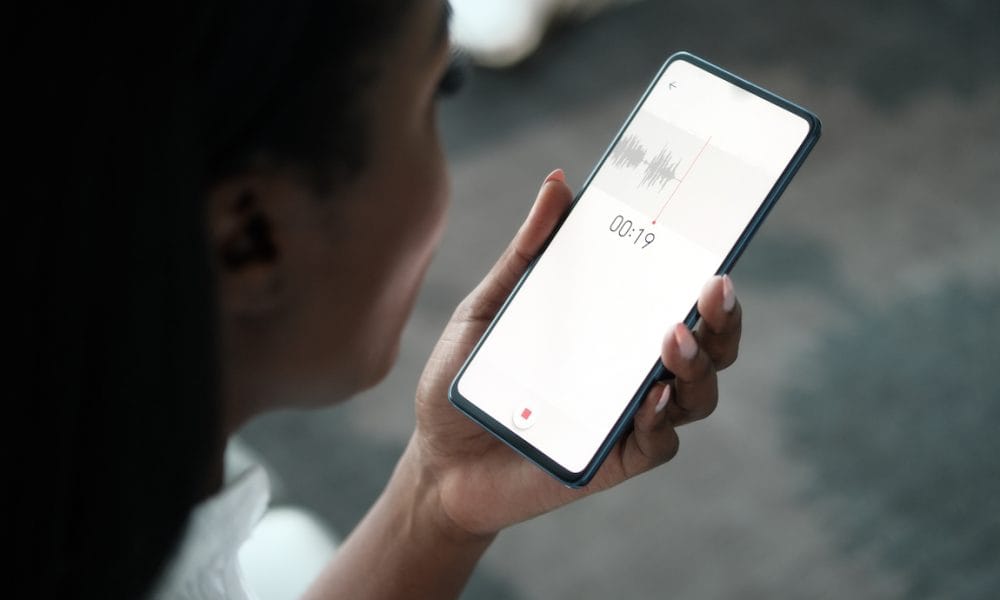
A team of scientists are exploring if pauses, pitch and voice intensity could predict the development of Alzheimer’s Disease.
It is thought that people with the disease tend to speak slower and pause more often as they try to find the right words.
The Alzheimer’s Society in the UK estimates that 850,000 people were living with dementia in 2019. It represents 1 in every 14 people aged 65 or over. It is thought this could rise to 1.5 million by 2040.
The study
The scientists used three machine-learning algorithms to assess voice data from 24 participants diagnosed with Alzheimer’s disease. They compared this to 99 participants without the disease. All those who took part were over the age of 65.
Participants were recorded speaking on the phone about lifestyle changes to reduce their risk of dementia as part of a public health program in Japan. They also took the Japanese version of a standard test of cognitive functioning called the Telephone Interview for Cognitive Status (TICS-J).
The team used vocal features from these recordings to train the machine learning algorithms to recognise Alzheimer’s disease against controls. The remainder of the recordings were used to test the performance of the resulting models.
Results
One of the algorithms, called extreme gradient boosting (XGBoost) outperformed the TICS-J. However, the difference was not high enough for statistical significance.
Scientists found that using several audio files from each participant made the predictions more reliable. The XGBoost and the TICS-J had a sensitivity score of 100% with no false negatives. This meant all participants without Alzheimer’s disease were correctly identified. XGBoost also recorded
no false positives with those already diagnosed. In comparison, the TICS-J only correctly identified 83.3%. The remaining 16.7% of participants falsely identified as having the condition.
App development opportunity
The scientists stated that the models could be incorporated into websites or apps. The apps or website could be used by the general public to determine if they show signs of early Alzheimer’s. This could mean earlier diagnosis and better help. It could also be developed for phone services for older people who are less likely to use apps or websites.
The team are planning to conduct the tests on a larger sample size to further validate their results.
Scientists from McCann Healthcare Worldwide, Tokyo Medical and Dental University, Keio University, and Kyoto University in Japan published the results in PLOS ONE.


