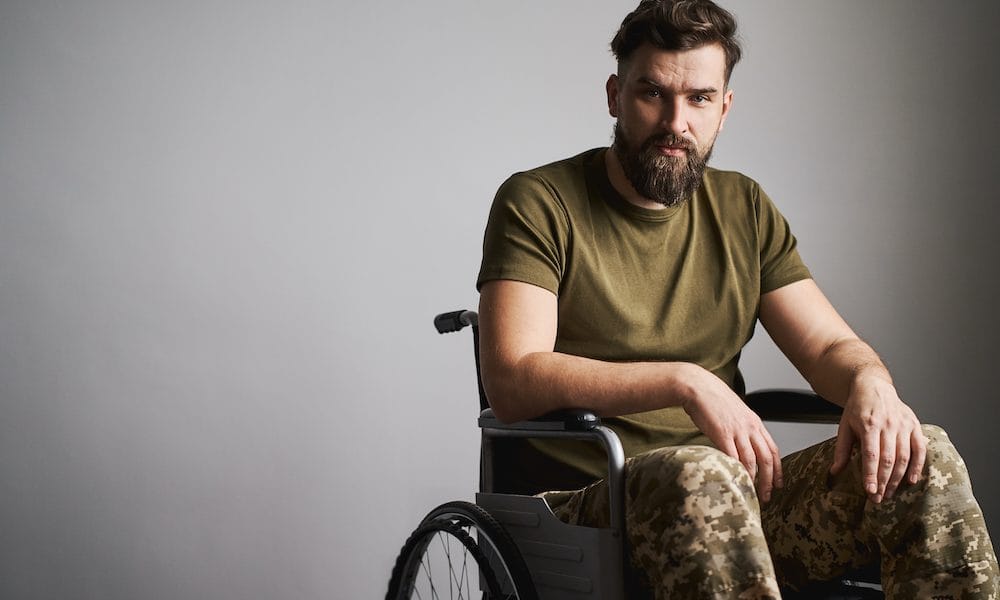
For seriously injured military personnel, the options around rehabilitation are increasing further with plans for a new National Rehabilitation Centre. Matthew Tomlinson and Rachel Seddon, from the military team at Slater & Gordon, discuss the importance of access to specialist support
For the majority of readers, initial treatment for their serious injury or illness will likely come from our exceptional NHS’ regional acute hospitals. When clinical rehabilitation, to assist those seriously injured is required, it is widely recognised that timely and tailored support is necessary to maximise the potential to return to a quality of life, and minimise further problems down the line. This is significant in relation to an individuals’ physical and mental health.
Getting people back to a meaningful life and capability following serious injury is a major policy area in Government. Return to work rates for people experiencing serious injury and trauma in England are below rates achieved in other European countries as well as rates achieved in the Armed Forces.
For seriously injured military personnel, the Defence and National Rehabilitation Centre (or DNRC) in Loughborough will already be a familiar part of Defence Medical Services, which comprises, in addition to the national Defence Centre, Regional Rehabilitation Units (RRUs), Units embedded within NHS Trusts, the Royal Centre for Defence Medicine and mental health services such as the DCMH (Departments of Community Mental Health) network.
The Defence Centre, or DMRC/Stanford Hall as it is known, is the state of art successor to the Ministry of Defence’s former Headley Court facility in Surrey. The facility, which is run by a Commanding Officer alongside uniformed staff and civilians employed by MoD, opened in 2018 and continues to treat and rehabilitate seriously injured members of the armed forces including those with serious neurological and spinal cord injuries.
In addition, plans to develop a ‘National Rehabilitation Centre’ (NRC) on the Stanford Estate (next to the Defence Centre) are gaining momentum and will be a very welcome initiative bringing world-class clinical rehabilitation for civilian NHS patients, as well as providing a national hub for training, research and development.
Recent reports suggest that, all being well, the green-light should be given later this year for construction of this new facility, with a target for treating patients by 2024. This is an exciting time in the future of clinical rehabilitation and the NRC will extend the success of acute services and established major trauma centres by providing a national centre of excellence in both patient care and innovation.
The recent and ongoing lessons of COVID-19 are showing the real value of excellent clinical rehabilitation in making a meaningful difference to an individual’s recovery and capability. For example, a specialist three-step rehabilitation programme developed at DMRC has been credited with saving the careers of military personnel with “long- Covid” (shortness of breath, fatigue, low mood and “brain fog”). The BBC recently reported that nearly all of the 150 patients that took part in the programme were able to return to work within three months.
The plans for the NRC appear to offer a unique opportunity to drive new rehabilitation products and technologies and improve accessible state of the art rehabilitation. The NRC would provide patient care focused primarily on treating patients within the NHS East Midlands region with the potential to treat patients referred from elsewhere in the country similar to the Defence Rehabilitation Model.
Already, the Defence establishment is acquiring new knowledge through, for example, Computer Aided Rehabilitation Environment and the cohort of patients treated at both the NRC and the Defence facilities must widen the opportunities for clinical research. The NRC facility itself aims to be transformative, leading in the testing and development of future treatments and techniques and the positives that can be derived from the Defence Rehabilitation Model and its collaboration with Defence Medical Services looks likely to bring about meaningful changes to injured individuals’ pathways.
Good rehab after serious injury is often described as ‘like a relay race’. Taking for example, the experience of our client, Soldier X. X was paralysed from the mid-chest down and would be graded T4 complete ASIA A paraplegic. He suffers from residual neuropathic pain, increased tone, spasms, impaired sensation and loss of power below the mid-chest and loss of visceral function. He has to self-catheterise and manually evacuate the bowels, and within a few years of injury, developed a syrinx, which is, along with syringomyelia, likely to further progress.
In the immediate aftermath of the injury, he went through numerous intensive and emotionally difficult stages of rehabilitation, including treatment at Stoke Mandeville NSIC.
During X’s Naval Service Recovery Pathway with Hasler Company, and numerous inpatient stays at DMRC Stanford Hall, he has been able to access tailored rehabilitation which has included hydrotherapy, 1:1 specialist physiotherapy and psychotherapy, and he has had the opportunity to complete successful trials of the ReWalk exoskeleton.
DMRC Stanford Hall has the feel of a military establishment in one sense and of somewhere very conductive to rehabilitation in a relaxed and personal manner. It has buildings and spaces specially designed to aid the recovery process including gyms, a range of swimming and hydrotherapy pools, a gait lab and “all the elements essential for its clinical purpose”, that is, to rehabilitate the most seriously injured members of the Armed Forces and also, importantly, return those who have been injured in the course of training back to work.
He is making good progress with his physical rehabilitation but acknowledges his ongoing challenges in terms of bowel and bladder care, sexual health and fertility, pressure sores, syrinx management, and mental health and so continuity and quality of care remains vital both now and beyond his medical discharge. In due course, Soldier X will likely engage with the Recovery Career Services which was launched as part of the Defence Recovery Capability back in 2013 with the mission of getting injured and sick personnel competing in the civilian employment market.
What the current Defence Rehabilitation Model seems to do very well is integrate all aspects of recovery including medical care, welfare, housing, education, reskilling, work placements, employment issues and opportunities. Whilst this remains an ideal care model and one that is decades ahead due to the combined efforts of the Services and the Service charities responding to carefully tailored individual recovery plans setting out a recovery pathway, if the NRC development plans can keep momentum, it presents a very exciting, and similarly patient-led opportunity to build the right environment for successful rehabilitation.
- For more information about Slater & Gordon’s specialist work with the military, visit here