
A doctor whose work has paved the way for the future of ‘mega data’ research into Cauda Equina Syndrome (CES) and its impact on patients’ lives has spoken of the importance of creating a more standardised approach to evidence-gathering.
Dr Nish Srikandarajah has created the Cauda Equina Syndrome Core Outcome Set (CESCOS), which has helped to define the outcomes that should be reported and enables the collection of evidence in a way that will allow for data synthesis.
Although research has been done into CES previously, Dr Srikandarajah discovered it was sporadic and completed in many formats, which would not allow it to be collated with other studies.
Through the creation of the CESCOS, research is now underway in at least two new studies, including one multi-centre UK study, which will enable more understanding of CES into the future – a huge benefit to patients who are often significantly disadvantaged by the lack of awareness around the life-changing condition.
“To get good evidence you need to be able to pool all of this data together and use it as one big mega data. If you fast-track ten years and have the mega data then you can make really good evidence-based guidelines,” said Dr Srikandarajah, a neurosurgeon at The Walton Centre in Liverpool, speaking on International CES Awareness Day.
“In scoping searches, you find there are a lot of papers out there but if we have a pyramid of how good studies are and the top of the pyramid is the best, the level of evidence we have for this syndrome is right at the bottom of the pyramid. If there’s five levels of evidence, with level one being the best, we’re hitting at three and four at the moment.

“What needs to happen is to reset the switch of this condition, it’s not a novel concept, it’s been done in other disease areas and I thought I needed to do this with CES through the CESCOS. The core outcome involves patients, professionals, key stakeholders and patients’ family members get most important outcomes.”
Through assessment of what research did exist into CES – a rare and severe type of spinal stenosis where the nerves in the lower back suddenly become severely compressed, which failure to diagnose and receive appropriate treatment can lead to risk of incontinence, paralysis and loss of sexual function – Dr Srikandarajah uncovered the fragmented nature of what was available.
“Studies are done retrospectively, what we need to do it to have in in trials and prospective studies where we’re actively looking it over time, and we haven’t got there yet with CES,” he told the first-ever CES Festival and Conference.
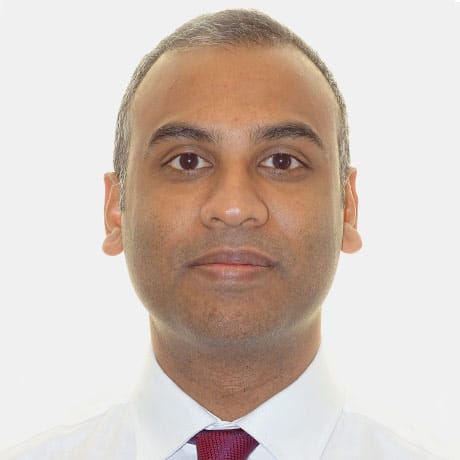
Dr Nish Srikandarajah
“When you look at these studies, one researcher may look at bag and leg pain, another may look at bladder as the most important thing, another may look at bladder and bowel.
“Then the issue you get after 15 to 20 years is how do you pull together these things, and on top of that they’re assessing it in different ways. One study might look at a bladder outcome and assess with one questionnaire and another may use a different one.
“So after 20 years of these studies you can’t put them together, essentially it becomes really difficult. The problem lies therein.”
Through a literature review and interviews with patients and healthcare professionals, grading what is important to them in terms of CES understanding and impact, the CESCOS was created. An International Consensus Meeting was also held to bring together participants from around the world.
Patient testimonials helped to articulate the reality of the situation they face, with a lack of knowledge and awareness, even from within many parts of the medical profession.
“If we came out of surgery and we needed a wheelchair, we’d probably be offered a lot more in terms of help and services…but because we come out and we’re still hobbling and walking, you’re going home with a leaflet,” said one.
Another said: “I don’t think people should be left alone with the emotional impact…the operation is over then you go home, you’re signed off and that’s it, you’re just left with it”
“I found a theme that a lot of patients were going through anxiety and reduced self worth. The process is so quick in hospital, you’re in then you’re out and you don’t have much support afterwards,” says Dr Srikandarajah.
But now with the CESCOS, research which can positively impact future understanding and awareness of CES can be made possible.
“It’s already been picked up by a multi-centre study in the UK using the Core Outcome Set looking at the different outcomes. The protocol has been put out in the BMJ, using the research we’ve come up with. Another study long-term outcomes using Core Outcome Set is already being used. All of these studies can be put together to make the solid evidence-based guidelines,” says Dr Srikandarajah.
“We’ve gone through a transparent international process, agreed with patient and healthcare professionals around outcomes, and this will improve consistency of reporting in the future and we can get better evidence-based guidelines.”