




Keen to shape the future of case management and encourage more healthcare professionals into the sector, Breakthrough Case Management is pushing the boundaries of tradition and helping to create a new future for clients and case managers alike.
Established in 2018 to deliver the person-centred service to clients which is of central importance to its founders Annabelle Lofthouse and Catrin May, Breakthrough is now helping to redefine rehab provision across the whole sector with its development of digital solutions.
Working alongside academic and scientific partners, Breakthrough aims to push the boundaries of rehab provision with digital innovation, which is set to provide a raft of new resources to case managers in the near future.
“I’d say we are changemakers, we believe in change being a force for good. We believe in innovation and enhancing rehab through digital solutions,” says Annabelle, who, like co-founder Catrin, is a registered nurse.
“We’re really keen to revolutionise how rehab services are delivered with a view to driving up quality. We are working on digital solutions which will add real quality and will make an impact.
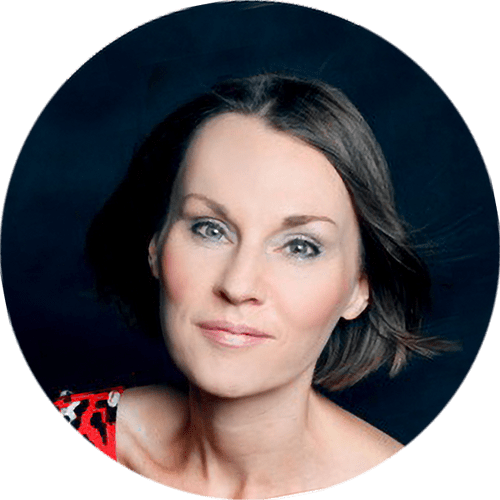
Annabelle Lofthouse
“But digital solutions will never replace the human touch and do not detract from the value of one-to-one care. We passionately believe in the value of in-person support. Our whole ethos is founded on delivering what is in the best interests of the client.
And it is that ethos which inspired the creation of Breakthrough, a case management business based in the South West, which routinely operates across the South of England but also has clients throughout England and Wales.
Growing strongly and continually adding new highly skilled case managers to its team, Breakthrough’s foundation comes from a shared desire from its founders to drive the sector forward.
“Catrin and I have never wanted to reinvent the wheel, but we did want to sprinkle our own magic into the industry,” says Annabelle, who has worked in healthcare for over 30 years.
“We know what high-quality, great rehab looks like and that’s what we wanted to deliver. It’s never about one size fits all, and nor should it be. We want to stay true to who we are as clinicians and want to make a difference, that’s what makes you feel good at the end of every working day.
“We’re a growing business but we have determined from the offset to avoid becoming too corporate, as people come to us for the personal touch. In case management, the relationships you build with clients and professionals can last for years, and it’s fundamental to our business that we are person-centred and ever present in everything we do.
“We have a team of high performing people here at Breakthrough who completely share this ethos, and by doing the work we’re doing, we hope to raise the profile of case management.
 “It could be a great career move for anyone wanting to use their clinical skills and expertise in a different environment, many health care professionals aren’t aware of case management as a unique and distinct discipline.
“This was certainly true for me when I first got involved in this field of practice – the role wasn’t very well known back then, this is thankfully changing a little but I think there is much more to be done to promote career options in rehabilitation.
“We’re on something of a mission to help change that and to raise the profile of case management.”
Having become established as a key name in the sector, Breakthrough began to look at other opportunities to bring high-quality and much-needed provision to healthcare. In addition to its core offerings, the business has ambitious plans to branch even further into wider health and wellbeing initiatives, which Annabelle describes as being “very much a case of watch this space”.
Its care division, Breakthrough Care, has played a vital role over the past 18 months during a time of uniquely high pressure for all providers, going from plan to reality within a few weeks after the outbreak of the COVID-19 pandemic.
“Breakthrough care has gone from strength to strength and we continue to build strong relationships with the NHS, local

Catrin May
authorities and commissioners,” says Annabelle.
“We’ve always thought outside the box anyway, but the advent of SarsCov2 saw us mobilise and push forwards with planned innovations so that we were well placed to make a difference in every way we could.
“In addition to looking after our clients and case managers, we wanted to support care. Developing our care service has been really rewarding and the response has been very good. We’re not about providing ad-hoc rehab or care, we look at providing rehab-focused solutions which promote recovery.
“As case managers, we recommend, implement and co-ordinate rehabilitation for clients who have suffered life-changing and catastrophic injury so we know the very real difference effective intervention and support delivers.
“We drew on our case management expertise and the fact we know what great rehab looks like to create a new and innovative care solution.
“It’s a different approach and one we are very proud of. We know that if you can create a situation where functional recovery is promoted and enabled every day, you can achieve great results.”
While still a relatively young company and having weathered the storm of a global pandemic – alongside expanding to provide a suite of complementary services – Breakthrough sees its role going forward as helping to lead the thinking digitally, while never compromising on the personal touch for which it is known.
“If you have digital tools in your armoury which enable you to deliver better health, wellbeing, care, rehabilitation and recovery outcomes, then winning hearts and minds becomes quite easy,” says Annabelle.
“On paper, some digital ideas and solutions might not sound like something people may want to consider, particularly in an increasingly remote world with so much virtual communication, but I think it’s likely to be a situation where you try something and wonder how you ever managed without.
“There is a lot of really innovative work going on and we’re so passionate about helping to make change and be the change.
“It’s not about replacing person-centred care or losing the personal touch – it’s about adding to that and giving the best possible quality of rehab you can.”


