Disabilities Trust expands team to increase neurorehab support

The UK’s biggest not-for-profit brain injury service provider is recruiting into roles throughout its therapy offering across the UK, as it looks to increase its neurorehabilitation provision even further to support soaring demand.
The Disabilities Trust is looking to bring in new clinical resource to many of its 13 inpatient centres across England, Scotland and Wales, to help build its offering to patients further.
Under the supervision of new clinical director Dr Rudi Coetzer, a consultant neuropsychologist who joins the Trust after 23 years with the NHS, strategic new appointments are being made across its neuropsychology, speech and language therapy, occupational therapy and physiotherapy services.
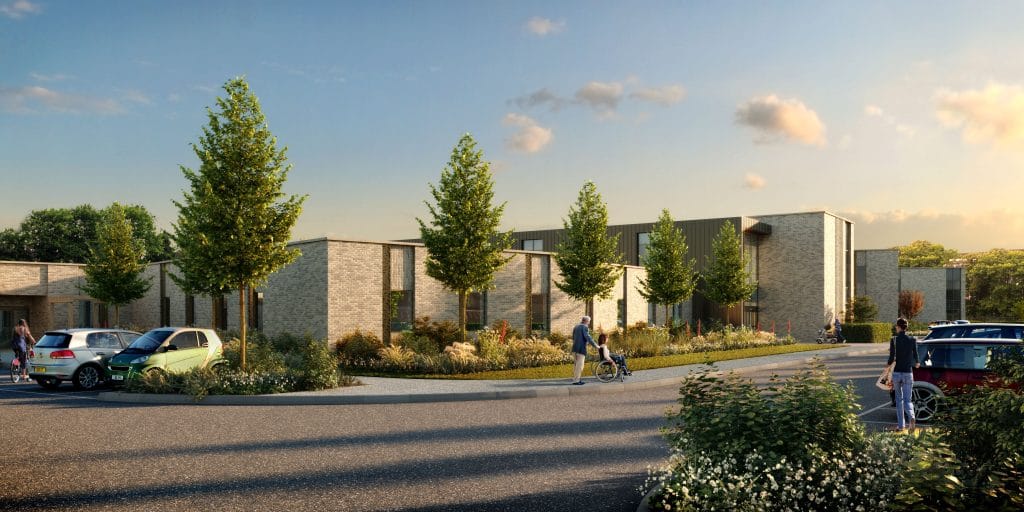
Investment continues to be made in its centres across the UK, with the Trust recently securing planning permission to create a new state-of-the-art brain injury hospital in York, relocating from its current site in the city and retaining 145 healthcare jobs.
The Trust has a stellar reputation for its ability to return patients to the community, with its discharge rate standing at 97 per cent for 2019/20 – including 73 per cent who were discharged to more independent settings – and is keen to build its provision further to continue to deliver the best possible outcomes to patients.
“We want to find the best people who can improve the lives of our service users, we are looking unit by unit to find the right people. We want to invest in the best staff who can deliver the best care to our patients,” says Dr Coetzer.
“There are a limited number of beds but infinite demand, and while bricks and mortar is one thing, it is our staff who are making the difference. Before I joined the Disabilities Trust and was working in the NHS, one of the key reasons I referred patients here was because of its outcome measures, one of the most important being discharge rates. This is achieved by the work of the fantastic team.
“We know there are a finite number of clinicians, but we are keen to find people who want to join us who can help develop us as a Trust, and who we can support and develop in their roles. Staff development is crucial to us and we are committed to giving this development.”
The Trust has a strong neurobehavioural specialism, with an emphasis on the discipline in several of its centres, and Dr Coetzer plans to update its existing model to ensure it is following the very latest in evidence-based practice.
“We will build in the latest research and clinical research and work with colleagues to make sure this is the right model for us now,” says Dr Coetzer, also an Honorary Professor at Bangor University.
“The model was first developed ten or 20 years ago, and while it has been revised over that time and is a great model, as with any treatment, there have been developments and advances. The creation of this updated model makes this a very good time for the right people with energy and enthusiasm to join and grow alongside us.”
During the 40 years it has been in existence, the Trust has become known for its research and the new insight it has helped to share in a host of disciplines, gaining national attention for projects such as its commitment to highlighting the situation around ABI in the criminal justice system.
For Dr Coetzer, research is something he is keen to maximise at the Trust post-pandemic.
“I really want to push the research agenda again. The Trust is widely known for its research, but that has stalled during the pandemic. Through research and the dissemination of research, we can learn how to improve the lives of patients,” he says.
“We also have Bangor University as a research partner, which is an internationally-renowned for its work in neuropsychology and neuroscience, so this will help to rekindle the research the Trust is known for.
“It is an ambition for us to hold some events, perhaps a conference, and get some speakers so we can share this. That is something we would like to do and is one of my goals.”