Who am I? Arguably life’s most defining problem. The answer as we all know is identity. But this is not the complete answer because “who I am”, my identity, is an all-encompassing system of memories, experiences, feelings, values, roles, thoughts and relationships.
When I am asked who I am my answer is likely to be multi-faceted and the answer will depend on the situation I am in. I might say. I am a mum, a wife, an Ouma (Grandmother), a sister, a clinical neuropsychologist, a friend, a regular church goer and so the list goes on.
This question permeates my working life as I sit with patients who want to know who they are now, how they can be who they used to be. They are scared, frustrated, anxious and believe that they can no longer be “me”. They face what the world calls an “identity crisis”. They are looking backwards prior to the traumatic, sudden, life changing experience they have gone through to this moment in time, to now after the brain injury.
This exploration highlights a gap, the gap between who they were before to who they are now. It is this gap that leads to the questions of “Who am I now?”, “What can I do now?”, “Where do I fit in?”.

Dr Anita Rose
Prior to their injury they had roles, “identities”, felt valued, helpful, independent, and confident in their life’s purpose. But now they report feeling lost, useless, frightened, insecure, stupid, lazy, and unreliable.
The gap seems insurmountable as they will report feeling they have gone from being kind, caring, and happy, to angry, sad and being a burden. These feelings are driven by the comparison of self-perceived capabilities pre- and post-injury. Such comparisons lead to the experience of “I am not me anymore” as the brain injury at a deeper level alters the sense of self and the qualities that define who they once were.
When I first started working in neuropsychology many years ago, I found the concept of loss of identity a real challenge. How can I support those whose lives have been dramatically changed “in an instant”, who maybe now very physically disabled and cannot return to their employment, their sport, their previous life?
I noted that many times individuals would turn to those around them to feed their self-worth. They would seek reassurance and praise from others to feel okay about themselves. Whilst in the moment such validation might support their emotional wellbeing, dependency on external validation is extremely detrimental.
Often patients would be perceived by caregivers as presenting with behaviours that challenge because they might be seen as demanding, for example constantly buzzing their call bell for reassurance. The reality is that sense of self should not come from other people but come from within. The most important relationship we can have is with ourself.
Over the years of clinical work, participating in research and listening to my patients stories I have learnt that the only way to support a person to develop that new sense of self is to recognise each patient brings with them their own unique life history, values and social context.
I have found that for many of my patients it has been about working together in a collaborative and supportive therapeutic relationship, a collaboration where the individual in is the centre. Based on mutually agreed goals we start out on a journey of rediscovery.
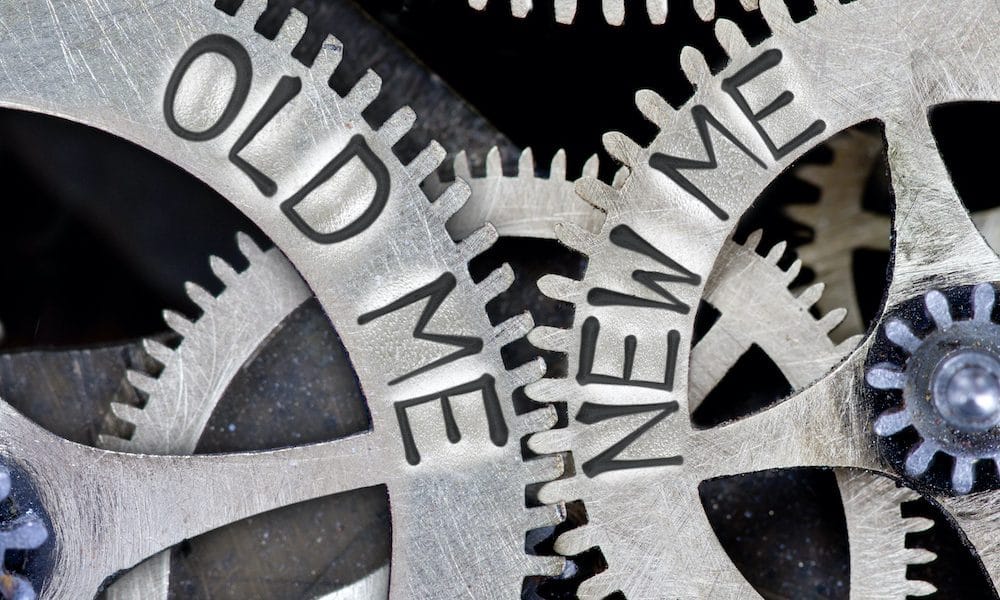
The initial stages of the journey are about grief and loss and enabling someone to express their grief and being given permission can be very powerful moment. The next stages are often around building awareness of the results of the brain injury as much raising self-awareness of the “me before” and the “new me”.
What is different? What is still the same? Can we build the bridge between the two parts of “me”?
Moving along the journey we start to look at the most important relationship in their lives, the one with themselves. When self-identity is challenged the ability to be compassionate towards one’s self is reduced. Finding news ways to promote self-compassion i.e. kindness and understanding towards one’s self can support the individual in finding meaning in their lives and achieve their personally valued goals.
Kenneth Gergen (1991) said: “One’s identity is continuously emergent, re-formed, and redirected as one moves through the sea of ever-changing relationships. In the case of ‘Who am I?’ it is a teeming world of provisional possibilities.”
The journey can be full of mountains and valleys, monsters to face but in my work at Renovo Care Group we recognise the various challenges these cause both the individual and their families.
We appreciate the need for a directed multi-disciplinary approach to work collaboratively with our patients by supporting them to re-engage in meaningful activities and to find meaning in their life following their brain injury. In other words, we are trying to re-establish the “bridge” across the gap between old and new. We support the patient along the journey leading to the “new me” after brain injury and look at how a comprehensive IDT evaluation and treatment of the “damaged sense of self” can lead to increased self-esteem, self-efficacy, and self-empowerment. All this leads to an improved quality of life for both our patients and their families.
But to end, it is the patient voice that speaks the loudest. A recent patient after going through this journey spontaneously said in his last session, whilst leaving the therapy room, “I have re-found myself”. He may still be profoundly disabled as a result of his brain injury and not met his original goal to walk again, but he has found an identity, a new sense of self that has emerged and reformed as he has found reconciliation between his self “before” and his “new me”. A bridge has been built across the gap.
It is for this reason that I find my role, and the role of the IDT (Interdisciplinary Team), in neurorehabilitation so fulfilling. As a patient learns to be self-compassionate, moves towards reconciliation and acceptance of the “new me”, regardless of whether or not their original goals have been met, the end of their rehabilitation process has been positive as they leave feeling empowered and able to believe they have a world of “teeming provisional possibilities”.