In the UK, the average patient will see a GP around seven times a year, according to the Royal College of GPs. This is a rise from 20 years ago, when a patient would see their family doctor around three times a year.
With an average appointment time of 9.2 minutes, British patients see their family doctor for less time than patients in the United States, Sweden, Canada, Spain and Japan.
There are 8,760 hours in a common (not leap) year. In the UK, patients have about one hour per year on average with a UK GP. During the other 8,759 hours, symptoms come and go over weeks or months, so what is recalled at the consultation may not be accurate. Such symptoms sometimes just go away, but at other times these symptoms are a sign of something that needs treatment. We are often told “if it doesn’t go away within x days, see your GP”. Yet 2020/1 has made this more challenging to do, whether virtually or face-to-face.
So much to say – so little time
There’s the challenge of getting the phone call answered at the GP surgery, getting a consultation time that suits and the anxiety of getting there and waiting for your time slot. How easy is it to forget some of the detail of the illness? How can doctors solve problems with imperfect information and poor communication as well as recall error? Is “doorknob syndrome” becoming a greater problem?
Healthwatch UK advises: “Before you see your GP, think about what you want to say. You can always write down your symptoms, worries and any questions that you would like to ask, so you don’t forget.”
Similarly, Cancer Research UK and other organisations provide tips to help patients to get the most from such precious but brief appointments. Top of their list are:
- Write down your symptoms including when they started, when they happen and how often you have them.
- Write down anything that makes them worse or better.
How many patients do this, or have the capability or opportunity to do it even more effectively?
Empowerment?
How can doctors feel empowered when their time is so pressurised, when there is a tsunami of data, information and knowledge let alone a mountain of paperwork and covid precautions on top of that? How can patients feel empowered when it is so difficult to see a doctor when they are most worried about their signs and symptoms?
COVID-19 makes things more complicated. Patients with multiple symptoms that vary from day to day find it especially hard to give a clear and concise summary. Even worse if they have fatigue and brain fog. Recall error is more of a problem. Could the patients be more empowered?
Symptom-tracking and real time data
There is a conundrum – how do we empower the patient-doctor relationship and strengthen the therapeutic alliance when there is less face-to-face time and longer waiting lists and more complex conditions? Achieving any of these might be easier if there was an increase in consultation time.
This draws attention back to the advice to patients to prepare to get the best from their consultation, how can digital technology help a good proportion of patients to do this ahead of the consultation? It is accepted that all patients will not use technology.
Accurate responses to questions about when symptoms started or when they happen and how often they occur could become digital real time data – provided this is sufficiently easy and well-structured. The acceleration of public health awareness and communication between doctors and patients via NHS Digital tools regarding symptoms has been a legacy of covid-19. While accepting that all patients won’t need or want digital, empowering those who do want or need it can relieve some pressure on the system as a whole and, over time, more will embrace it.
TIYGA™ – time is your greatest asset
So how do we manage to utilise time with GPs, nurses and specialists more efficiently? Patients and doctors must use their time together more productively and anything that can be captured, measured, calculated, and displayed in the right way ahead of the consultation must happen. Healthcare professionals are trained to deliver consultations, but patients are not trained in how to prepare to see different healthcare professionals with different specialities. In these time-poor days, it is more important than ever that patients present the right data to the right person at the right time and in the right place.
Personalised medicine is increasingly important in preventing, predicting, and managing many health conditions and we don’t just mean at genomic level, but more holistic treatment and accepting that not all one size fits all. In 2019, the UK had 55.5m smartphone users and this is expected to rise to 64.9m by 2025. According to Statista, in 2024, the smartphone user penetration rate is expected to reach 88.1 per cent of the total UK population – 93.7 per cent in 2025. In 2020, 70 per cent of 55–64-year-olds owned a smartphone. How can we justify not making better use of this high adoption rate?
Talk to many clinicians and they’ll tell you that all their patients don’t have a smartphone and don’t have access to broadband. In 2020, the overall share of households in the United Kingdom (UK) that had access to the internet was 97 per cent. The overall share of households in the United Kingdom (UK) with internet access was six percent higher than the average of the European Union (EU-27).
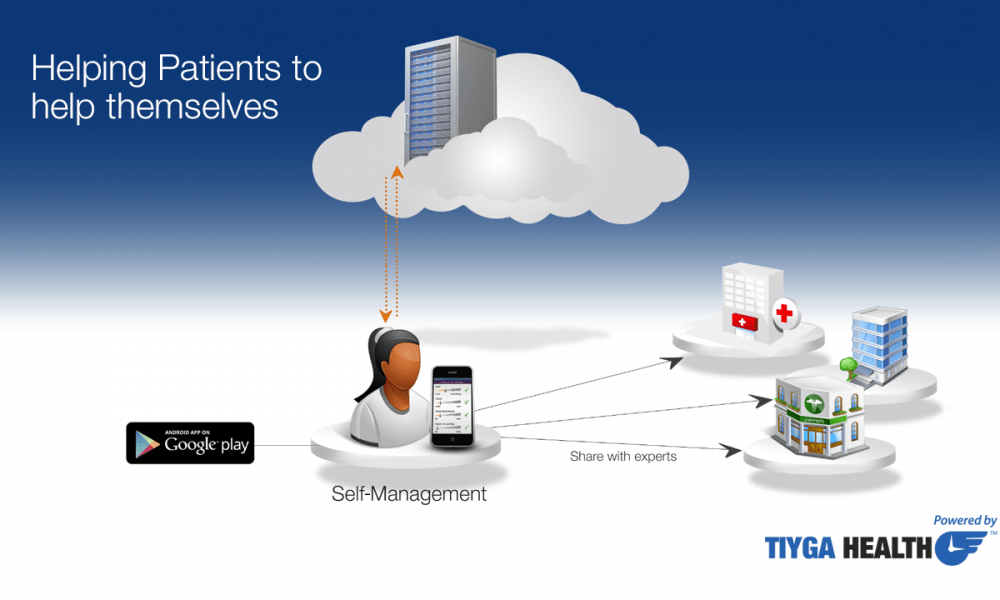
The challenge is not in the technology. We send people into space, we replace human vital organs, we can replace joints and even create and successfully rollout vaccines to fight novel virus at record speed. Do we encourage people to use popular consumer devices to record simple, routine health data in a way that can help our healthcare professionals to get more efficient input to consultations?
We will always need GPs, and nobody expects every poor pensioner to become a geek but symptom-tracking by smartphone could reduce the time many patients need to spend with a GP, fewer consultations might be required to make a diagnosis and the first consultation at secondary care could be more efficient. Taken together, these factors could reduce some pressure on waiting lists.
- By Katrina Delargy of TIYGA Health