
A landmark study has been launched to better understand why millions of people around the world develop brain diseases, with the goal of pinpointing disease biomarkers before clinical symptoms present themselves.
The Cleveland Clinic Brain Study – the largest clinical study ever for brain disease – will collect data from up to 200,000 neurologically healthy individuals over a 20-year period to identify brain disease biomarkers and targets for preventing and curing neurological disorders.
One in every six people around the globe has a neurological disease such as Alzheimer’s disease, Parkinson’s disease, multiple sclerosis, stroke or epilepsy.
While the medical community has learned to manage some symptoms of brain disorders, it remains challenging to predict who will become sick or how to cure – or even stop the progression of – these diseases once they are diagnosed.
Led by Dr Andre Machado and Dr Imad Najm of Cleveland Clinic’s Neurological Institute, the longitudinal multi-year study will work with a multidisciplinary team of doctors and scientists from across the global health system.
“Disrupting neurological diseases is one of the greatest challenges of our time and motivates our clinicians and scientists every day,” said Dr Machado, chair of the Neurological Institute and the Charles and Christine Carroll Family Endowed Chair in Functional Neurosurgery.
“By launching a study of this magnitude, we have the potential to discover causes of neurological disorders and what happens before symptoms become obvious – the silent phase.
“Our hope is to change the course of neurodegeneration, with the long-term goal of curing diseases in their earliest stages, years before symptoms are even seen.
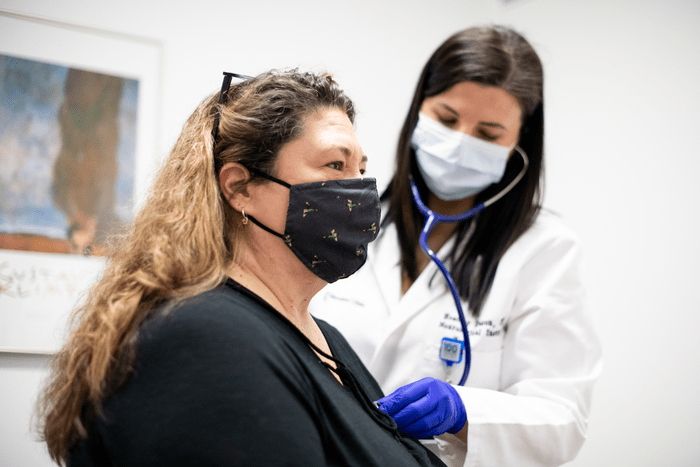
Participant in Cleveland Clinic Brain Study is examined by the research team
“Achieving this will be a great gift to our children and grandchildren. We can make neurological care better for the next generations.”
The initial phase of the study will enrol 10,000 volunteers over the first five years who will be examined and thoroughly investigated.
This will include adults aged 50 years and older with no known neurological disorder and neurologically healthy adults aged 20 and older who have a close relative diagnosed with multiple sclerosis.
Participants will undergo yearly assessments including neurological examination, blood work, eye retina scans, brain MRIs, EEG and sleep studies and other cognitive function tests.
Using advanced computing tools, researchers will collect data points from the study volunteers. Collectively, these data points will form a trend line to capture the genetic risk factors, and invisible molecular, structural, neurophysiological and cognitive/memory changes in the brain over time.
Researchers will seek ‘disease fingerprints’ to help guide diagnostic and preventative medicines.
“By researching at-risk healthy individuals over the course of 20 years, we will learn what is happening to the brain and body before a neurological disease is diagnosed,” said Dr Najm, vice chair of the Neurological Institute for Strategy and Development and director of Cleveland Clinic’s Charles Shor Epilepsy Center and the Joseph H. and Ellen B. Thomas Endowed Chair in Epilepsy.
“This research will help us understand the mechanisms of brain diseases and lead to the design of preventive treatment for neurological diseases. This is precision medicine in its best form.
“We’re building a foundation to screen one person at a time – potentially with something as routine as a blood test – to diagnose brain disease on the spot and prevent it from happening altogether.”