




A €10 million project to deliver precision medicine for Motor Neuron Disease (MND) has launched.
The academic, clinical and industry research programme will result in advanced, data-driven prediction models for progression of MND, also known as Amyotrophic Lateral Sclerosis (ALS), in patients and next-generation data analysis to facilitate clinical insights and treatment.
Precision ALS is led by ADAPT and FutureNeuro – two Science Foundation Ireland research centres – who will work in partnership with TRICALS, an independent consortium of leading ALS experts, patients and patient advocacy groups across Europe.
It is hailed as providing an innovative and interactive platform for all clinical research in ALS across Europe, that will then harness AI to analyse large amounts of data.
As the largest international multimodal dataset aimed at precision medicine for this condition, Precision ALS will address the issues with gathering new data at scale in a timely and cost effective-manner across multiple international sites in order to present that data in real time to clinical scientists.
The project – supported by €5 million funding from Science Foundation Ireland, with an additional €5 million from industry partners – is also being backed by national and international industry partners and charities.
Director of the Precision ALS research programme and professor of neurology at Trinity College Dublin, Professor Orla Hardiman, said: “Despite significant advances in pre-clinical models that help us understand the biology of disease in animals, the success of clinical trials has been disappointing.

“ALS is a disease that only affects humans, and there is increasing recognition of the need for a precision medicine approach towards drug development.
“We know now that ALS is heterogeneous, meaning that it has different causes and different patterns of progression. Large numbers are required to understand these differences.
“Using ‘big data’ analyses, Precision ALS will provide an in-depth understanding of the factors that drive heterogeneity, and in doing so will for the first time allow us to target new and innovative treatments to specific patient subgroups.”
Speaking at the launch, Tánaiste and Minister for Enterprise, Trade and Employment, Leo Varadkar, said: “This project straddles clinical research and industry, and will combine the best of our technologies, the best of our ideas, and the best of our medical expertise with to potential to change lives for the better.
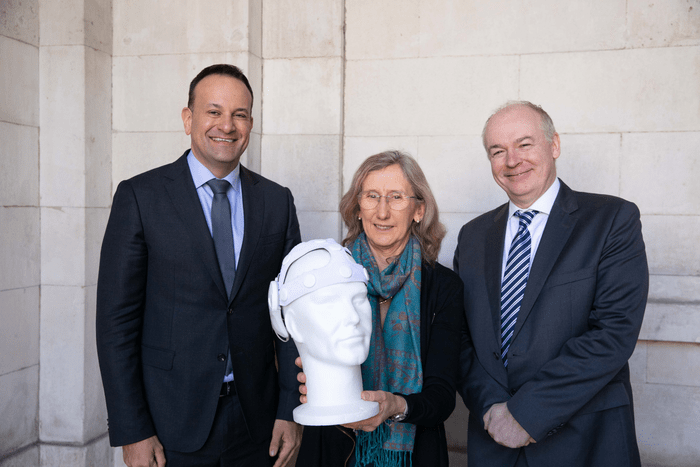 “It will develop tools that facilitate clinical trials based on precision-medicine, and has the potential to produce benefits for other rare conditions and diseases, supporting job creation and reducing drug costs.”
Using big data analysis, Precision ALS will provide the technology to improve our understanding of how these factors impact the development of the disease. This in turn will inform which treatments will work for each individual, instead of a one-size-fits-all approach.
Professor Vinny Wade, director of the SFI ADAPT Centre for AI-Driven Digital Content Technology, said: “Precision ALS brings together a perfect mix of data and technology research skills to trailblaze discoveries in tackling these devastating diseases.
“Our experience in researching these datasets for immediate interrogation using AI will help identify contributing factors and increase our power to discover changes linked to disease.
“Unlocking this data in an ethical way is the key to achieving the research mission and realising true ‘precision medicine’. This pioneering work will lead to transformational change for patients with a ripple effect that will positively impact society.”


