Sounds of a Newcastle United winning the FA Cup through to a train leaving Aberystwyth and the sounds of nature are all part of a pioneering new game designed to help people living with dementia and brain injury.
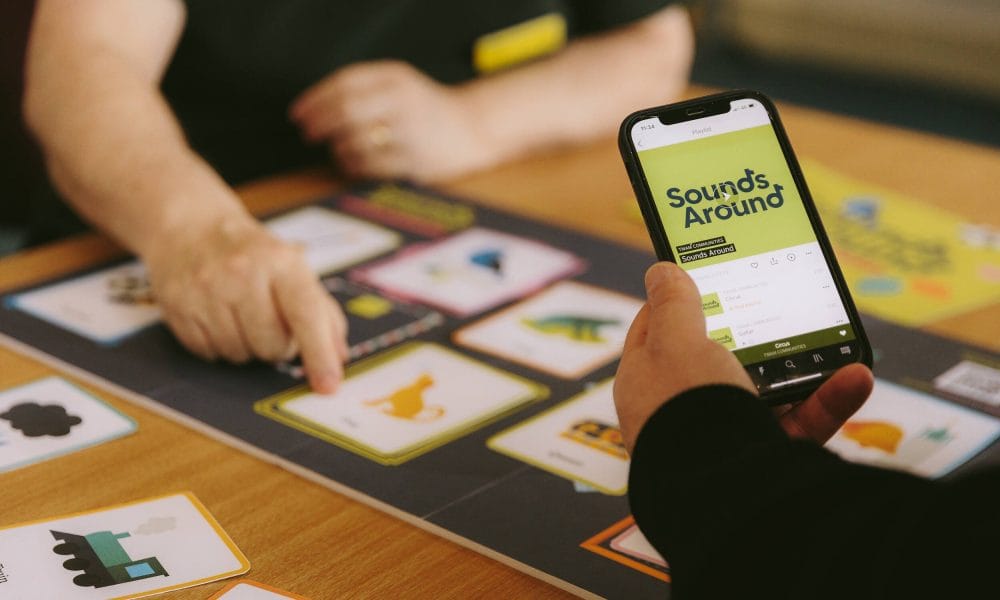
The Sounds Around game is a sound and card game designed for care professionals to use with people with dementia or brain injury.
Using a variety of heritage sounds drawn from across the UK, alongside imagery and interesting facts, the game stimulates conversations, unlocks memories, and encourages play.
The game forms part of an initiative between the British Library and Tyne & Wear Archives & Museums (TWAM) to preserve sounds, while using them for the benefit of people with neurological injuries and conditions in collaboration with Northumbria Healthcare NHS Foundation Trust.
The sounds included in the game are:
- Circus-themed Fenwick’s Christmas window, Newcastle upon Tyne, 1986
- Guitar music from Hull Fair Project Collection, 2005 Newcastle Civic Centre Carillon Bells, playing a Christmas carol medley, 1967
- Music of Northumbrian Bag Pipes played by Kathryn Tickell
- A dog barking
- The sound of the tide
- The start and finish of the 1990 Great North Run, in Newcastle and South Shields
- Commentary from the game of Newcastle United winning the FA Cup in 1951, with a goal from Jackie Milburn
- Queen Elizabeth II opening a train line
- The sound of a brook, recorded in Kynance Cove, Cornwall, 1996
- Scottish Woodland in late spring
- A tawny Owl hooting, Gloucestershire, October 1979
- A nightingale song, Brownsea Island, Dorset, 1964
- Rain falling on leaves and puddles in a tropical rainforest in Tambopata Wildlife Reserve, Peru
- A common frog, South Brent, Devon, 1965
- A train leaving Aberystwyth at 9.50am, 13 November 1965.

Sounds Around consists of 16 cards with images and text, a board and a sound playlist on SoundCloud.
By playing the sounds and matching them to an image on the card, participants can start conversations about different subject matters. Then they can select their favourite 10 sounds to arrange in an order of their choice. On the back of each card is a fact about the sound, keywords and example questions to ask the participants. There is no right or wrong way to play the game.
In trials, the game – used as a tool for care professionals to engage patients – has helped people with dementia to boost their mood, develop their confidence and have conversations about the world around them.
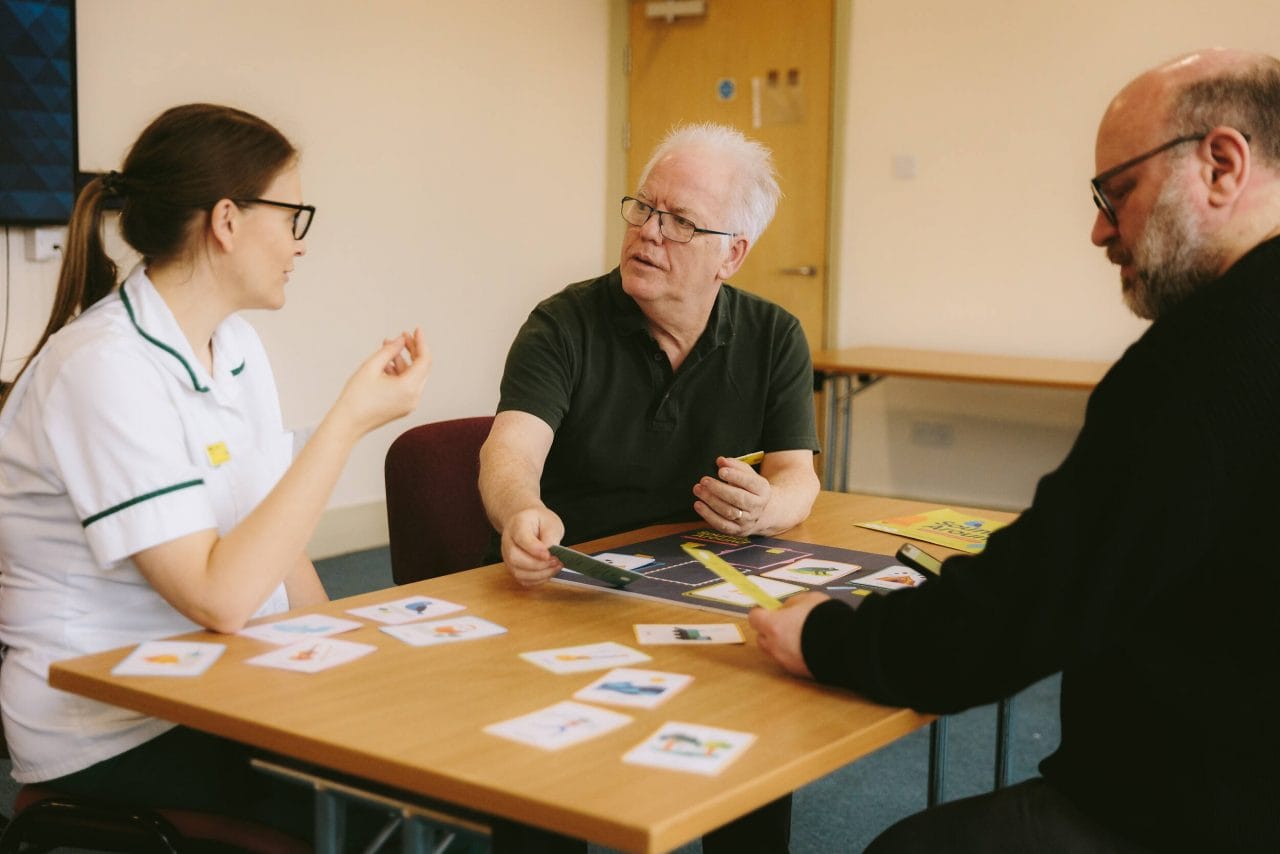 Alexandra Pentelow, occupational therapist at Northumbria Healthcare, said: “It was great to work on this project and share my experience of working with people with dementia, looking at how the game could be adapted to make it more engaging and user-friendly for this patient group.
“It was important to look at factors such as the colour and design of the game and also the practicalities like the volume, length and clarity of the clips.
“Due to the differing needs of people with dementia and the different stages people may be at, it was important that the game could be played flexibly to accommodate this.
“Playing the game with patients has sparked so many meaningful conversations where I have learned about their past and experiences which is so valuable in delivering the best patient care.”
The Sounds Around game is part of the legacy of the British Library’s Unlocking Our Sound Heritage (UOSH) project, a national initiative that preserved, digitised and provided public access to thousands of the UK’s rare and unique sound recordings.
Sophie Mitchell, communities officer at TWAM said: “It is a wonderful legacy of the UOSH project, that these preserved sounds can go on to help people and aid health professionals, enriching people’s lives and recovery.
“The groups who have trialled the game in North Tyneside have enjoyed it so far. The game is a product of our ongoing relationship with NHCT which we’re hoping to develop further.”
Chandan Mahal, learning projects manager at the British Library, said: “We are delighted UOSH, a UK-wide project to save the nation’s sounds and open them up to everyone, has inspired the new Sounds Around game.
“Tyne & Wear Museums & Archives’ collaboration with health and care professionals in the North East shows how sound collections can be used to support wellbeing and mindfulness in a creative and inspiring way.”
Health and care professionals can loan a copy of Sounds Aloud, or learn more, by contacting [email protected]