



Irish campaigners call for meaningful and swift change, as brain injury patients struggle to access rehab services stipulated in UN convention.
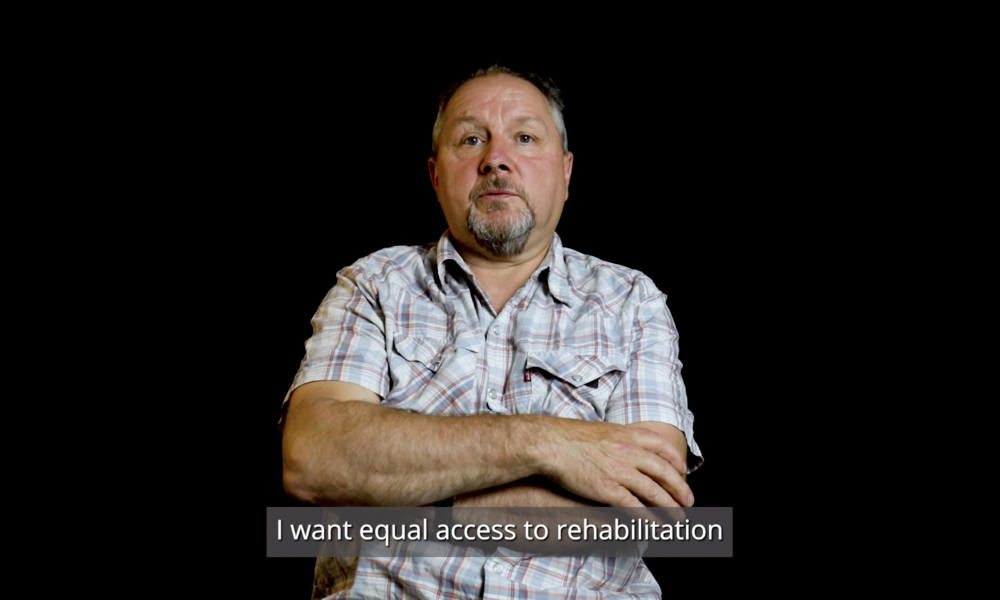
Acquired Brain Injury Ireland, a community-based rehab provider from Ireland, has launched the Right to Rehab campaign to “raise the voice” of brain injury survivors facing barriers to rehab provision.
The campaign which came about through funding from the Irish Human Rights and Equality Commission looked at the access individuals currently have to rehabilitation services, the barriers they are facing and the improvements they would like to see.
Rehabilitation became a human right in Ireland in 2018. However, in an online survey conducted by Acquired Brain Injury Ireland, almost two thirds of the 68 respondents said they did not know they are entitled to rehabilitation under the UN Convention on the Rights of Persons with Disabilities.
“These findings validate our purpose for the campaign from the get-go,” says Aoife Lucey, communication and engagement manager at the Dublin-based rehab provider.
“We wanted to do something to empower brain injury survivors to advocate for themselves and, more importantly, we wanted to have survivors at the heart of this.
“Many survivors [who had access to rehab] call themselves lucky because they know from their networks that not everyone benefits from the same services.
“It’s a geographical lottery. Provision is different in every part of country.
“In some areas, there is very limited provision or no provision at all and in others, services may only be available to certain cohorts of survivors with specific types of brain injuries. Everybody is experiencing the pathway differently.”
A lack of funding has delayed the implementation of a national neuro-rehabilitation strategy planned almost a decade ago, leaving hundreds of patients in limbo.
Funding and geography are citied as the main barriers to rehab and for many brain injury survivors supportive services are not available early enough.
Effective specialist services, however, are vital for improving mobility and cognitive abilities in brain injury patients.
“Rehabilitation needs don’t just disappear when patients leave the hospital,” explains Dr Karen Foley, head of service operations at Acquired Brain Injury Ireland.
“When people return home to their local communities, they need support to regain most of their independence and skills they may have lost as a result of their illness or injury. That only happens through rehabilitation.
“However, if they’re supported by services that come in and do things for them, as opposed to a rehabilitation and re-enablement approach, then these people become more dependent [on those things] which creates a societal burden of care.
“If that’s happening across the board for every person with rehabilitation needs, it means it affects people’s ability to contribute to society, to return to work or education and have meaningful family roles.”
Access to rehab is also a cost-effective way to work with brain injury survivors, says Lucey.
“It not only helps individuals to be integrated as part of the community, but it also helps the state save money.”
Multiple studies have shown that rehabilitation is also likely to reduce the long-term impacts on a broad range of health conditions and ease pressure on an already overwhelmed healthcare system.
Remote services – which have risen as a result of the pandemic – are addressing some of the current issues in the neuro-rehab sector, but this is not enough to solve the problems, says Lucey.
“We are engaging with the HSE and the government to demand more funding and advocate for the continued rollout of the neuro-rehabilitation strategy.
“Everyone should have equal access to neuro-rehab pathways regardless of their age and where they are from,” she adds.
“Sharing the message and heightening awareness are equally important. Our hope is to give survivors, their families and those who work with them, the tools and the motivation to advocate for themselves and fight for what they’re entitled to.”


