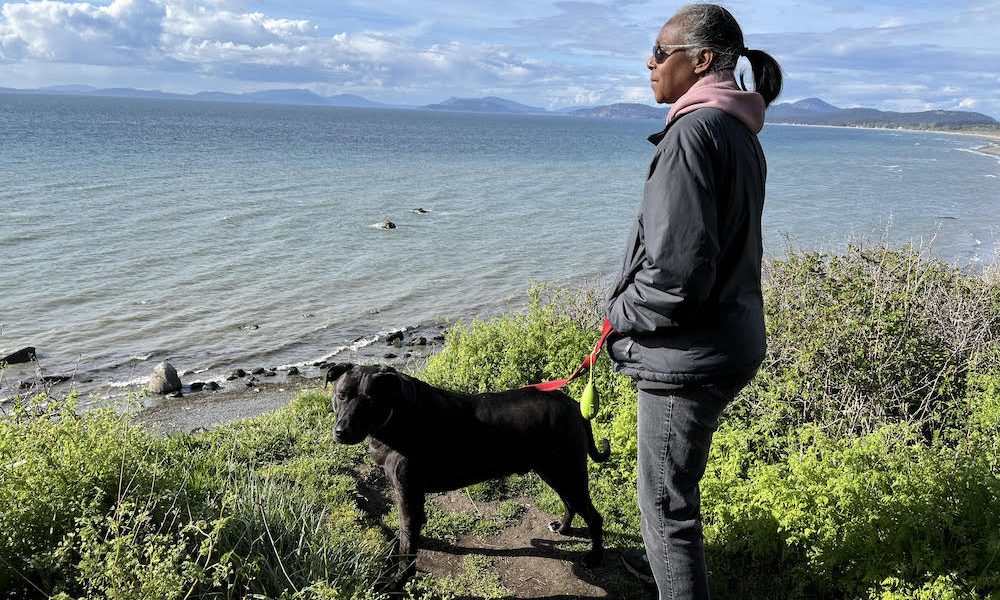
Karen Grazionale lives on the east coast of the United States with her husband, Victor, and their dog Riley. Her essay, When the Sun Rises, won her runner-up status and publishing in the February 2023 issue of BRAIN. She is currently writing a memoir.
It’s been seven years since my husband was hit by a distracted driver. I remember getting the call from our friend who was running with him. I remember seeing my husband as he lay in the hospital. I remember the sound of the machine that breathed for him for weeks on end.
I also remember coming home from the hospital weeks later to wash my hair, shower and get some, much needed sleep. As my foot landed on the bottom step, my eyes teared up.
As my other foot landed on the second step, tears streamed down my face. By the third step, I was in a pile on our staircase sobbing into the carpet. I wasn’t scared to be in the house alone. I was lonely. I missed my husband and I didn’t know if or when he was coming back.
I had been told that his brain was injured in the Frontal and Parietal lobes. I’d also been told that those types of injuries can cause changes in personality, mood disorders, memory loss and a whole host of other things.
“What would all of that mean for us?” I wondered once I stopped crying. “Had I lost the person who I shared everything with? Who would I bring home?”
Those thoughts lingered as I showered and washed my hair. Once in bed, I reached out and let my hand rest on the empty place next to me. I fell asleep longing for my husband.
Loneliness is something I rarely talk about. I walk a thin line with family and friends. I doubt that they will understand. How can you be lonely, your husband is right there with you. He didn’t die.
They don’t know about ambiguous loss. They don’t know you can grieve the loss of someone who is still physical there. They only know that he survived and that I should be grateful. I should feel blessed. It’s hard to share that I don’t always feel blessed. That sometimes all I feel is sad and lonely.
I know that by focusing so much on my husband, I’ve isolated myself from them. My need to educate only pushes them further away. Yet, I feel the need to make them understand. Make them see below the surface. Sit in the sadness and the solitude with me. Let me know that even though I am lonely, I am not alone.
Sometimes I see my husband staring blankly while we eat. He isn’t bored or daydreaming. His brain has shutdown from too much stimuli. I may get up and turn the lights off or turn off some sound that I hadn’t noticed, but has overloaded his brain.
Then, I just sit there and wait. When he’s ready, his eyes will light up again and he’ll resume eating. If I’m still enough, he won’t even be aware that it happened. It’s an emptiness that we share alone.
We used to have Family Days once a month where the kids would come over with their families. The house was full of life on those days as the grandkids ran around playing and our now grown kids played a game at the table after dinner.
I’d sit, sipping my wine, listening to the different conversations around me. Their voices filled me with so much joy. Family Day is a very rare occasion now. There’s too much stimuli. It’s another loss that I silently add to the list.
I thought more people would understand once we’d all gone through the Covid Lockdowns. The isolation was something that we all shared. We got creative with ways to stay connected and went out of our way to find ways to see each other.
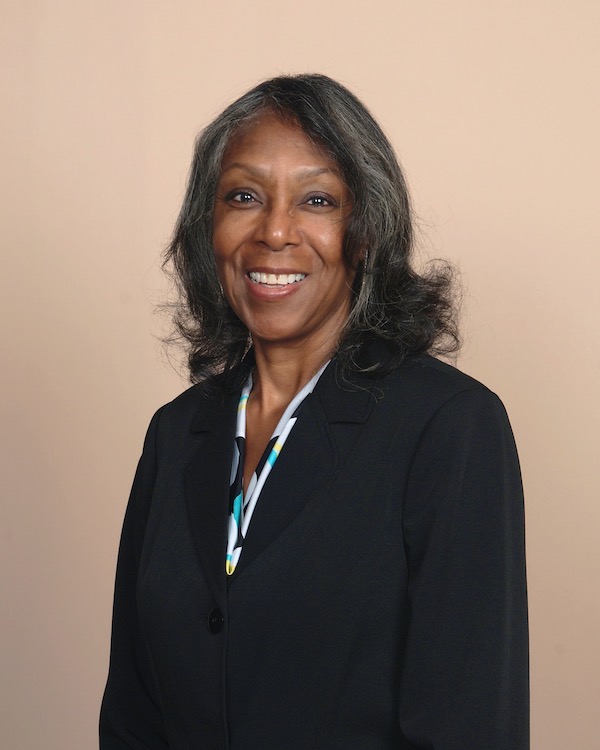
Karen Grazionale
I remember the kids driving by on birthdays as my husband and I stood out in the yard and waved. I remember game nights on Zoom with multiple family members across the country. I spoke to more people on the phone that I hadn’t seen in years. It was great reconnecting.
Then life reopened for them and off they went back into their old lives. They assume I’ve done the same, but my old life is long gone. There’s nothing to go back to.
What I miss most is the companionship my husband and I shared. I miss being able to say whatever I was thinking and know that he understood me when no one else did. I must now be cautious about what I share with him.
I need to make sure that I have his attention. That I don’t use too many words. That I pause to give him time to process what I’ve said.
It requires a lot of effort to communicate this way. My psychologist tells me how lucky my husband is to have me. She tells me how courageous I am. Working with her, I have learned to be compassionate with myself and recognise that I am doing the best that I can.
I have also learned to accept the loneliness and welcome it into my life. It reminds me of better times and encourages me to continue my efforts to make these times better.
I now share what I’m feeling with my sister who listens without judgement. I’m more open with my husband, who listens, when his brain allows him to, without feeling guilty. I even share with our dog, Riley, who just wants a treat. My circle is small, but powerful. It’s just what I need.
Today, as I walk Riley, I realise that I no longer feel lonely. It’s like having a headache and not realising that it’s gone until hours later. I am happily surprised and instantly wonder if it will come back. It probably will, but I have my circle if I need it.
I hear my name and turn around to see my husband walking towards me. He reaches out his hand and I eagerly grab it.
As we walk along the beach together, Riley running ahead chasing seagulls, the warmth of his hand comforts me. In this moment, we are together in all the ways that matter. He will never know how much this seemingly small gesture means to me. Only the lonely know how I feel.