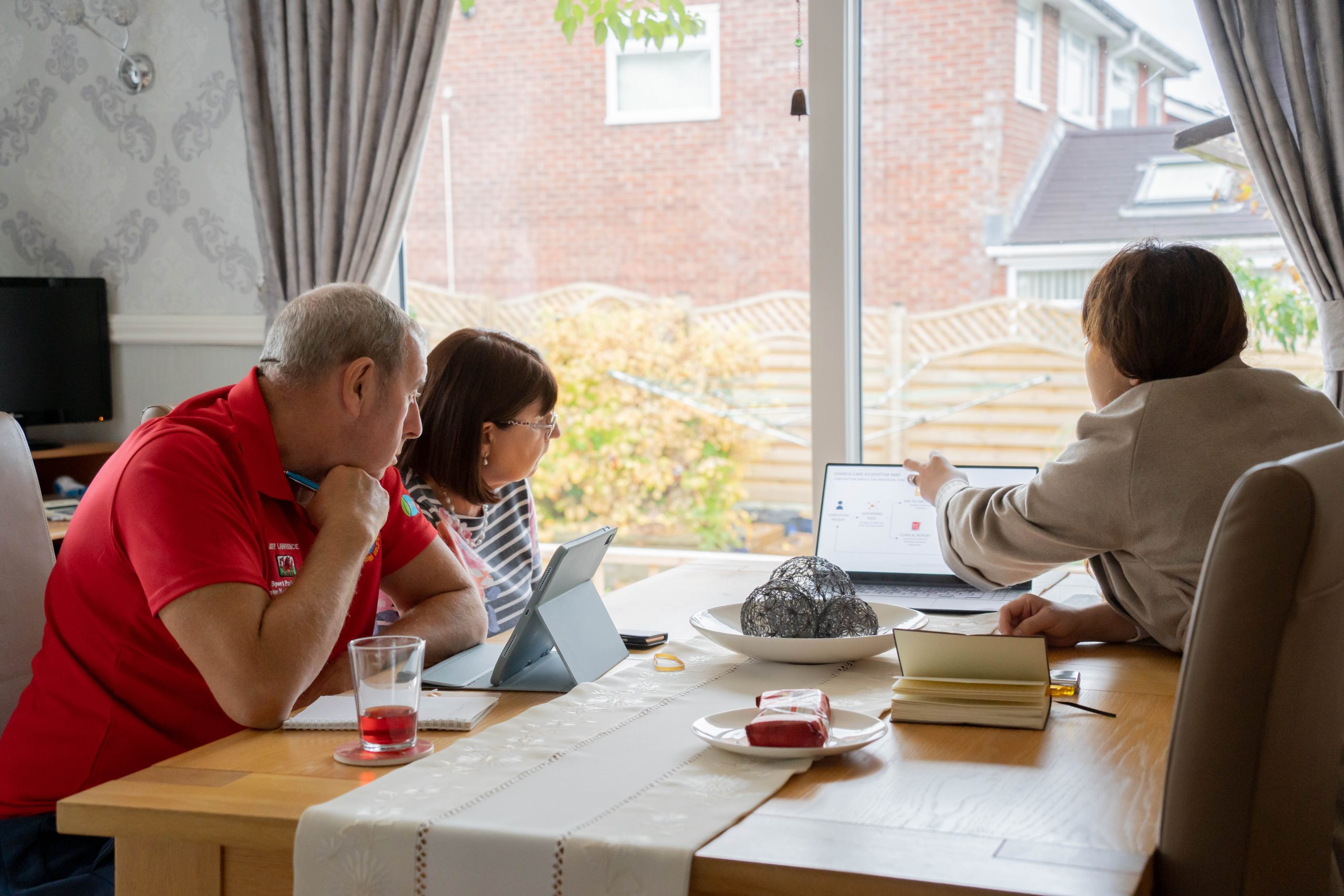
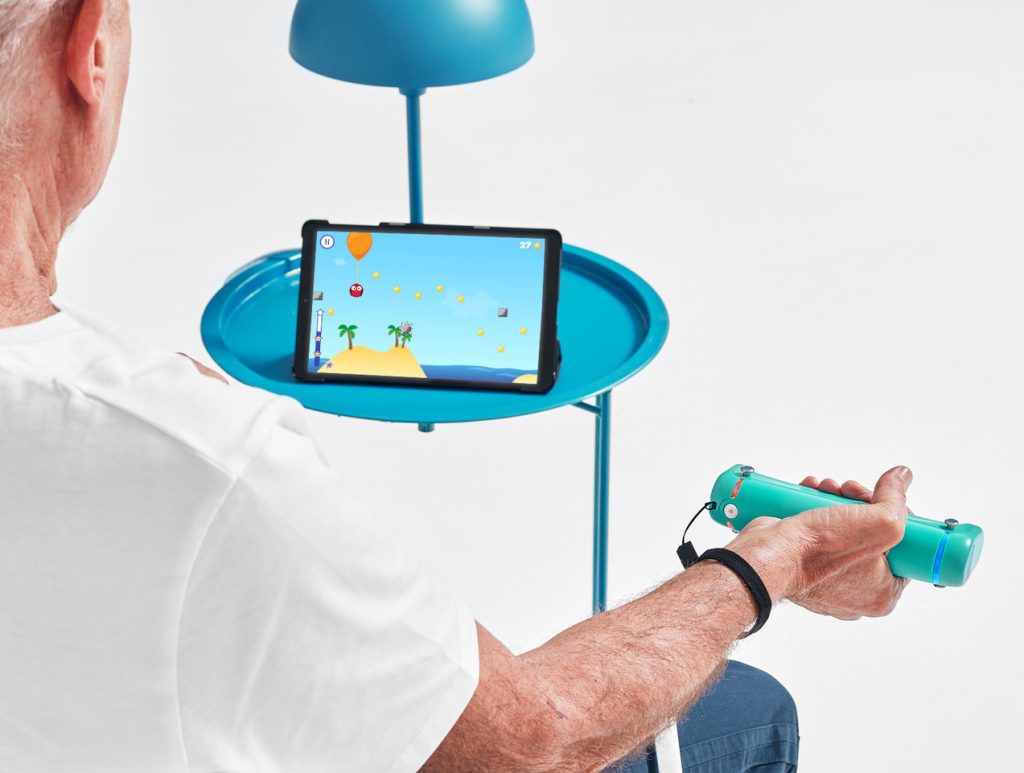
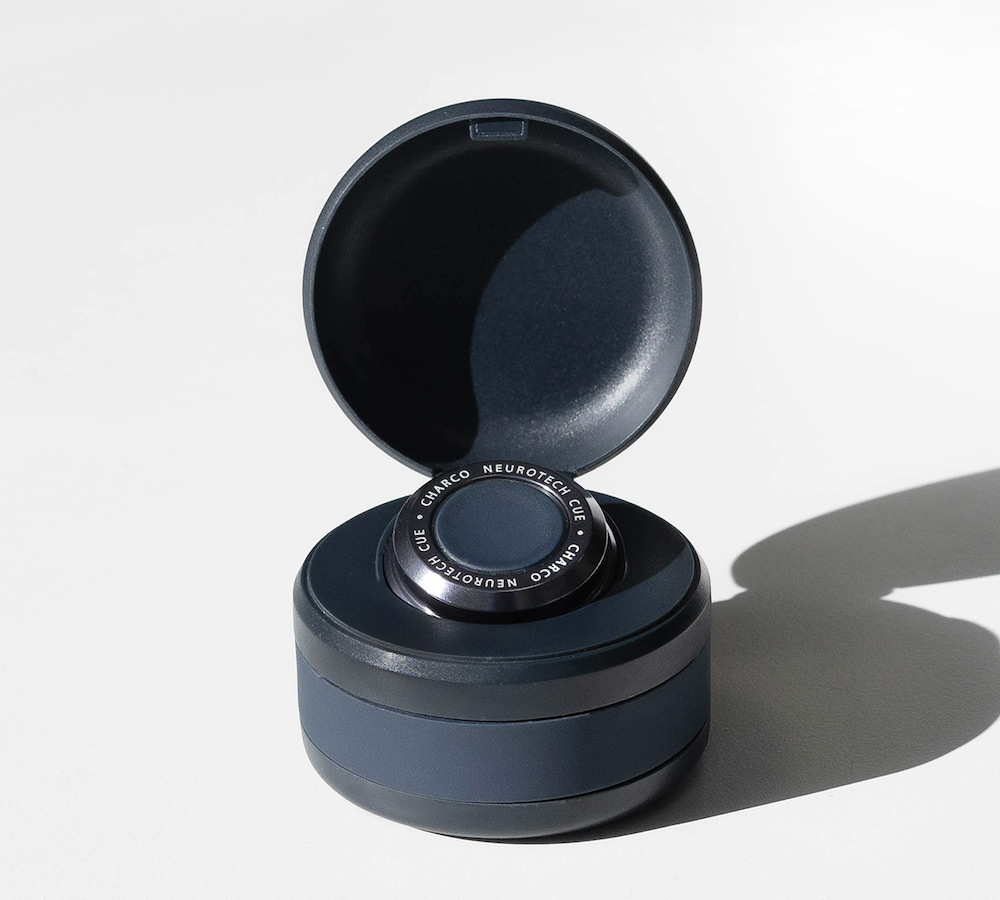
CUE1 has emerged in recent years as a new tool in the fight against Parkinson’s, the world’s fastest growing neurological condition.
The wearable, non-invasive device is designed to improve motor performance and alleviate freezing of gait.
NR Times spoke to Lucy Jung, co-founder and CEO of the company behind it, Charco Neurotech, to find out more.
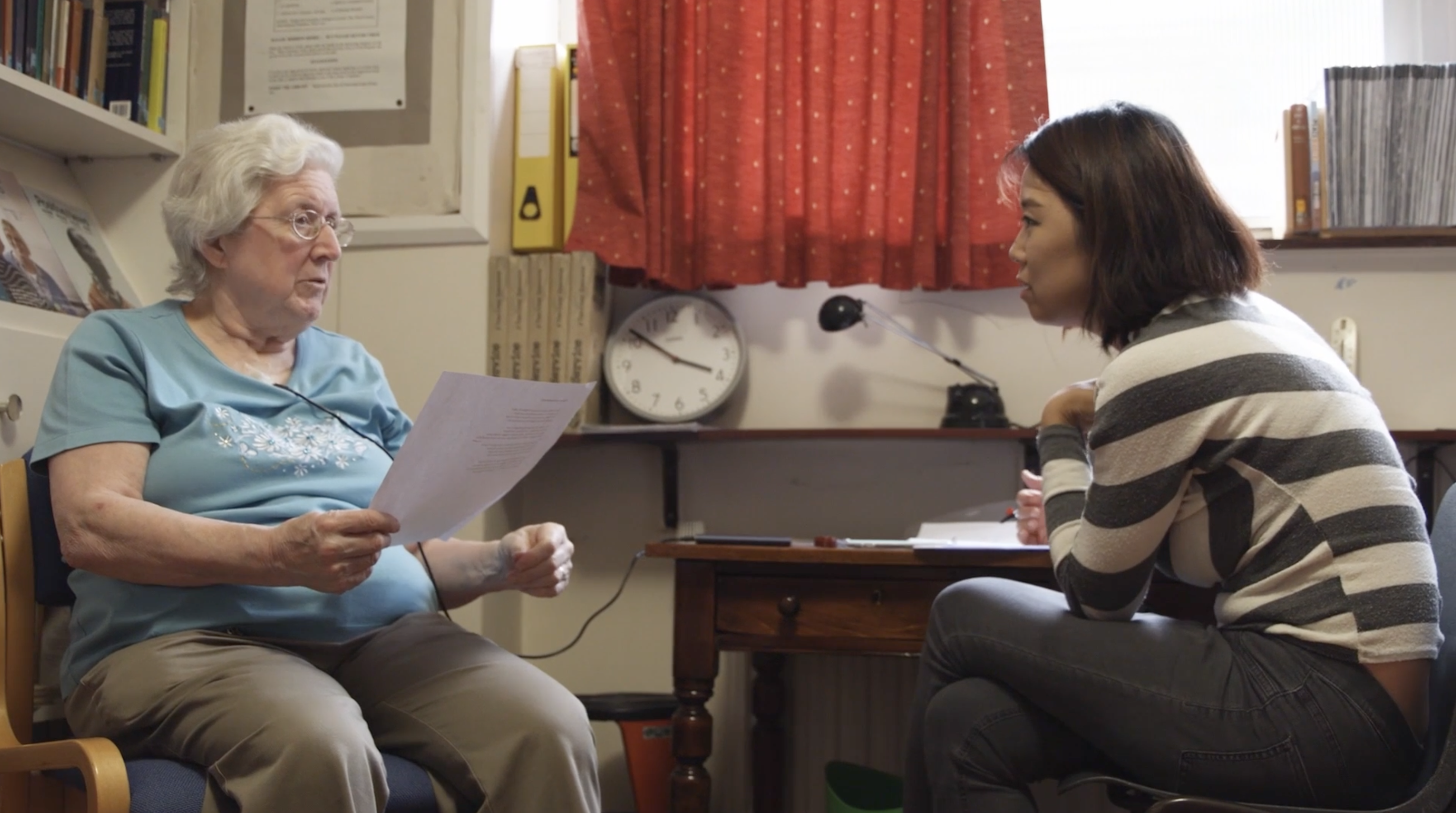
Lucy Jung, co-founder and CEO of Charco Neurotech (right), with an individual trialling the CUE1 device.
NRT: Tell us about the development journey of CUE1.
LJ: Though Charco was officially founded in June 2019, research for the CUE1 stretches back into my time as a master’s student.
Conducting research into an unrelated project, I spoke to a man with Parkinson’s who spoke of how his condition impaired his ability to express himself facially.
He also described how sitting in a massage chair helped ease some of these symptoms, prompting me to further investigate the science underlying these therapeutic benefits.
This research directly informed early prototypes of the CUE1 and grew into the Charco of today. This interaction also informed Charco’s motto, ‘Bringing back smiles to people with Parkinson’s’, which informs everything we do.
Where did the original idea come from?
 I co-founded Charco Neurotech during my time at Imperial College, where I was getting my Masters in Innovation, Design, & Engineering, together with Floyd Pierres, an NHS clinician.
We both had experience of working on a wider range of health conditions, but decided to focus on alleviating Parkinson’s symptoms following several meetings with individuals with the condition who highlighted the toll of its symptoms on their quality of life.
It is the fastest-growing neurological condition globally, and while there is no cure, we are committed to making the lives of people with Parkinson’s as enjoyable as possible.
We decided to name our start-up after Professor Charcot who, in the 19th century, was the first to notice the therapeutic effects of vibratory stimulation on Parkinson’s.
Since his discovery, there have been many studies around the ability of nerve stimulation to alleviate the movement symptoms of Parkinson’s disease.
Over the last few decades especially, the scientific community’s understanding of movement has developed significantly, and we are increasingly appreciating the importance of the sensory system.
There is growing evidence that modulation of this can change patterns of brain activity and improve movement across different tasks.
We wanted to build on the existing science to create an easy-to-use device which can make the positive effects of these kinds of stimulations accessible to people in their daily lives.
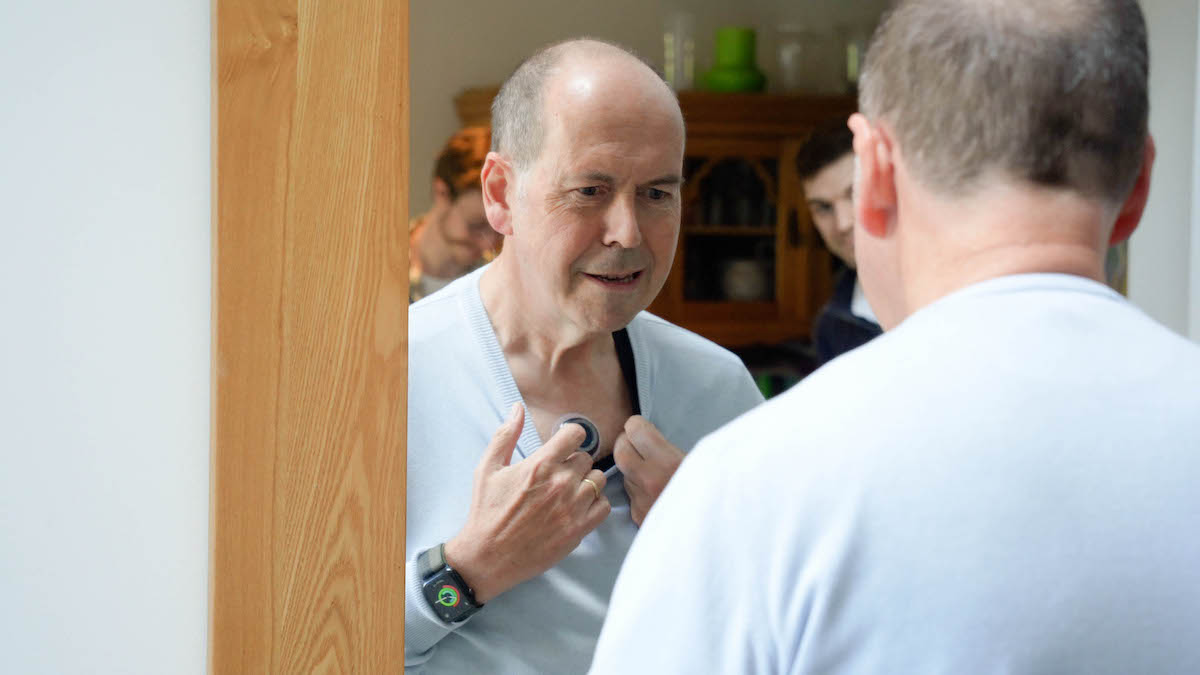
Former BBC technology journalist Rory Cellan-Jones, who was diagnosed with early Parkinson’s in 2019, with the device.
How exactly does the CUE1 benefit Parkinson’s patients?
The CUE1 is a non-invasive, non-pharmacological intervention that can improve symptoms above medication alone. It is worn on the sternum and the wave shape and frequency of its ‘buzzing’ delivers two scientifically validated principles in a combination unique to this device; focused vibrotactile stimulation and cueing.
Focused vibrotactile stimulation is used to describe the effects of vibration on an outside part of the body. Research suggests that localised vibration, termed “focused vibrotactile stimulation”, elicits sensory nervous signals that are transmitted from the skin and muscle to the brain.
Here, these may modulate cortical activity to reduce excessive beta wave activity seen in Parkinson’s, putting the body in a “ready-to-move” state and reducing stiffness and slowness.
Cueing is a phenomenon whereby external stimuli facilitate movement initiation and continuation.
In the CUE1 device, this stimulus takes the form of vibrotactile stimulation, delivered to the patient via repeated peripheral pulses. Much research is currently being conducted into the biological processes underpinning cueing as a treatment for Parkinson’s.
Presently, the favoured theory is that external cueing mimics the natural, internal cueing exhibited by the basal ganglia.
Dopamine is the main neurotransmitter in the basal ganglia, and this is deficient in Parkinson’s patients. Therefore, alongside conventional dopamine pharmacological treatments, the CUE1 has an important role to play.

Lucy with a user of CUE1.
How does an individual with Parkinson’s, or the professionals and loved ones around them, access CUE1?
People who think the CUE1 might be of help to them, or their loved ones, can currently join a waiting list on our website.
As our business and manufacturing capability grows the time between ordering and delivery is shortening, and our team does its utmost to bring the device to people’s home as soon as possible.
Parkinson’s is the fastest-growing neurological condition in the world, so fully and quickly meeting the demand for devices such as ours is a long-term mission.
As a company our mission is to make the CUE1 available to people via their local healthcare systems too down the line too.
Lucy with a user of CUE1.
Can the CUE1 be used to help with other conditions?
Our testing to date has been focused around the CUE1’s beneficial effects on the symptoms of Parkinson’s.
There is, however, existing evidence that therapies utilised by the CUE1 can benefit conditions as varied as stammering, multiple sclerosis, and strokes. This is something which we are preparing to investigate further.