The potential of stem cells to unlock new treatment options for brain injury survivors is being realised on several fronts, as NR Times reports.
Researchers in Australia this week announced that they had begun collecting umbilical cord blood cells from preterm babies; with the aim of using them to reduce their increased risk of brain injury and disability.
Theirs is the latest study seeking to unlock the full potential of stem cells in brain injury treatment.
And, although at an early stage, it looks to have overcome an initial hurdle, with a 72 per cent success rate in what is a highly challenging cell collection procedure.
This research focuses on the cord blood left in the umbilical cord and placenta of newborn babies after birth.
It is rich in stem cells which can be used to help protect, repair and grow cells in the body.
Dr Lindsay Zhou, leading the study, believes these cells can potentially be harnessed to treat neonatal brain injury – having shown promise in pre-clinical models and early-phase clinical trials.
“While it has been tested in infants born at term, these life-giving cells have not been tested in preterm babies, who arguably have the greatest need for new treatments because their risk of brain injury and disability later in life is so much greater,” he said.
The researchers took cord blood from 38 infants born before 28 weeks gestation.
Babies born extremely preterm (<28 weeks) have a high chance of long-term developmental issues, including cerebral palsy, and learning and behavioural issues.
Of the babies included in the trial, 21 were male and 17 female. Twenty-four (63.1 per cent) were delivered via caesarean section, and 11 (28.9 per cent) were a multiple birth. The average age of the baby in this study was 26 weeks gestation, and the average birth weight was 761.5 grams.
The researchers were able to collect an average of 19 ml/kg of cord blood from these preterm babies, which is similar to term babies by body weight. The procedure was successful in 72 per cent of cases.
According to Professor Atul Malhotra, co-director of the Newborn Cell Therapies Group from the Department of Paediatrics at Monash University, these findings are important “because we have shown we can collect these cells in extremely small babies, and can now use them in the CORD-SAFE study currently underway at the Monash Children’s Hospital.”
The CORD SAFE study is expected to publish its results before the end of the year.
The trial was conducted at Monash Children’s Hospital Melbourne.
Also making headlines for stem cell-driven neurological innovation is Aspen Neuroscience, a startup based in San Diego. The Washington Post this week reported on its mission to reverse the symptoms of Parkinson’s via an injection of lab-cultured brain cells, developed from the patient’s own cells.
Its focus is on the development of stem cells to address diseases with high unmet medical need, beginning with autologous neuron replacement for both sporadic and genetic forms of Parkinson‘s and extending across the brain and affected organs.
It is bringing together stem cell biology with artificial intelligence and genomic approaches to investigate patient-specific, restorative treatments. It reports that tests in animals have been “promising”, as it seeks to map the long, arduous route towards a practical and available treatment for patients.
As well as the challenge of extraction, as addressed in the CORD-SAFE study, another hurdle faced by stem cell researchers is being able to keep stem cells alive for long enough to make their desired impact.
A new hydrogel that safely delivers stem cells to brain injury sites in mice may well have provided one possible solution.
Hydrogel is a water-based gel that can be used to deliver substances into the body and can be used to promote the effective growth of new cells.
A study published in Nature Communications, reports a proof-of-concept breakthrough in prolonging the life of stem cells to the point that they are able to evolve into the cells required to create new tissue when they are inserted into a damaged part of the body.
The hydrogel supplies both the stem cells and oxygen needed to keep stem cells alive during the injection process.
Researchers believe this advance will benefit stem cell treatments in many other parts of the body beyond the brain and central nervous system.
University of Melbourne Professor David Nisbet said: “After an injury such as a stroke, there is a dead area in the brain, including the blood system. So, we need a temporary blood supply to support cells until the blood system repairs. This patented hydrogel provides that.
“Very few drug treatments can treat conditions like stroke or Parkinson’s Disease and they have little efficacy. There are currently no treatments that can reverse these conditions.”
Professor Colin Jackson, a member of the Innovations in Peptide and Protein Science, and Synthetic Biology Australian Research Council Centres of Excellence, said the breakthrough would interest researchers and clinicians globally and is likely to lead to many revolutionary medical treatments.
“Proof of concept has now been demonstrated within the brain of mice, but the research represents a generalisable strategy for developing injectable nanomaterials for a diverse range of applications, including cell transplantation, gene and drug delivery, 3D in vitro disease models and organ-on-a-chip technology,” he said.
A synthetic protein based on myoglobin – a natural protein found in high concentrations in the heart muscles of sperm whales and horses – added to the hydrogel provided the sustained oxygen release needed to ensure stem cells survive the delivery process and develop into the type of cells needed to repair brain tissue.
Whales and other deep-diving animals are thought to have evolved high concentrations of myoglobin in their muscle tissue so they could slowly absorb as much oxygen as possible while diving. Similarly, horses are thought to have evolved higher concentrations of myoglobin so they could run over longer distances.
University of Melbourne Professor Clare Parish conducted the mouse studies and said the results were achieved in injured brain tissue, raising the possibility for growing new tissue for future human treatment.
“We saw that the hydrogel incorporating myoglobin and stem cells repaired injured brain tissue.
“Analysis at 28 days after delivery of the hydrogel revealed significantly enhanced survival and growth of the new stem cells that are needed for healthy brain functioning, compared with a hydrogel without myoglobin,” she said.
“We observed that the new tissue could be stimulated in a similar way to healthy brain tissue, providing the first evidence of the benefits of including oxygen delivery within a hydrogel to achieve the long-term survival and integration of stem cell transplants.”
Another breakthrough that could shape future brain injury treatments is the ability to develop neurons that are functionally mature.
To date, efforts to transform stem cells into neurons have created those seen in the early stages of development. Limited maturation achieved through current stem cell culture methods restricts their potential for studying neurodegeneration.
But researchers led by Northwestern University, Illinois, US, has achieved a breakthrough by producing the most mature neurons to date from human induced pluripotent stem cells (iPSCs).
This advancement opens up new avenues for medical research and the possibility of transplantation therapies for conditions such as neurodegenerative diseases and traumatic injuries.
To create the mature neurons, the team used “dancing molecules,” a breakthrough technique introduced last year.
They first differentiated human iPSCs into motor and cortical neurons and then placed them onto coatings of synthetic nanofibres containing the rapidly moving dancing molecules.
The enriched neurons were more mature, but also demonstrated enhanced signaling capabilities and greater branching ability, which is required for neurons to make synaptic contact with one another.
And, unlike typical stem cell-derived neurons which tend to clump together, these neurons did not aggregate, making them less challenging to maintain.
With further development, the researchers believe these mature neurons could be transplanted into patients as a promising therapy for spinal cord injuries as well as neurodegenerative diseases, including amyotrophic lateral sclerosis (ALS), Parkinson’s disease, Alzheimer’s disease, or multiple sclerosis.
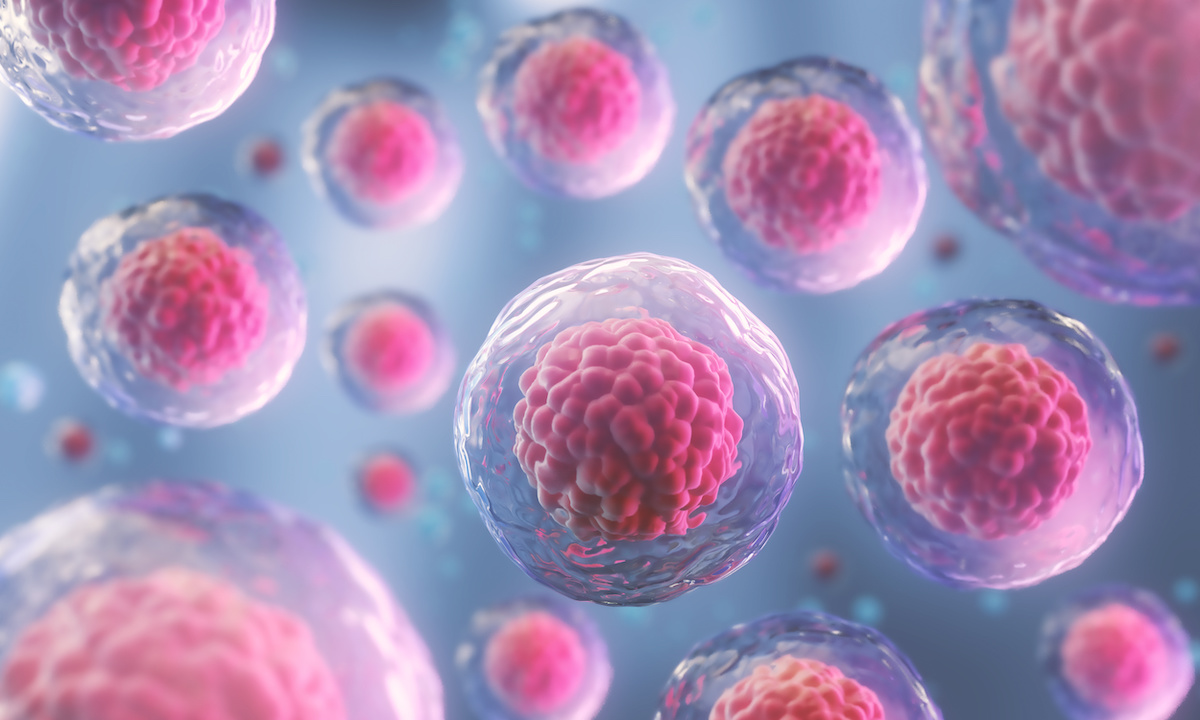
3d rendering of Human cell or Embryonic stem cell microscope background.
The mature neurons also present new opportunities for studying neurodegenerative diseases like ALS and other age-related illnesses in culture dish-based in vitro models.
By advancing the age of neurons in cellular cultures, researchers could improve experiments to better understand late-onset diseases.
“This is the first time we have been able to trigger advanced functional maturation of human iPSC-derived neurons by plating them on a synthetic matrix,” said Evangelos Kiskinis, co-corresponding author of the study.
“It’s important because there are many applications that require researchers to use purified populations of neurons.
“Most stem cell-based labs use mouse or rat neurons co-cultured with human stem cell-derived neurons. But that does not allow scientists to investigate what happens in human neurons because you end up working with a mixture of mouse and human cells.”
Perhaps further along on the lab-to-bedside journey, meanwhile, is MSC-NP, a form of stem cell therapy currently in early clinical trials for MS.
Researchers believe it can reduce the inflammatory activity of brain immune cells or microglia.
The therapy is known to reduce disease severity and improve myelin regeneration in animal models of MS, and the findings suggest it may be doing so at least in part by modulating the activity of microglia.
Co-author Violaine Harris, a researcher at Tisch Multiple Sclerosis Research Center of New York, said: “This research gives us another important layer in understanding of the efficacy of MSC-NP therapy, and potentially furthers our ability to effectively use this therapy to slow the progression of MS symptoms in patients.”
“We’re incredibly excited about this development and the opportunity it presents for us to improve regenerative treatments for MS.”