“I’m a terrified patient, I know exactly what I’m talking about”
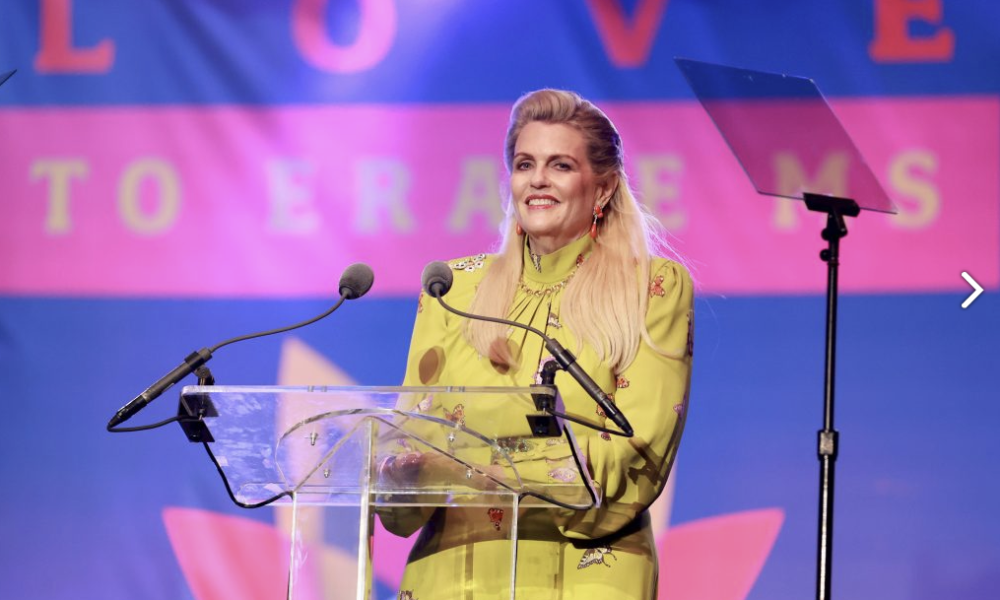
Her life’s work has been to rid the world of MS and now Nancy Davis believes she’s getting ever closer. NR Times meets the tireless Race to Erase MS founder who has been the catalyst for 20+ FDA-approved MS therapies and US$50m in research funding.
A well-worn phrase from success coaching parlance says that the best way to take the island, is to ‘burn the boats’.
Out of absolute necessity comes achievement – and after the point of no return, there is nothing to be done but move forward and get to it.
That point for Nancy Davis came in 1991 when, at age 33, she was diagnosed with MS.
Faced with a relative treatment black-out by today’s standards, and against the backdrop of an unhappy marriage, the fate of her three children as the disease progressed was necessity number one.
Then there was the prospect of her own existence. A doctor said the best she could hope for was enough mobility to operate a TV controller.
And so sparked a race against time, not only to save herself, but to help others with MS avoid a similarly bleak outlook.
The non-profit founded by Denver-born Nancy, Race to Erase MS, has since helped to bring numerous FDA-approved MS therapies to market and raised US$50m in funding.
It serves as a lightning-rod for MS treatment innovations and progress by uniting research teams through its ‘Center Without Walls’ programme.
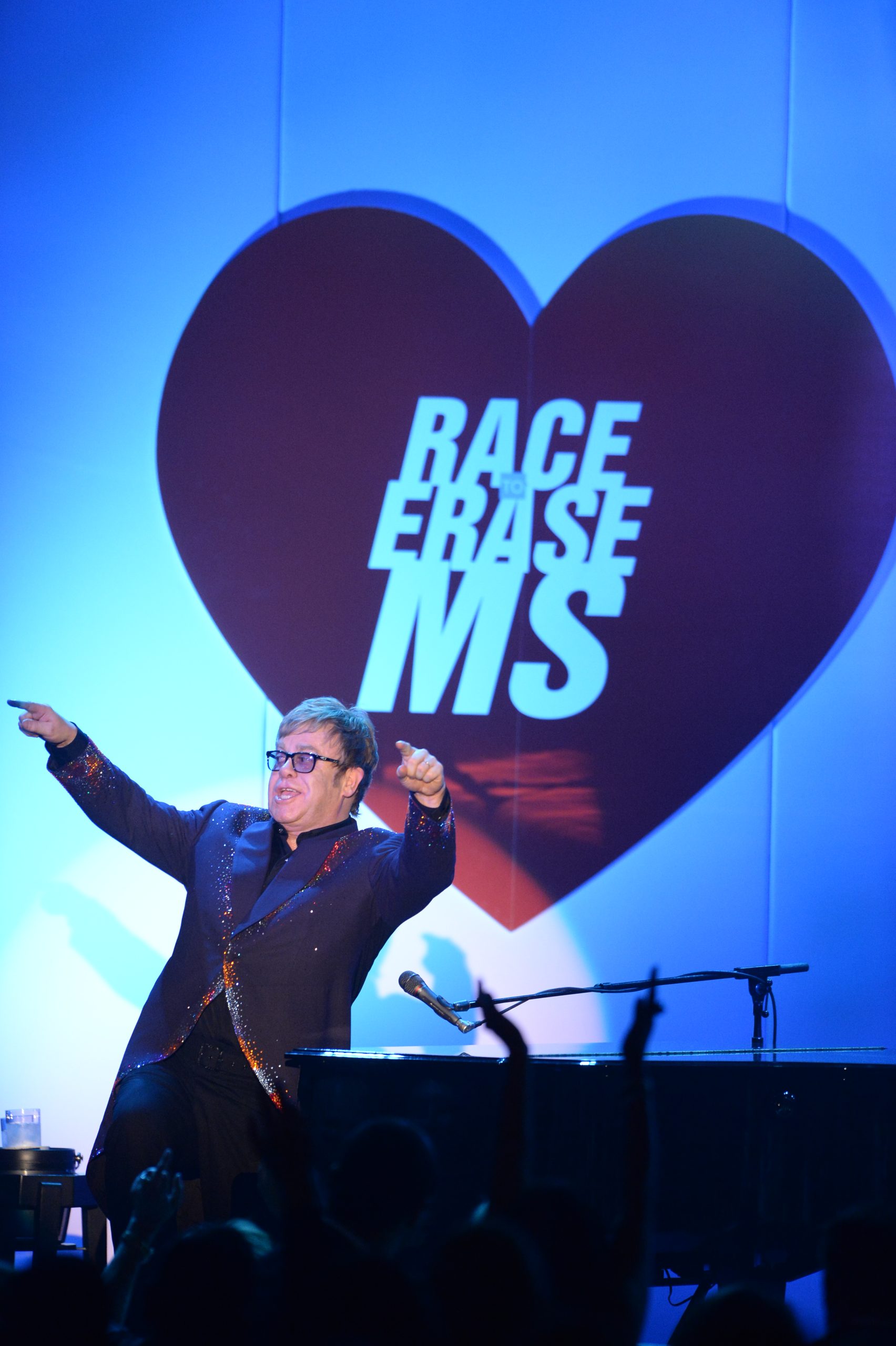
Hollywood A-listers and the likes of Elton John are big fans too, helping to continue the journey towards Nancy’s vision for an MS-free world.
“I was diagnosed almost 31 years ago with MS,” Nancy tells NR Times.
“There was no cure, no drugs on the market, and very little hope. I was told to go home and go to bed, and that the most I could look forward to in my life was to operate a remote control my TV set.
“I was a young mom of three children. That was the last thing I had in mind for my whole life. I was fortunate in that I could get a second opinion from some really great doctors around the country.”
Nancy travelled first to the National Institute of Health, followed by a tour of some of the most medically advanced universities in the US, including Harvard, Yale, Johns Hopkins, UC and UC San Francisco. In doing so she stumbled upon a great flaw of MS research that she was able to address.
“I talked to some of the best doctors in the country, hoping somebody could tell me that I did not in fact have MS.
“That didn’t happen, but when I listened to the research that was going on, great doctors were doing identical research to others, yet they were convinced that they were the only ones doing it.
“I would tell them ‘you know, they’re doing this at Harvard and Yale too’. They’d say ‘you don’t know what you’re talking about, you’re not a doctor’.
“’Yes but I’m a terrified patient who wants to live so, of course, I know exactly what I’m talking about’.
“Doctors were working in a vacuum, thinking they were the only ones doing that study, but it was apparent that everyone was doing the same thing.”
This was the seed of the idea for the Center Without Walls and the Race to Erase MS Foundation that drives it.
“What if we could put the best and the brightest to work as a team to never duplicate research, but to communicate and not spend the same amount of money, time and energy again, and again, to have the same disastrous results?”
Aside from duplication of studies, Nancy also noted a reluctance to publish negative findings among MS researchers.
“Negative results rarely get published,” she says. “They don’t get talked about, but the reality is that 90 per cent of every research study ends up with negative results.
“Out of the negative, you might find positive information or building blocks for other doctors as they progress and create a new study. You might find that a drug has a terrible side effect, the dose is too high or too low or interacts badly with some other medication in our body. But every doctor needs to know all that information as they go forward and create new studies.”
The Center Without Walls, funded by Race to Erase MS, connects multidisciplinary scientific programmes and expertise across the US to advance the understanding of the cause of MS and to develop new treatments.
It enables doctors to work together towards the mutual goal of an MS cure; and brings together a network of top MS institutions including Cedars-Sinai, Harvard, Johns Hopkins, Oregon Health Sciences University, UCLA, UCSF, USC and Yale University.
The programme has been instrumental in the development journey of several MS drugs and therapeutic interventions now on the market.
For example, Nancy and her foundation funded the scientific discoveries that led to the development of a fifteenth drug to receive FDA approval in March of 2017 called Ocrevus.
The studies were carried out over a period of many years at UCSF in work supported by the Race to Erase MS.
There are now 20+ FDA approved drugs to help stop the progression of MS with more exciting therapies coming through the pipeline.
The impact of Race to Erase MS and the centre is all the more impressive given that Nancy, as the driving force behind it, has no formal medical background.
Her success has been fuelled by motivation stemming from her own seemingly helpless situation, a commitment to help others in the same boat and some prior experience setting up and growing a diabetes charity with her diabetic sister.
“We didn’t realise we were technically advanced then but the Center Without Walls was virtual before its time, with the idea that all the doctors who joined our group had to communicate monthly on everything good and bad that was happening.
“The exciting thing is that we tend to get FDA approval on another drug every year for MS. As unpopular, impossible and depressing as they told me it was in the beginning, last December, the 25th [MS] drug got FDA approval in our country, which is nothing short of a miracle for that person being diagnosed today.”
A particularly fruitful area of MS treatment development in recent years has been B cell depletion therapy. B cells are white blood cells which produce antibodies that fight bacteria and viruses. In MS, however, they can enter the brain and spinal cord and attack the myelin sheath that protects the nerves. There are now three such FDA-approved drugs on the market.
“The future is bright,” says Nancy. “These three drugs now that suppress your B cells seem to be the answer.”
But she believes many more miles of progress are ahead towards the goal of “creating medications that could reverse what is happening in the body”.
Thanks to research breakthroughs, “we now know that when your B cells are elevated, they start the mechanisms that start your T cells [which protect against infection] attacking each other.
“We don’t know exactly what to do at the point, and we certainly don’t know how to remyelinate, although that is one of our big studies at the moment. For people with chronic progressive and primary progressive MS, we would love to be able to do that.
“But for that person newly diagnosed today, and actually for everyone with MS to not have more attacks and more demyelination, which we don’t know how to fix, these drugs today are nothing short of an insane miracle.
“I would say 85 per cent of the people with MS have relapsing remitting MS, which comes and goes and you can be pretty well in between.
“But for the 15 per cent who have chronic progressive and primary progressive MS we need more medications. We need to figure out how to remyelinate and stop the nerve damage that exists.”
A willingness to collaborate among researchers and clinicians is key to the success of the Center Without Walls – and maintaining some face-to-face interaction in this golden age of video conferencing is vital.
“They meet monthly [virtually] to report on everything, but get together in person four times a year. When the doctors come here to Los Angeles and meet each other, it’s magic.
“They are very respectful of each other, and are each other’s heroes in many ways, and ask lots of questions.
“Putting them in the same room for two days makes such a difference. These are some of the most brilliant doctors from all over our country and from Europe too.
“There is nothing better than putting doctors in the same room, and them talking on the way to the water cooler; that’s when the magic happens.
“The amount of things going on now is incredible and meeting in person is really everything.”
A major contributor in generating the tens of millions of dollars needed to fund this movement has been the buy-in from some of world’s biggest celebrities.
Stellar A-listers regularly support the Race to Erase MS annual gala and help to bring global attention to the realities of life with MS.
“A lot of people suffer in silence with MS, so we get different people talking about it. When celebrities talk about certain things, it helps a lot of people. One year we honoured the Osborne’s after Sharon’s son Jack had been diagnosed with MS, and Elton John performed that night.
“We’ve also honoured Selma Blair, who’s an iconic person that people look up to and means a lot to people with MS.
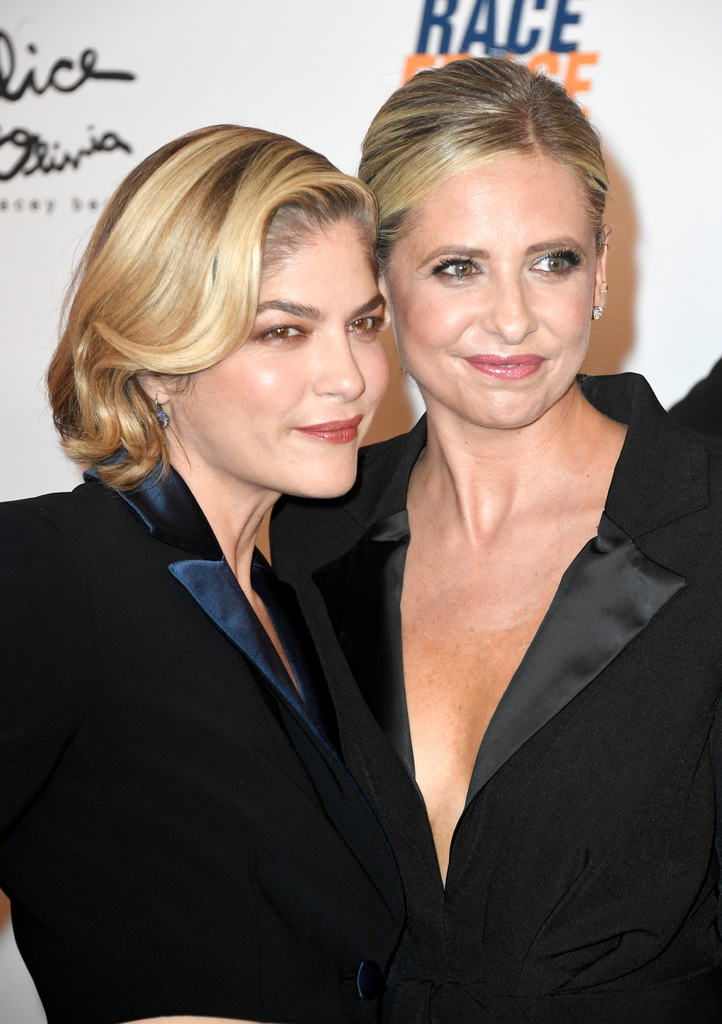
Selma Blair with Sarah Michelle Gellar
“This year we’re celebrating our 30th anniversary in June so we’ll be honouring 30 different people who have made a huge difference over the last 30 years. We’re dying to cross that finish line in finding a cure for MS and trying to figure out how can we get there quicker.”
While the finish line may be some way off, much ground has been covered so far; and Nancy has seen a huge shift in attitudes towards MS in the last three decades.
“When I was first diagnosed, people really didn’t understand it.
“They were afraid to give you a hug or a kiss because they thought they were going to catch MS. You felt like a pariah and people were afraid to get close to you.
“Obviously, there’s so much more information out there today.”
Despite this positive change, however, access to care can be patchy in America.
“There are various parts of the country where they have a lot of MS doctors, and some that just don’t.
“It can be very hard to get treatment depending on where you live. MRIs are the important diagnostic tool and if you live in a big city, you take it for granted that it’s easy to get an MRI.
“But if you live in a very remote place where it takes hours to drive to a hospital that would have an MRI, and maybe even six months to be able to get on a list to have one, it’s not equal everywhere.
“But people can also do their homework and there’s so much that exists today on the internet.
“You have a wealth of knowledge that you can use for yourself and sometimes if you can’t get into one place, we hope you can get into another one.”
While tapping into the expertise of world-leading medical experts, Race to Erase MS also harnesses the power of youth in pursuit of its ultimate goal.
“There are really exciting things happening in MS and we [often] try to bring in young researchers. We purposely try to help younger doctors just graduating from medical school get their careers started because we believe so much in youth and the way that younger people have learned medicine.
“They have always had access to the internet, and some of the older doctors who are brilliant didn’t learn that way.
“It’s so nice that they can work hand-in-hand at the different centres that we fund, and forge their career. It’s so important to start young people who get excited about this disease as well.”
With so much activity going on in MS research circles, how does the foundation choose which studies to fund?
“You fund everything that you think is the best of the best in that moment. Sometimes you get really lucky, like we did with the B cell depressant drugs, because it’s made the biggest difference to people’s lives, it’s just amazing.
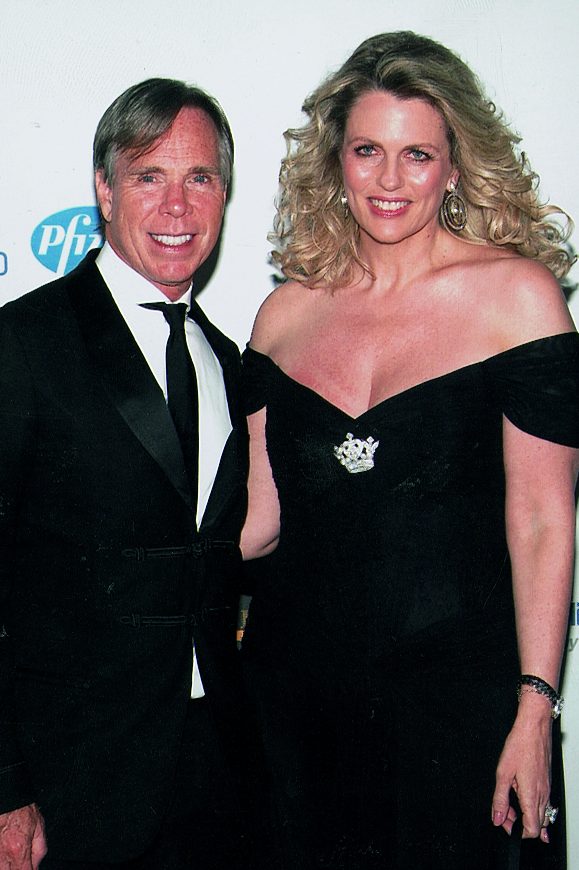
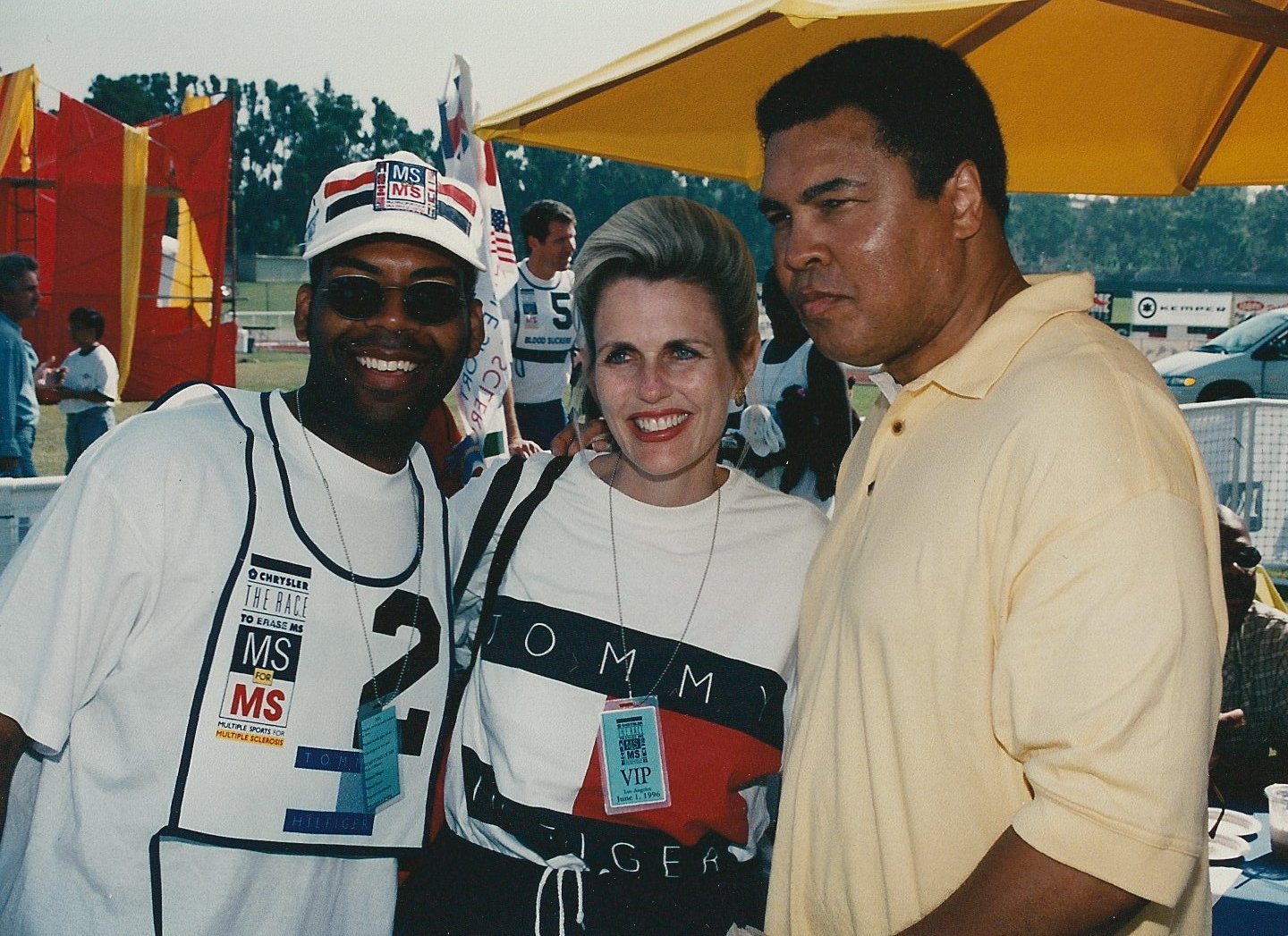
Nancy with Race to Erase MS supporter Tommy Hilfiger.
“We’re constantly looking out, and you might have a feeling that this one feels best, or that one feels bad. But you don’t know until you put it through a double-blind study and you set it up very carefully to get FDA approval.
“We’ve been very good at making things happen that way. We do pilot studies when they’re very young and very new. We look for brand new ideas and new things that have not done anything yet. We will never fund something that has been out there for a while, we’re not interested.”
The question that hangs over all activities at Race to Erase MS, of course, is how far away we are from an MS cure.
“I really hope that within the next five years, we put this to bed [with] a cure. We’re so close on so many things. The medications that are here today have made such a big difference, especially for that new person being diagnosed with MS.
“If they can get one of these medications right off the bat, they’re not going to have the myelination and all the debilitation that exists from MS, which would be a miracle. Not everyone can take those drugs, and it doesn’t fit the category for everybody. So we’re working hard to find other things.
“I would hope in five years we could find a cure for MS. That would be my dream.”