Researchers around the world are transforming outcomes for neuro and spinal injury rehab patients everywhere with innovative research.
NR Times and OML will be celebrating examples of game-changing research at the second annual NR Times Awards.
Here, we round up some of the most exciting research stories from the past year.
Find out more about the NR Times Awards and enter for free here.
New data-sharing tool aims to advance Parkinson’s disease research

Aligning Science Across Parkinson’s (ASAP) has launched a new platform – the ASAP CRN Cloud – a data-sharing tool designed to advance Parkinson’s disease (PD) research by making data easily available to researchers worldwide
The platform contains data from a unique human postmortem-derived brain sequencing collection.
These include samples from four ASAP Collaborative Research Network (CRN) teams and 156 donors, offering unprecedented insights into neurodegeneration.
The CRN Cloud brings resources from across ASAP’s network to a single platform, enabling researchers to share, access, and work directly with other leading experts to distill discoveries offering the potential for unprecedented insights into neurodegeneration.
The initial data originates from ASAP’s Collaborative Research Network, an international, multidisciplinary, and multi-institutional network of scientists working to address high-priority basic science questions at the heart of PD.
“Human postmortem-derived brain samples and data are a precious resource that are highly limited for scientific research communities studying neurodegenerative diseases like Parkinson’s disease,” said Sonya Dumanis, PhD, deputy director at Aligning Science Across Parkinson’s (ASAP).
“By democratising and federating data in one place through the CRN Cloud, ASAP and our partners are building responsible, open access data and resources to amplify the impact of every contribution across the research community and allow researchers to develop faster and better outcomes.”
Network aims to unlock UK research into spinal cord injury

A leading charity focused on spinal cord injury, Spinal Research, is driving a major new initiative aimed at unlocking the UK’s potential for cutting edge research into spinal cord injury.
The Spinal Cord Injury Clinical Research Network was formally launched this month and brings together clinicians, academics, researchers and potential funders across the UK.
It aims to catalyse and coordinate research activity and create a world-class clinical trials network testing potential new treatments and therapies for those paralysed after a spinal cord injury.
As part of its three-year funded partnership with the RFU Injured Players Foundation, which supports players who are catastrophically injured while playing rugby union in England, Spinal Research is now able to introduce a dedicated Clinical Research Network Manager and establish the formal structures needed to drive its work.
The partnership with the IPF also enables investment into neuromodulation studies with the aim to bring meaningful change to the standard of care in both hospital and community settings.
Dr Ram Hariharan, a spinal injuries consultant at the Princess Royal spinal injuries centre in Sheffield, has been coordinating network activities in recent years and is CRN Chair.
He said: “There has been a real lack of collaborative research in this area in the UK. With a formal research network in place, we hope to raise awareness and increase collaboration – not only between the 12 Spinal Injury Centres but also Trauma Centres, academics, researchers, and most importantly, those living with spinal cord injuries.
“The aim is to create a platform which will make it much easier and attractive to do, and participate in, quality research in the UK as well as contributing to multi-centre studies nationally and then internationally.
“Thanks to the support from Spinal Research, my hope is there’ll be more collaborative work between academic researchers and all SCI rehabilitation centres nationally and internationally and that we’ll be able to generate more evidence-based data from the UK.”
New research points to potential therapies for neurodegenerative conditions
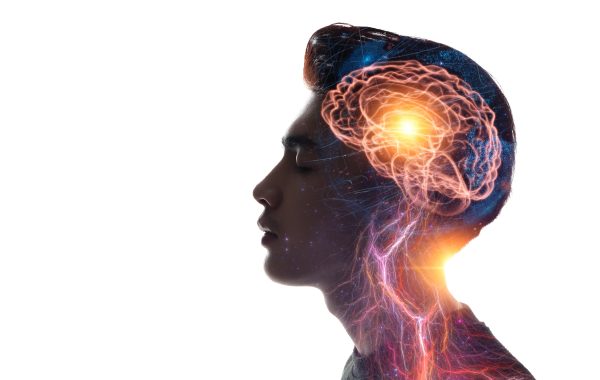
New research for the first time reveals the function of a little-understood junction between cells in the brain that could have important treatment implications for conditions ranging from multiple sclerosis to Alzheimer’s disease, to a type of brain cancer known as glioma.
The study, from Oregon Health & Science University, is published in the journal Nature Neuroscience.
Neuroscientists focused on the junction, or synapse, connecting neurons to a non-neuronal cell, known as oligodendrocyte precursor cells, or OPCs. OPCs can differentiate into oligodendrocytes, which produce a sheath around nerves known as myelin.
Myelin is the protective sheath covering each nerve cell’s axon — the threadlike portion of a cell that transmits electrical signals between cells.
The study found that these synapses play a pivotal role in producing that myelin.
“This is the first investigation of these synapses in live tissue,” said senior author Kelly Monk, Ph.D., professor and co-director of the Vollum Institute at OHSU.
“This gives an understanding of the basic, fundamental properties of how these cells work in normal development. In the future, we might look at how they function differently in the context of MS patients.”
£5m research network to open up MND trials access

The MND Association is investing £5m into building a network of research nurses aimed at enabling everyone diagnosed with the disease to take part in vital research.
The charity will build “a coordinated network of MND Association research nurses” across England, Wales and Northern Ireland, with the first nurses expected to be in post by the end of the year.
MND is a fatal, rapidly progressing disease that affects the brain and spinal cord, and attacks the nerves that control movement so muscles no longer work.
It can leave people locked in a failing body, unable to move, talk and eventually breathe. It affects more than 5,000 adults in the UK at any one time.
Currently, access to trials depends on a number of factors.
This can include a person’s proactivity in seeking opportunities, the knowledge their health and social care team has of research trials and where they live, as many clinical trials only take place in a small number of locations.
The MND Association Research Nurse Network aims to bring equitable access, with the opportunity to take part in clinical research and trials part of each person’s holistic care.
The specialist nurses will help people with MND navigate the research trial process – providing information, identifying trials and research opportunities patients are eligible for, explaining what’s involved, and supporting their ongoing involvement.
Collaboration across the Network will support the sharing of outcomes, so successful research can be put into practice quickly.
MND Association research nurses will work alongside multidisciplinary teams in care centres and networks where the MND Association currently funds the coordination of care and support for people with MND.
Find out more about the NR Times Awards and enter for free here.