



The role of specialist nursing in active rehabilitation for people with complex brain injury

In the previous issue of NR Times, we heard from Charlie Oliver, Ward Manager working within St Andrew’s specialist neuropsychiatry pathway on Allitsen ward. Charlie gave us an insight into how her team support people who have complex physical healthcare needs alongside their brain injury.
This month, we get an insight from Sharonie Fitzhugh, who is Ward Manager on Tavener ward.
Tavener, one of five specialist wards, is an active rehabilitation service within the St Andrew’s pathway which works with ABI patients to prepare them for independent living and a move back to their home or a supported community setting closer to their home area.
The ward accepts transfers and step-downs from St Andrew’s ABI admission wards, but also has people come directly from external hospital settings.
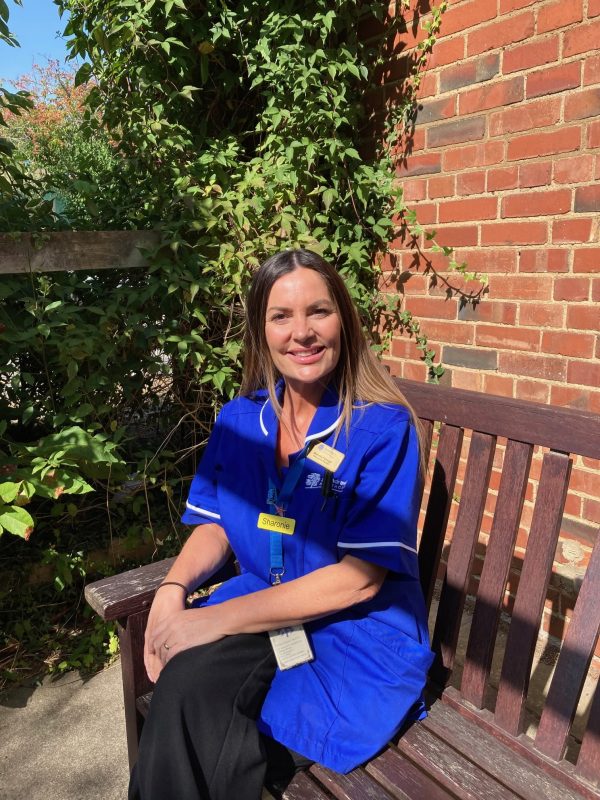
How do you and your nursing team support people with a brain injury on Tavener?
At St Andrew’s we specialise in supporting people with complex brain injuries, significant physical needs and who tend to have longer term management needs.
Providing a good quality of life for patients is central to mine and my team’s approach, so we work very hard to establish nurturing therapeutic relationships and building on those to support patient rehabilitation.
On Tavener, our whole ethos as a nursing team is around facilitating community engagement and supporting active rehabilitation.
Whereas, on Allitsen Charlie’s team will be supporting people as part of the specialist MDT with personal care and physical healthcare needs, my team will be working alongside Occupational Therapists and Health Care Assistants to facilitate Activities of Daily Living (ADL) skills.
So, for example, it could be something like helping a patient to arrange a haircut; instead of getting the on-site hairdresser to come on the ward and cut everyone’s hair we need to teach that person about phoning up and making an appointment, and then about how they plan to get to that appointment; do they need to walk, catch a bus or go by taxi, what time do they need to leave – for someone to then attend that appointment is a massive achievement.
For people who have been in hospital for a long time as a result of their brain injury, doing things like that on the phone or things like internet banking, can be challenging, but we support them with these processes from start to finish.
We do things at the person’s pace but we do maintain the momentum with that person, on Allitsen it’s a slower paced rehab where they do get people back to the community but on Tavener our patients are ready to make that transition much more quickly.
How do you work with people to rebuild skills that they may have lost through their injury?
From the moment someone comes to us on Tavener we are assessing that person’s potential for rehabilitation and planning their discharge.
They need to be open to and engaged in therapy and so much of the therapeutic relationship that we build with them is around establishing what their personal goals and motivations are.
It’s all about good communication and through that the slow process of building trust whilst promoting their independence as much as possible; putting their needs and goals at the very centre of everything we do.
Their goal is the thing that you as a nurse hold onto; that’s the seed, that’s all you need, and you think I’m going to keep watering that every day and I’m going to keep working with you around that and that’s how we get people to flourish.
Someone may be very focused on a return to work or gaining a qualification so it’s part of our job, working with the wider MDT, to provide vocational and educational opportunities. If this is their goal they can begin by accessing work at our on-site public facing garden centre, café or ceramics workshop.
Ultimately we’re working towards our patients accessing as many opportunities in the wider community as independently as possible.
If they attend college we might accompany them for the first couple of sessions in a ‘buddy’ capacity rather than as a nurse and then we’d encourage them to attend independently, possibly being met there by someone, say a volunteer, from the college.
Do you have different environments on Tavener ward that support patient’s progress?
Yes, on Tavener ward we have single bedrooms based on a more traditional ward format but we also have four self-contained flats integrated into the ward that encourage progress and foster independence.
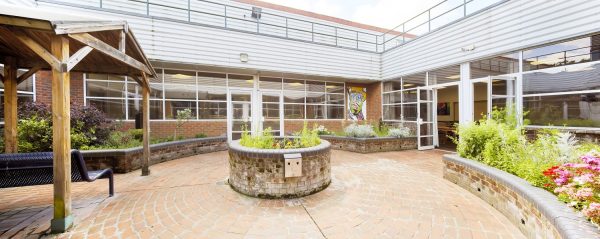
We have facilities on the ward like a training kitchen to work with people in developing their activities of daily living, and in this space we’ll be making sure that people are safe whilst building on their skills repertoire.
This kind of support will not just be about the cooking but also about budgeting and shopping for food.
At St Andrew’s we also have extensive facilities off the ward but still within the grounds that initially allow us to provide on-site rehabilitation and vocational opportunities whilst a person builds their confidence ready for more community-based interactions.
These kind of on-site work and social programmes can also be useful in identifying gaps and deficits that a person may be experiencing as a result of their brain injury.
We had one person who was accessing workshops and through the work he was doing there it became apparent that he had a left sided weakness as result of his ABI. This then meant that our MDT were able to support him with adaptations to address this deficit.
Can you share some examples of patients positive rehabilitation journeys on Tavener?
Yes, one that comes immediately to mind is Leo* who came to Tavener when he was 28 with a brain injury as result of encephalitis.
His brain injury had resulted epilepsy and complex behaviours that challenged and previous hospital placements had broken down as a result of these behaviours.
His memory retention was very poor, he arrived on a PEG feed and he was reluctant to engage in personal care. His impulse control was also compromised as a result of his brain injury and he would regularly over-eat.
Leo loved to be active so we built on this by taking him onto the hospital courts for regular games of tennis, which was great for his physical and mental health and also helped with his co-ordination and focus.
We also did lots of work with Leo in the training kitchen cooking healthy meals and we made regular visits to the on-site café so that he learnt positive behaviours about the kinds of food and the size of the portions he was ordering.

This reinforcement of positive behaviours meant that Leo started to engage in personal care and was able to cook for himself and enjoy visits to restaurants and cafes in the local community.
One very personal goal for Leo was to honour his friend as Best Man at his wedding, so as a team we supported him to achieve this; organising trips to noisy environments like the bowling alley and social settings so he could get used to bright lights and music, in readiness for the reception
Our Speech and Language team also worked with Leo to help him prepare and deliver his Best Man’s speech.
He had a really smart suit for the day and there honestly was not a dry eye in the house.
Leo now lives in his own supported living flat in his home area, 10 minutes from his family but we are in regular contact with him and his family and he has been back to visit us on the ward.
We also recently worked with a gentleman who came to us after he sustained a brain injury in active service.
Following acute hospitalisation, David* initially went into a military rehabilitation facility but his behaviours became too challenging for them to manage and he came straight from there to Tavener.
David* had sustained physical injuries in addition to his brain injury and when he came to us he could self-propel in his wheelchair but he was only able to stand for a very limited amount of time.
He was initially very dismissive of neuro-physiotherapy and he just wanted to be in the gym everyday trying to implement the programme he’d done in the army.
However, he didn’t have the cognitive awareness to recognise that his body had changed as a result of his injuries and in conjunction with the muscle wastage he’d sustained he was compromising his physical recovery with these exercises.
With David we had to build a therapeutic relationship based on helping him to psychologically understand that he would no longer be able to pursue his military career and to find new goals and find hope for his future.
We had to work with him in a grieving capacity so, we had to grieve the life he had in the army with him and support him to adapt to a new life, so there were a lot of challenges there.
We did a lot of work with him around social adjustment too, so we built his confidence up with regular trips out into the local community because he was very self-conscious about his changed appearance following his accident having lost a lot of muscle tone and facially his features had changed.
His speech was also dramatically affected by the brain injury.
We reached a place where David was able to accept that his life would be different and when he left us he was physically much stronger and able to walk with the aid of walking poles rather than having to use his wheelchair.
Again, David now lives in a supported community setting in his own flat.
Our specialist approach means that we can progress people off the ward and back home or to a community setting relatively quickly.
Intensive interventions mean that our patients achieve a lot in a short space of time and it is really important to us that we do absolutely everything we can to give them the best quality of life.
For one person in our care this meant working with him to re-learn the London underground tube map so he could return to living back home in London.
We took it step by step and accompanied him from Northampton to London, using the tube on a number of occasions, eventually getting him to the place where he could make this journey confidently on his own. We always go above and beyond.
Seeing people, like Leo and David make that transition back home or to a supported community unit closer to their family, and to see them rebuild their lives and have hope for the future are what makes my job worthwhile.
To ask Sharonie a question or to find out more about the ward you can email her directly at; [email protected]
To find out more about the active rehabilitation programme on Tavener you can visit the web page HERE or to discuss a referral contact our Admissions Team on
e: SAH@[email protected] t: 0800 434 6090
*please note that we have changed the names of patients in this article to protect confidentiality


