The Children’s Trust: Transforming outcomes for children across the UK

The Children’s Trust is the UK’s largest charity supporting children and young people with brain injury and neurodisability.
The Children’s Trust’s brain injury rehabilitation service is primarily delivered from its national specialist centre in Tadworth, Surrey.
It’s the only service commissioned directly by NHS England to provide specialist brain injury rehabilitation for children and young people outside of an acute hospital setting.
The Children’s Trust helps children restore their lost skills or develop new ways of doing things while supporting the family with their child’s newly acquired disability transition home and plan for the future.
NR Times sat down with Melanie Burrough, Director of Therapies and Education and Tim Grove, Lead Analyst and Impact Manager to find out what’s next for the charity following their NR Times Rehab Outcome of the Year Award win.
Firstly, congratulations again for winning the Rehab Outcome Award sponsored by Elysium Neurological.
The category judge was really impressed on how you have managed to achieve such incredible outcomes in a relatively short space of time.
Mel, can you tell us how do you tailor your programmes to enable children to reach these outcomes?
It’s a team approach – we work together to provide personalised care with input from our consultants in neurodisability, specialist physiotherapists, occupational therapists, speech and language therapists, music therapists, clinical and educational psychologists, as well as our nurses and carers.
This is done in partnership with the child and their family, working to set goals which are important to them – these goals help to determine their neurorehabilitation programme.
What kind of treatments do you offer?
Through a highly skilled multi-disciplinary team, we offer speech and language therapy, occupational therapy, physiotherapy, and psychology, underpinned by specialist medical, nursing and care support.
Some of our treatment is neuro-technology focused, so technologies that drive repetition of recovery in movement and functional tasks.
That might include getting dressed in the morning, playing games with friends again or completing schoolwork.
We also have neuro-technology that focuses on the upper limb and technology that supports lower limbs for children who need more input around moving, standing and walking, as well as a range of wearable technologies that are connected to virtual reality that provide children with increased intensity and dosage in their treatment.
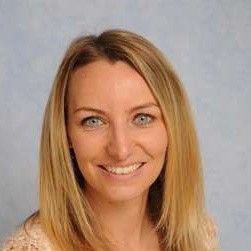
Melanie Burrough
Alongside technology, we offer treatments, such as aquatic therapy and rebound therapy. Children also have access to hippotherapy as well as community outings and leisure participation.
We aim to see improvements to the child’s quality of life, their happiness and wellbeing, as well as their recovery.
This might be seen in physical skills, cognition, communication and language, supporting everyday activities like washing, dressing in the morning, going to school and interacting with friends and family.
Tim, we were also really impressed to see just how many children were able to return home with either no or just minor adaptions to their homes and often able to return to the same school or educational setting as before their injury.
How important is it for children to have all of those securities around them when they return home?
I think it’s hugely important.
Sometimes we have to have these conversations in a really sensitive way, because what the future might look like for a child or young person may not be what they or their family would be expecting because of the nature of having an acquired injury.
Of course, there may well be an impact on how that child is functioning in their everyday life and what they may need to return home safely.
That might involve aids, adaptations and equipment or maybe a specific are package to support them overnight.
They may need similar aids and equipment within a school setting, and further support in the classroom, for example.
Some children might need an education health and care plan, known more commonly as an EHC plan, to identify where their needs have changed and what support they need to help them at school.
So, it’s really important that during rehabilitation we understand how an acquired brain injury might impact on longer-term outcomes and participation for that child and family.
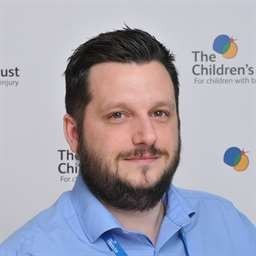
Tim Grove
It’s also important that we do this planning early. We start by focusing on discharge plans, to home, to school, to the community, really early on, even before the children come to us and begin their neurorehabilitation programme.
We start that conversation with professionals supporting the child in the acute phase of their treatment, whilst in hospital, and with their family early on so that we can help coach and provide guidance where things have changed or might look different as they move forward.
Another part in understanding that is through psychological support and intervention for the whole family.
That’s about coming to terms with the impact of an acquired brain injury but also looking forward to what new opportunities there might be around recovery or adaptation to a new disability.
Mel, can you tell us more about how you work with schools, clinicians, the family, GPs and so on after the child is discharged?
We try to ensure that there’s an integrated pathway of transition from the child receiving inpatient neurorehabilitation with us to returning home into their community.
As part of that, we liaise with community professionals and share insights and information around the child’s rehabilitation, their progress, their ongoing goals and what they might need support with moving forward.
Of course, there are challenges such as waiting lists for community support, and we support children from all over the country, so we have to work with a number of different local providers and external stakeholders.
Coordination of care can really be challenging, but that’s what we aim to do.
You’ve touched on it a little bit there. But what do you see as some of the gaps in the healthcare system today, and how are you trying to plug those yourselves?
One of the biggest barriers for children with acquired brain injuries can be waiting times. There’s such demand on community NHS paediatric services and capacity to provide what is needed at the right time.
There are differences in criteria and waiting times across the country. Sometimes that geographical area can influence what a child and their family have access to.
We’ve worked hard to develop an integrated pathway for neurorehabilitation.
To support the onward transition into community services, both for children transitioning from our inpatient service in Tadworth, and for children further afield across the country, we’ve developed and invested in our community rehabilitation service.
This provides an in person and virtual pathway for longer-term follow up and support in the community, which then also extend into schools.
What are your goals for the charity in 2025 and beyond?
The Children’s Trust is embarking on an organisational strategy that is exciting and promotes sustainability and growth.
Our ambition is to reach as many children as possible and to help them live the best life possible.
We also hope to see greater support and follow up across our community rehabilitation service so that we can provide more support to children and young people, as well as offering more opportunities where children can come to us on an outpatient basis.
We certainly want to grow, develop and innovate around our neurotechnology. That’s something we’re really passionate about.
We’ve done quite a lot of growing already, but we would like to move forwards and provide new technology, particularly around gait training and relearning to walk.
Those are some of our big priorities for the coming year.
We are engaged in the vital work of the national ABI agenda and continue to advocate for paediatric neurorehabilitation.
We want to make sure that all children and young people with an acquired brain injury, and their families, have a voice that is heard on a national level, to help shape the support available to them today, and for others in the future.
Find out more about The Children’s Trust at thechildrenstrust.org.uk/