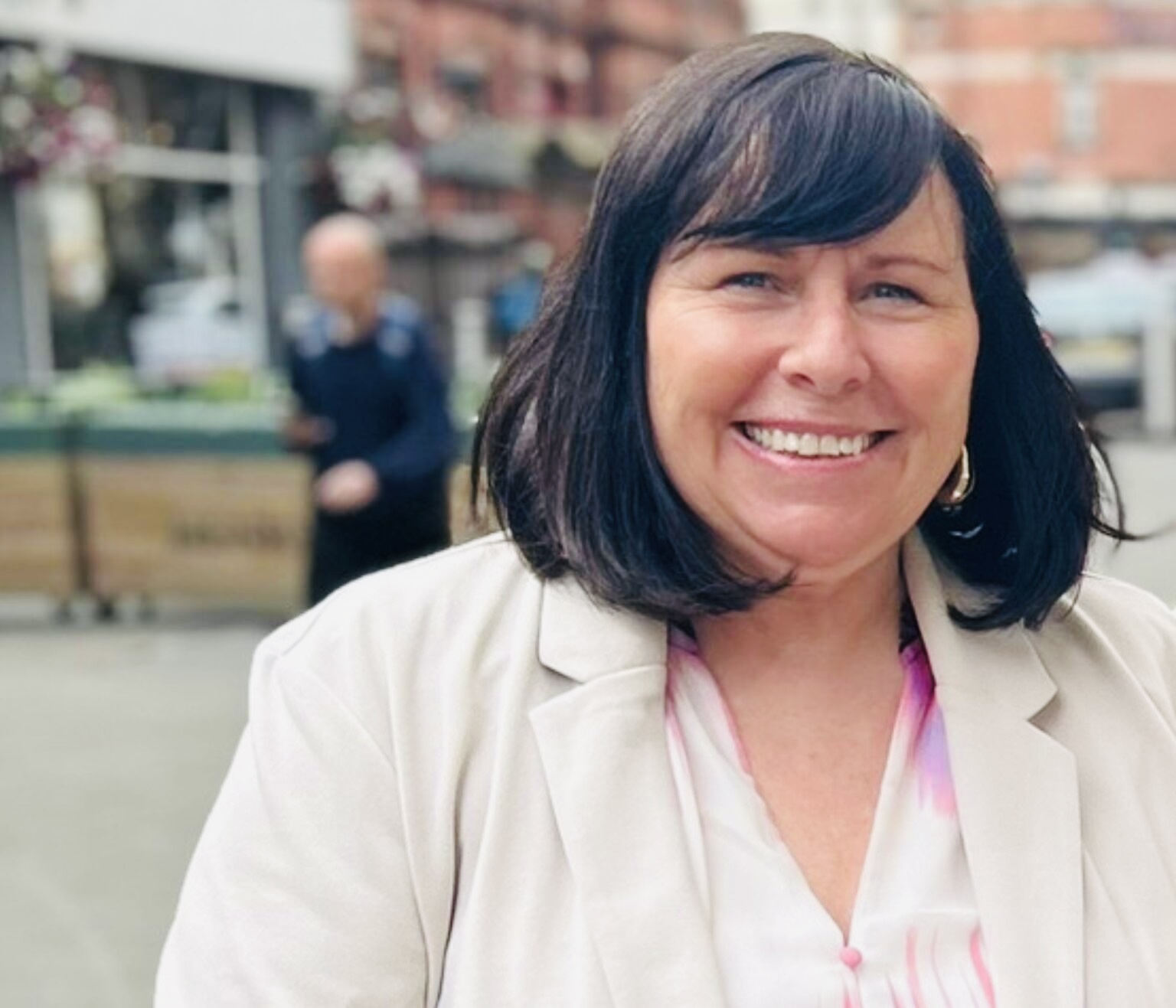
Elizabeth Wilce, programme manager for the Brain Injury Linkworker Service at Brainkind, reflects on 28 years working at the intersection of brain injury and criminal justice.
NR Times award-winner Elizabeth Wilce has dedicated her near thirty-year career at Brainkind to extending person centred neurorehabilitation to previously under-represented groups.
She is committed to providing care for everyone who needs it – not just those who can easily access it.
Elizabeth has played an instrumental role in researching, developing, and leading Brainkind’s award-winning Brain Injury Linkworker Service.
Today, Elizabeth leads a team at Brainkind working across 14 prisons in the UK, supporting some of the country’s most vulnerable people.
“I feel quite lucky that I’m able to do the work that I do,” Wilce says.
Advocating for specialist brain injury support within prisons has often required careful explanation, simply because many people have not previously been aware of the prevalence of brain injury or the complex experiences that shape individuals’ lives before they enter custody.
Wilce notes that, historically, public understanding has been limited.
“People often have questions about why support is needed,” she says.
“Comments like ‘why do they need certain things?’ tend to reflect a lack of awareness rather than a lack of care.”
What these views don’t always capture, she explains, is the life journey that brings many individuals into contact with the criminal justice system.
“The people we work with frequently come from challenging socioeconomic circumstances,” Wilce says.
“Many have faced barriers to support from a very young age, whether in family life, education, or the community.”
Importantly, Wilce emphasises that the environment within prisons has evolved considerably over time.
“I’ve seen real progress in how the prison system recognises and responds to complex needs,” she says.
“There is screening, and dedicated support in place. Prisons are doing a great deal of positive work, and there’s a strong commitment to improving outcomes for everyone.”
The scale of unmet need
Brainkind’s research has helped build a clearer picture of just how many people in prison may be living with the effects of brain injury.
In the original study at HMP Leeds, indicators of brain injury were identified in around 48 per cent of the population.
In the women’s estate, that figure is even higher, rising to 64 per cent — and many women’s experiences were shaped by earlier trauma, including domestic abuse.
Work over the last decade has confirmed those prevalence rates, even indicating that it may be higher for women.
Insights like these have guided practical changes in how Brainkind approaches screening.
“We’ve traditionally asked questions like, ‘Have you ever lost consciousness?’” Wilce explains.
“But we realised that people don’t always connect certain experiences, for example being loss of consciousness following non-fatal strangulation with the question, even though it can impact the brain.”
Emerging evidence helped the team to improve screening process, introducing questions like: “Have you ever been held in a way that you cannot breathe?”
That small change made a big difference, helping the service identify more people who could benefit from support.
Wilce, says that these findings echo the charity’s Complex Lives research with women in Wales who have been in contact with the criminal justice system.
“In that study, 80 per cent on women screened positive for a history indicative of brain injury,” she says.
Wilce emphasises that it’s important to understand these findings in context.
“Brain injury is one factor among many that people may be navigating,” she explains.
“PTSD, mental health challenges, anxiety, depression – all of these experiences can interact and influence someone’s wellbeing.”
She’s also clear that it isn’t helpful to oversimplify the picture.
“I’d never want to suggest that a single intervention will eliminate the possibility of reoffending,” she says.
“Human lives are far more complex than that. Brain injury is just one piece of a much broader picture that shapes someone’s journey.”
From practice to policy
One of the most powerful parts of Brainkind’s approach is how Wilce’s day-to-day work with people in prison feeds directly into national policy conversations.
Wilce explains that the insights gathered through the Brain Injury Linkworker service don’t just stay within the prison walls — they feed into the All-Party Parliamentary Group (APPG) for Acquired Brain Injury and, through partners like UKABIF and the ABI Justice Network, reach MPs and other decision-makers.
“For people in prison, it can be incredibly hard to have their experiences represented in policy spaces,” Wilce says.
“Our work provides a route for those voices to be heard. It shows what neuro-rehabilitation can achieve and shares the stories of people who feel the difference it’s made.”
Wilce also highlights that the intervention itself is relatively low-cost, yet its impact is felt throughout a person’s journey in custody, from early identification to preparation for life beyond the prison gates.
On the ground, Wilce leads the work of the Brain Injury Linkworkers who are embedded within prison healthcare teams.
They collaborate closely with mental health services, neurodiversity leads, and reducing reoffending teams to ensure that support is joined up and person-centred.
The partnership with neurodiversity leads — a role introduced as part of a national action plan — has been particularly valuable, helping to create smoother pathways and a shared understanding of individuals’ needs.
The ongoing success of the service demonstrates Wilce’s ability to blend her commitment to person centred delivery with a deep understanding of the neurorehabilitation needs of people in contact with the CJS, and how to work with the wide range of stakeholders that support people in prison.
Looking ahead
Brainkind has just mobilised services across seven new prisons in the Northwest of England, with this expansion generating considerable interest for its regional design.
Rather than focusing on individual institutions, the Northwest pilot spans prisons, probation services, approved premises and reconnect services, creating a connected approach across the entire criminal justice pathway.
“This is such an exciting opportunity to work with commissioners to look at how you can have a regional approach to brain injury across all areas of the criminal justice system,” Wilce says.
If the evaluation delivers what the team hopes, it could provide a blueprint for a regionalised model nationally.
Alongside the expansion, the organisation is expecting to publish patient-reported outcome measures from within prisons, research on women’s prison data and a broader evaluation of the Brain Injury Linkworker service.
After 28 years, what gives Wilce the most hope about the future of neuro-rehab in the populations she works with?
“The team, with their passion and commitment to improving services for everyone.
“The fact that people are listening now, and that the door’s not being shut. We’ll just keep banging the drum.”