


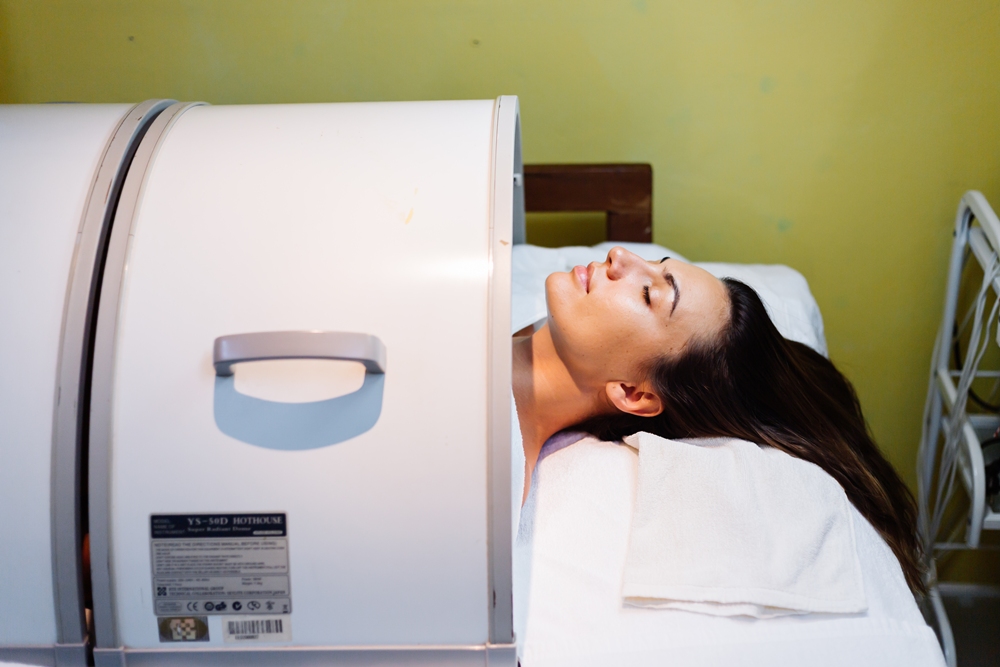
UVB light therapy is a relatively simple process – a phototherapy lamp is used to shine light on your body, special bulbs emit ultraviolet B radiation, and over time, your skin condition gets better. UVB light therapy may be conducted as a targeted treatment or done in a special cabinet for a full-body treatment. It’s been used in dermatology clinics since the 1920s, and doctors still prescribe it constantly. That alone should tell you something about how well it works.
The ultraviolet B spectrum covers wavelengths from about 280 to 320 nanometers. Your first session might last literally five seconds. Over the course of several weeks, exposure time creeps up toward 10 minutes max, with visits usually happening three times per week.
How UVB Treats Skin Conditions
Take psoriasis. Healthy skin cells renew on roughly a 28-day cycle. Psoriatic cells do it in 3 or 4 days, piling up into thick scaly patches. UVB light slows that turnover by disrupting DNA replication in the outer skin layer. Fewer new cells means the plaques start clearing.
Almost all clinics today use narrowband UVB, which puts out light concentrated around 311 to 313 nanometers. Before the late ’80s, they used broadband lamps that covered a wider range. Broadband burned patients more and didn’t work all that well, so narrowband took over. It’s now the go-to option for uvb light therapy worldwide.
On top of slowing cell growth, UVB helps suppress or remove overactive immune T cells in the skin and reduce the inflammatory signals they produce. When the harmful T-cell activity is calmed, psoriasis plaques lose the signals telling them to stay inflamed and grow too fast, so redness, itching, and scaling reduce, and the skin can heal.
Other Conditions It Works For
Vitiligo is worth mentioning because the results have been proven to work. UVB pushes melanocytes inside hair follicles to start making pigment again. According to a review covered by Dermatology Times, 80% of patients held onto their repigmentation a year after wrapping up NB-UVB sessions. For vitiligo, that’s a really strong number.
Eczema is another common one. Some people spend years going through different steroid creams without ever really getting their flares under control. A 12 to 16 week run of UVB sessions often does what the creams couldn’t. It’s especially popular with patients who worry about using topical steroids long-term, since thinning skin and other side effects become a real concern after years of use.
There’s also cutaneous T-cell lymphoma, lichen planus, and polymorphic light eruption on the list.
The Move to Home Treatment
Going to a clinic three days a week for months is a lot. People miss sessions, get behind, eventually quit. It was the single biggest practical problem with phototherapy for years. And it wasn’t a small problem. Compliance basically determines whether phototherapy works or doesn’t.
Home UVB devices solved it. Studies found outcomes were basically the same whether patients were treated at home or in the clinic, at least for chronic plaque psoriasis. You still get your dose calibrated by a dermatologist first and you still go back for checkups. But the practical part happens in your bathroom on your own schedule.
Insurance coverage expanded for home units. Prices on the devices dropped. Both of those things mattered more than any clinical study in getting patients to actually use the treatment consistently.
Risks to Know About
Early on, some redness and light burns are normal while the dose gets figured out. Dry skin, too. Anyone who gets cold sores should flag that, since UVB can trigger herpes simplex flare-ups.
Skin cancer risk comes up every time this topic does. The World Health Organization breaks UV radiation into three bands. UVB is the middle one, sitting between the deeper-penetrating UVA and the atmosphere-blocked UVC.
Narrowband UVB is way less risky than PUVA, the older method that paired UVA light with a photosensitizing pill called psoralen. PUVA’s connection to squamous cell carcinoma is well documented. NB-UVB doesn’t carry nearly the same risk. Doctors generally recommend cancer screening around the 500-session mark as a precaution, but that number isn’t some cliff where things get dangerous.
Biologics Are Great, but Phototherapy Still Makes Sense
Adalimumab, ustekinumab, secukinumab. These biologic drugs cost upward of £37,000 ($50,000) per year. They’re effective for severe psoriasis. Nobody’s questioning that.
But for moderate cases, NB-UVB holds up really well in head-to-head data. Quality-of-life improvements after 12 weeks of phototherapy have matched adalimumab in published comparisons. Phototherapy is also local, meaning it treats the skin without suppressing the whole immune system, which matters to a lot of patients.
Excimer lasers now let dermatologists target small, resistant patches precisely. Dosing keeps getting smarter. NHS guidelines still recommend phototherapy as a standard step before moving patients to systemic treatment.
 Ex-army chief urges ministers to back MDMA therapy for veterans


