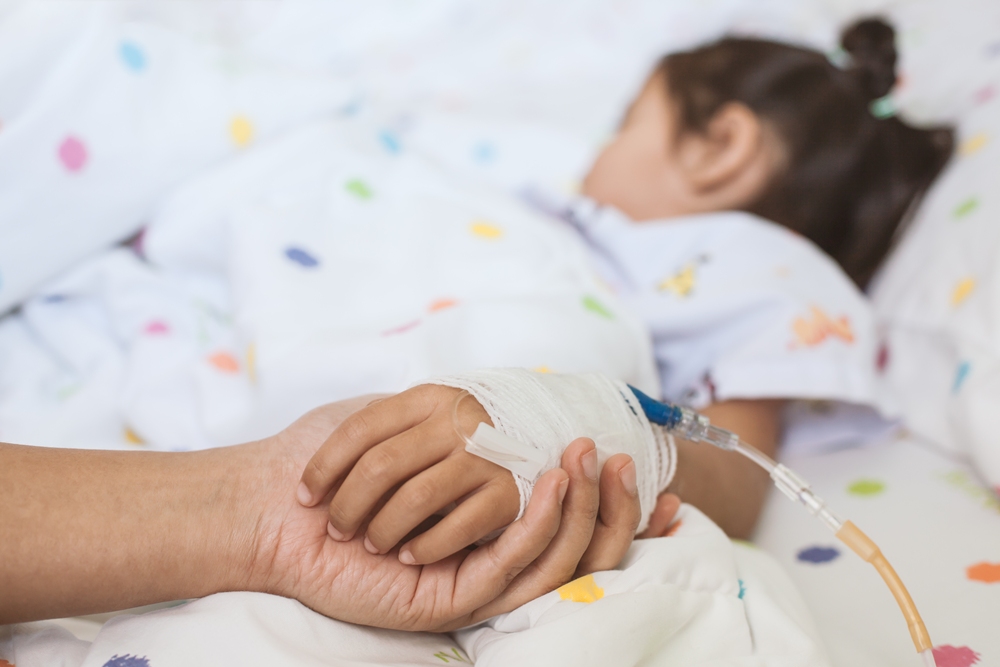
The FDA has approved Ocrevus for children aged 10 and older in the US with relapsing-remitting MS (RRMS).
In a clinical trial, the infusion therapy significantly reduced relapses and new or enlarging lesions in paediatric patients.
As the second treatment approved for children and adolescents with relapsing-remitting MS, it offers a new option for patients, according to developer Genentech.

The approval makes Ocrevus the second therapy to receive formal FDA approval for this indication, according to Genentech, a member of the Roche Group.
Previously, Gilenya, also known as fingolimod, was the only MS therapy approved for paediatric patients in the US.
“This approval represents a landmark for children living with MS in the U.S. and their families, which can help close the longstanding gap in high-efficacy treatment options for children aged 10 and older,” said Levi Garraway, chief medical officer and head of global product development at Genentech.
“By bringing a decade of efficacy and safety data to this younger population, Ocrevus may reduce relapses and potentially redefine what’s possible for their future.”
MS is a chronic disorder marked by inflammation that damages nerve cells in the brain and spinal cord, leading to symptoms that can include difficulty moving, mental health challenges and fatigue.
The disorder mainly affects adults, but in some rare cases it can develop during childhood or adolescence.
When MS begins before the age of 18, patients are said to have paediatric-onset MS.
Virtually everyone with paediatric MS initially develops the relapsing-remitting form of the disease, which is marked by relapses, or flares, followed by periods of remission when symptoms ease.
Ocrevus works by depleting B-cells, a type of immune cell with a central role in the inflammation that drives MS.
It is given by intravenous infusion, meaning the medicine is delivered into a vein, with the first two doses administered two weeks apart and later doses given every six months.
The therapy was already approved in the US for adults with relapsing forms of MS, specifically clinically isolated syndrome, relapsing-remitting MS and active secondary progressive MS, as well as primary progressive MS.
The new approval for paediatric MS was based mainly on data from the Phase 3 OPERETTA 2 trial, which enrolled 187 children and adolescents with MS.
Participants were randomly assigned to receive either Ocrevus or Gilenya, a daily oral medicine, for two years.
The trial met its main goal of showing that Ocrevus was at least as effective as Gilenya at reducing relapse rates.
Patients treated with Ocrevus had a 48 per cent lower risk of relapse than those receiving the oral medicine.
Additional results showed Ocrevus reduced the number of patients with new or enlarging MS lesions by 48 per cent and lowered the number of participants with actively inflamed lesions by 87 per cent.
Lesions are areas of damage in the brain or spinal cord caused by MS inflammation.
Genentech said the safety profile seen in children was consistent with the known profile in adults.
No side effects led to treatment discontinuation in the Ocrevus group, while three participants withdrew from the Gilenya group.