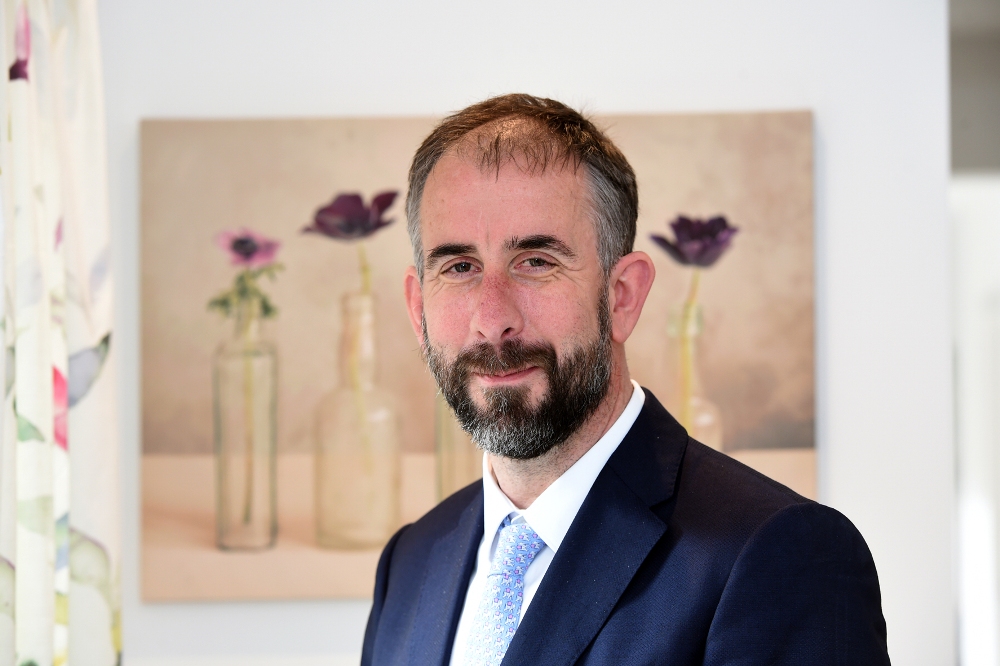
Ahead of his presentation at the Adult Brain Injury Conference, hosted by the Brain Injury Group, Dr Neil Graham talks about blood biomarkers, the football heading debate and what we still do not know about the brain’s long-term response to trauma.
Dr Neil Graham is a consultant neurologist at the National Hospital for Neurology and Neurosurgery at Queen Square and a clinical lecturer at Imperial College London.
Dr Graham will be speaking at the Adult Brain Injury Conference June 11, where his talk, titled ‘Latest Research and Understanding of the Long-Term Consequences of a Head Injury’, will bring delegates up to speed on a field that has moved remarkably quickly in recent years.
“My scientific focus has long been on traumatic brain injury and its consequences,” Dr Graham says.
“The interface of head injuries and progressive problems like dementia.”
Much of Dr Graham’s recent work has centred on blood biomarkers: ultra-sensitive tests that can detect chemical signs of brain injury in the bloodstream.
His PhD examined the validity of these tests, and the technology has since moved from research tool to something approaching clinical reality.
“These tests not far from being available on the NHS, pending further data about cost-effectiveness” Dr Graham says.
“There are MHRA and FDA approved tools that you can use to measure very sensitively what’s happened in terms of injury.
“They seem to be more sensitive than clinical symptoms in some cases, and certainly much more sensitive than CT scans, and probably more sensitive than MRIs acutely.”

Dr Neil Graham
At the conference, Dr Graham will discuss new criteria for classifying traumatic brain injury: a framework built around clinical features, biomarkers, including both blood tests and advanced imaging, and what researchers call modifiers – the environmental and biological factors that shape how well, or how poorly, a patient recovers.
“We haven’t had the technology to measure these blood biomarkers until very recently.
“There’s a challenge about rolling it out and understanding exactly what it means in which circumstances, but I think it’s very exciting, and it’s probably going to be very helpful for patients and clinicians to learn about this.”
Sport, football and a contested science
Any discussion of head injury and long-term brain health inevitably arrives at sport. And in the UK, at football in particular.
The question of whether repeatedly heading a ball causes neurological harm has become one of the more contentious in sports medicine, with governing bodies and scientists often butting heads.
Dr Graham was at a meeting hosted by the Football Association (FA) the week before this interview, shortly after the FA made public statements appearing to downplay the link between heading and long-term brain injury.
Dr Graham says: “I think the epidemiology is fairly persuasive.
“There are big studies of former professional footballers that suggest there is a relationship between the exposure and adverse brain health outcomes.”
He is careful to add nuance. The relationship appears to be dose-dependent, meaning that the amount of exposure matters.
“I suspect this likely won’t be hugely relevant for every person playing a bit of football on the weekend, although we know little about individual susceptibility or protective factors right now” he says.
Nor does he think the answer is simply to steer people away from sport.
“Inactivity is certainly a risk factor for dementia in later life. We definitely don’t want to put people off having good cardiovascular health.”
What he wants, ultimately, is better data and for governing bodies to use that data responsibly.
Dr Graham says: “It’s going to be for individual players, and sporting governing bodies to make choices about how they interpret that information and weigh how best to manage risks and benefits of participation. It may be that rule changes can mitigate a lot of the risks.”
Beyond the pitch
The same scientific challenges that apply to sport apply in a military context too.
Dr Graham is involved in a cohort study of more than 1,000 serving and former service personnel in the Midlands, examining the consequences of blast injury through brain imaging and blood tests.
One of the core difficulties, he explains, is retrospective exposure assessment: working out after the fact exactly what someone was subjected to.
“You can do a study where you know perfectly how someone is now, but you didn’t know in detail what happened years ago, at the time of their injury. Or you could assess people immediately post injury, perhaps even with biomechanical information about the mechanism, but might have to follow up several years to understand the consequences.”
Piecing together the full picture remains, as he puts it, a challenge of putting the puzzle together.
Research groups are now using tools such as blast pressure gauges and, in rugby, instrumented mouth guards, to build up real-time data on biomechanical loading.
The hope is to understand not just whether exposure causes harm, but which exposures carry the most risk, and whether there is a safe threshold or a continuous gradient of harm.
Living with uncertainty
For patients, this uncertainty can be acutely difficult.
Dr Graham is co-developing a service for people with concerns about dementia or chronic traumatic encephalopathy (CTE), the degenerative condition associated with repeated head impacts that has generated enormous media coverage in recent years.
CTE cannot currently be diagnosed definitively during life. Many of its reported symptoms overlap with other conditions.
“A lot of psychiatric and neurological symptoms seen in this context can be generated by other processes. They don’t necessarily indicate a progressive degenerative brain disease,” Dr Graham says.
“For patients and clinicians alike, this area is hugely challenging.
“However, we do have experience of managing these cases, and tools that provide us with useful clinical information, allowing us to try to identify what we think the cause of a particular set of symptoms is — and what the best treatments or ways to manage those symptoms are.”
The science is still catching up with the scale of the problem. But it is catching up.
Dr Neil Graham speaks on Day 1 of the Adult Brain Injury Conference, taking place June on June 11 and 12 at the Lowry (Salford Quays) in Manchester.
Find out more and secure your seat here.