Strokes are increasingly striking people in their 20s and 30s, with health services on both sides of the Atlantic struggling to keep pace.
Recent reports have highlighted a sharp rise in the number of young adults experiencing strokes, with delays in diagnosis and treatment compounding the risks.
In the US, stroke incidence among adults aged 18 to 44 rose by around 15 per cent between 2020 and 2022, according to new data.

Doctors there say that a variety of factors are to blame, including diabetes and obesity, but cardiovascular problems remain the biggest driver.

Dr Lauren Shapiro, medical director of the stroke programme at Brooks Rehabilitation in Jacksonville, said: “There has been a significant rise in the incidence of stroke among people under age 55 over the past two decades.
“There are multiple reasons, but the rising prevalence of high blood pressure is probably the most significant.”
Young mother Bethany Fonseca had a stroke at just 27-year-old mother, describing her stroke as beginning with her arm “feeling like a limp noodle.”
She told USA Today:“I just wanted to see my daughters one more time.”
Fonseca has since been left with fatigue and balance problems.
Meanwhile, in the UK, England goalkeeper Ellie Robuck is preparing to return to the game after surviving a stroke at 24.
The now-25-year-old suffered a stroke while at Manchester City at the start of the 2023/24 season, which required a lengthy recovery and kept her sidelined for 19 months.
Roebuck said of her early days in recovery: “The biggest barrier of all was my mind.
“To anybody who dismisses the symptoms of anxiety, trust me, they are very much real and physical.
“After I found out I’d had a stroke, even simple balance and head movements terrified me. I would turn my whole body left and right just to look around.
“I felt like a ticking time bomb ready to explode any second.”
The goalkeeper has vowed to savour every moment as she returns to her old life.
She said: “After my stroke, I made a promise to myself that, moving forward, I will enjoy every win, every moment on the training pitch.
“Every meal with my family. Every walk with my dog. No matter how hard it gets.
“Now, I’m excited to start my new chapter at Aston Villa.”
An Irish former football player is also speaking out to raise awareness of the impact of a stroke at a young age.
In April 2022, Andy Waterworth marked his retirement from football, having played the final professional match of his career for Glenavon only a day earlier.
But the very next day, the 36-year-old striker, now serving as the Irish FA’s Director of Elite Player Development, suffered a stroke.
Waterworth said: “I was in shock. Never in a million years did I think that I would have a stroke.
“As an athlete, health and fitness is the number one priority and to be fit and well one minute and have a stroke the next was unbelievable.
Waterworth is one of three local sporting greats backing a new awareness campaign, after each having faced the potentially devastating effects of stroke, as the number of people living with the condition in Northern Ireland has risen by more than 20 per cent in the past decade.
Ambulance delays fuelling risky decisions
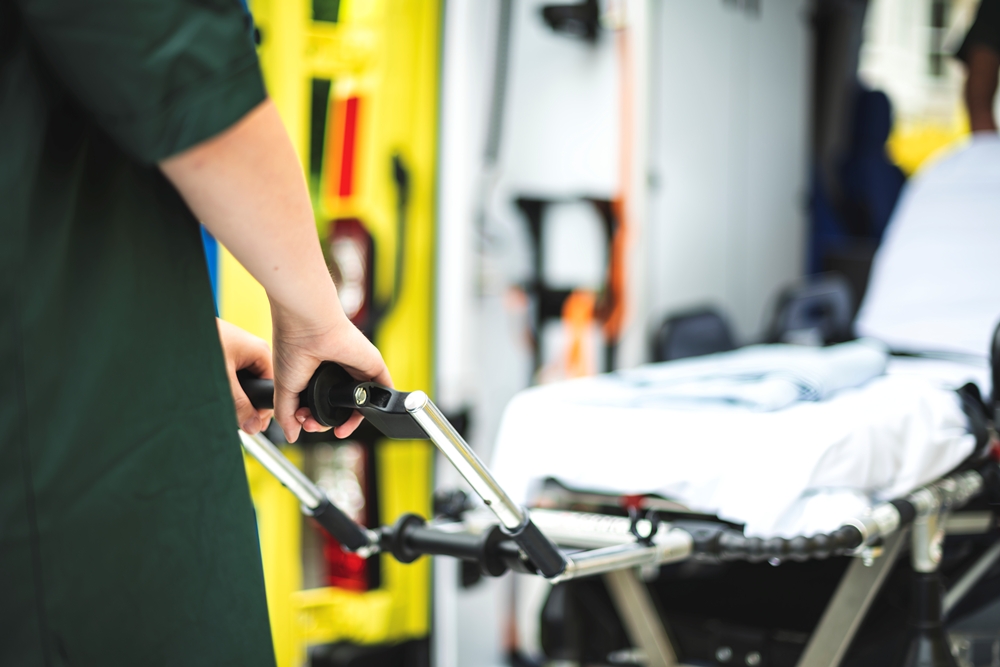
Back in the UK, more than a quarter of stroke patients are bypassing ambulances altogether and making their own way to A&E – the highest proportion since records began, new figures from the Sentinel Stroke National Audit Programme (SSNAP) have revealed.
The Stroke Association has warned that arriving by ambulance can be life-saving, as paramedics ensure rapid transfer to specialist stroke units and immediate brain scans.
Without this pathway, patients risk delays in receiving clot-busting drugs or thrombectomy, both of which are highly time-sensitive, the charity said.
Professor Deb Lowe, Medical Director of the Stroke Association, said: “We do understand people’s concerns about long ambulance waits but, in most cases, it’s still the fastest and most efficient way to get the best treatment and care for stroke.
“This is especially pertinent when supported by technologies, such as prehospital video triage, which can help diagnose stroke on the road to a specialist stroke unit.
“Getting to the right place for rapid and effective treatment can make the difference between a stroke patient walking out of hospital or leaving in a wheelchair.”