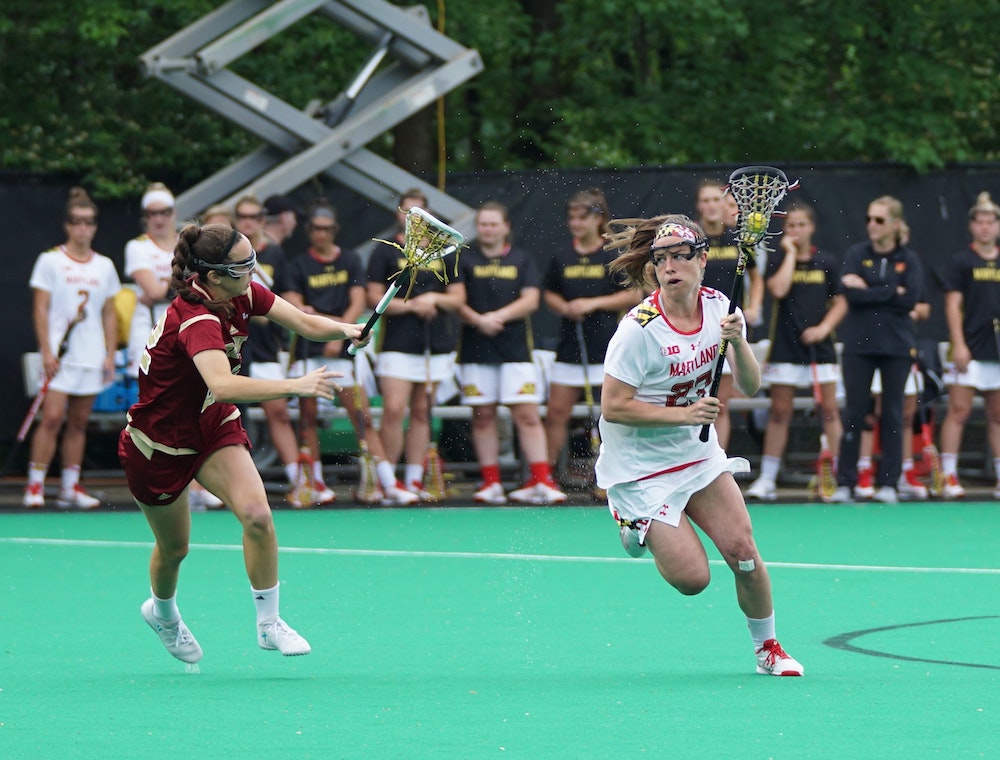
Why do we protect our shins and not our brain? And why is sports performance focused below the neck? We speak to Judith McMinn, founder of the brain protection company Rezon, in search of answers.
In recent years, the long-term effects of neurological issues in sport have become more widely acknowledged due to the incidence of dementia in sporting heroes.
However, the scientific evidence surrounding concussion in sport is limited.
Research suggests that in the UK there are currently insufficient measures in place to prevent, recognise and monitor acquired brain injury in sport while coaches have little knowledge of concussion.
“The focus has been on below the neck,” says Judith McMinn, founder of the UK-based brain protective company Rezon. “The closest that sport gets to the brain is nutrition and sleep and yet, the very winning essence that helps top performers is the brain.”
The most important organ in the body is often left unprotected. Although many sports-related brain injuries go unreported, head impacts can trigger neurometabolic disruptions that contribute to long-term neuronal impairment.
“One of the great things in sport is that you can come back stronger,” says McMinn. But you can’t come back stronger after a brain injury.
“Unfortunately, there’s a lack of awareness both at a club and at an amateur level. It’s quite weird that we have all this focus on performance, but actually, the only performance is from your brain. ”
Although campaigners call for more government support, McMinn says that the responsibility lies with the coaches rather than the government.
“The coach has an enhanced duty of care that’s enshrined in law and anybody who’s an employer has a duty of care as well.
“It’s not the government’s problem to look after your staff or look after your team,” the founder continues.
I have yet to meet a coach who knows that females are greater risk of brain injury of concussion.
Athletes at all levels in sport have a greater risk of lower-body injury issues for more than a year following a sport-related concussion. In some cases, this risk is as high as 67 per cent.
For many, brain injuries can also have commercial consequences. A clear relationship has been shown across professional sports between the number of days out due to injuries and the difference between a team’s final position against their expected position, adjusted for overall squad value.
While sporting headwear is sometimes provided, many fail to offer brain protection. “The head and the brain are used interchangeably,” explains McMinn. “The head is the skull, and the skull can be repaired. The brain cannot.
“Although there’s really been a debate about either love the game or love the player, with Rezon we’ve gone right down the middle. We’re not in either of those camps. We’re in brain protection, which gives people an empowered choice to reduce rotational forces to their brain and reduce their risk of neurodegenerative disease.”
The brain protective company has developed its first sports headband, called Halos, to reduce rotational brain injury, protect the brain from concussive and sub-concussive impacts and improve performance.
“There’s a real element of understanding what’s a rotational force and what’s a linear force,” McMinn says. “The linear force is a straight-line force. But in sport, forces come from angles – from balls, elbows, knees. They don’t come straight.
“Reducing linear forces is irrelevant. It’s rotational forces that cause the brain to rotate, the brain cells to shear and the neuro reaction to happen, damaging the blood brain barrier.”
Halos has a textured silicone grip to ensure it remains in place and has been shown to reduce the transmission of rotational forces by 61 per cent.
Although it is used by many top performers, the headband is targeted to those who do not practice performance sports too.
“These are the people who need their brain most outside of sport”, says McMinn.
“The non-professionals don’t make money from sport, so they will need their brain long after they’ve played and unlocked their boots. For them, the risk of brain injury is probably even greater. Your brain doesn’t care whether you’re playing at Wembley, or at the park.”
McMinn says that driving research and raising awareness remain a priority. The company works with the experts behind Re:Cognition Health and aims to continue educating people about the importance of brain protection.
“In the next five years we want to give everybody the chance to wear a Rezon headband. Because it’s the brain that defines your performance in sport and life.”