



Asking young people what they want: Lessons from a case manager

By Krystyna Wilde, ILS Case Management
Children and young people spend most of their childhood and early adolescence being told what to do, what to expect and what they need.
This happens at home, at school, at the doctors, in hospital and in most realms of their life.
Adults often make decisions with the best intentions, believing they keep the child’s wishes at the centre of the decisions.
But is that really the case? And what might happen if we asked children and young people what they truly want?
Why Asking Matters
For children and young people with a disability this may be more profound.
Adults may assume they lack the cognitive capacity to choose or communicate, and if they continue to smile, it’s often taken as agreement. This narrative can become pervasive, and the young person can be left out of the loop of decision making altogether.
A Case in Point
One case that illustrates this is that of a seventeen-year-old young man with learning difficulties, cerebral palsy and was nonspeaking.
He had used a standing frame at his special needs school since he was young, and a new size was needed for him as he grew.
He hadn’t used a standing frame for some months and when the team arrived with a new frame, they wheeled him up to it and proceeded to explain that he was going to stand up into the frame to try it out.
The young person nodded as was his normal method of communication. He stood up in the frame, and the decision was made that one would be ordered for him.
When it arrived in school and the carers had started to use it, they reported to the therapy team that the young person kept pulling on his gastrostomy tube whilst in the frame and could they look at a way that he couldn’t reach his tube, for example by placing the straps in a different place.
When he was reviewed, it became clear that this young man was not enjoying his standing frame and his only way of communicating that was to pull at his gastrostomy tube so that he would have to be taken out.
A simple communication device suitable to his needs was used to ask him if he wanted to use the standing frame and he clearly indicated that he did not.
There was disagreement from the adults around him and phrases such as, “He’s always used one at school”, “He’s never complained before.” “He might lose some skills” were used to justify the need to continue using the frame.
All those concerns may have been valid, but it was clear that this young man no longer wanted to use the standing frame.
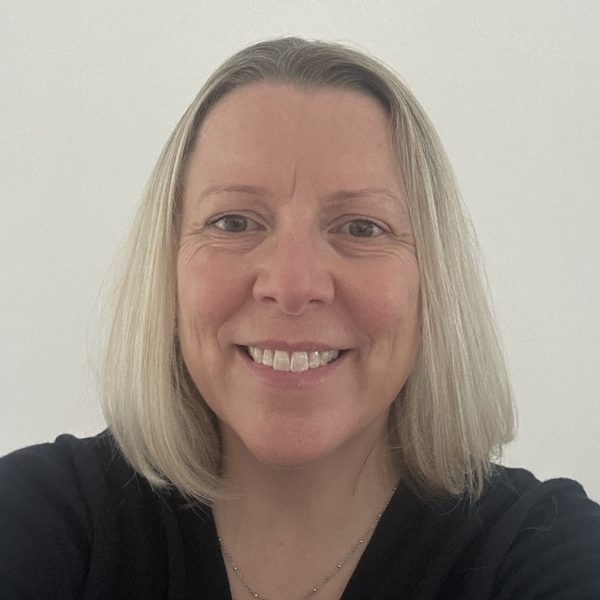
Krystyna Wilde
His voice was finally heard, and when the frame was wheeled away from him, the relief on his face was obvious.
From this point on this young man was then involved in decisions about his orthotics and shoes and when he wanted to use his walking frame.
He had some control about what happened to him for the first time in his life and his mood and participation in school activities lifted.
The policy driven systems in place in young people’s lives are constraining and have compliant based outcomes. There are often limited resources and preconceived expectations from families.
The space for appropriate communication strategies, building trust and rapport and active listening is not always available.
The Role of Case Managers
Case Managers can be fundamental in steering the dynamic from directive to collaborative as they hold a holistic lens over a young person’s life. They can support young people and families to navigate through the structured plans and resource limitations and ask young people what they would like to do. What their dreams are and what aspirations do they have? This may be as simple as whether they want to use a certain piece of prescribed equipment or more complex around where they want to live and who with.
Goal setting with a young person is an opportunity for case managers to build rapport and trust with a young person and help them to be heard and their wishes to be realised.
Another Example: Finding a Voice
Another example highlights where a young person suddenly realised that they had control of their decisions when a young man had started college at sixteen.
His therapy equipment had been delivered to the college, and the therapy team had come to college to set up his chair, standing frame and walker for him.
An agreement had been made with the college staff that he would use his standing frame for certain lessons and his supportive chair at other times.
This young man had learning difficulties and cerebral palsy and was able to communicate verbally with dysarthric speech.
I met with him a few weeks into his college start and asked him if he liked using his standing frame and supportive chair in college.
There was a pause and then he looked at me wide eyed and said, “Are you asking me?” I said I was and straight away and with as much breath as he could muster, he shouted “No” and signed it at the same time.
It was the strongest and most affirmative “No” I had heard. He then said he wanted to sit like everyone else at the table in a normal chair. A simple aspiration.
He also wanted to go to the gym like his peers and wanted the barriers to this removed.
He wanted to get a coffee in a disposable cup and carry it to his next lesson like everyone else and he suddenly realised that he could voice what he wanted, and people would help him to achieve it.
From a case management perspective, navigating advice from professionals alongside parental expectations may involve creative and lateral thinking.
This young man did need a degree of postural support from a chair and did need to use his walker to help him manage longer distances but now we knew what he wanted we could look at all the options available using his wishes and the advice of professionals.
The young person became much more vocal at college after he realised, he had some control and could make decisions for himself.
The use of the mental capacity act should in theory prevent these situations arising, but so often in my experience in statutory services, the use of the act is not implemented for these seemingly small decisions.
The Bigger Picture
When we truly ask young people what they want – and listen – the impact is transformative.
For too long, decisions have been made without their active involvement, often under the assumption that adults know best. As case managers, we can shift this narrative.
By creating space for choice, using communication strategies that meet individual needs, and respecting their voice, we empower young people to become active participants in shaping their future.
This isn’t just about equipment or going to the gym; it’s about dignity, autonomy, and fostering resilience.
When young people feel heard, they engage more, advocate for themselves, and develop confidence that lasts a lifetime.
Let’s make it a priority to move from directive to collaborative practice, because asking the question, and truly listening, changes everything.



