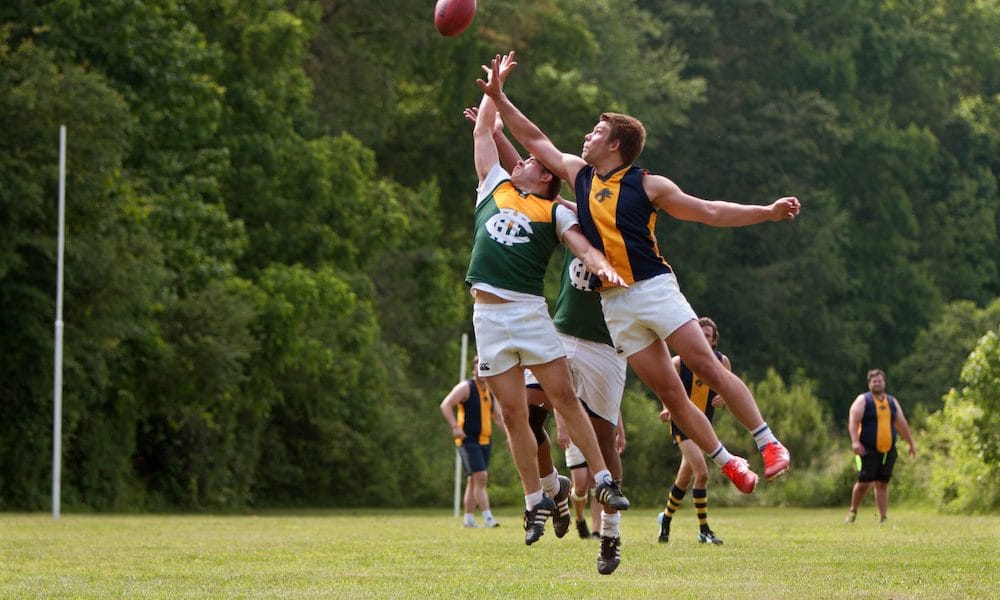
Further evidence of the long-term impact of concussion in sport has emerged through the findings of a new study into young Australian Rules football players.
The new research has discovered that physical damage is still evident in the brains of players months after sustaining a concussion, adding further to concerns around the long-term neurological health of sports players after a head injury.
The study, from Monash University, found damage to the white matter and cortex in players even six months after their concussion, raising concerns that Australian Rules players who experience concussion result in persistent brain injury.
Twenty-six young male Australian footballers with sports-related concussions – as well as 27 non-collision sport athletes as controls – were recruited to the study, which investigated the presence of brain abnormalities in Australian rules footballers with a history of sports-related concussion as determined by MRI scans.
None of the footballers had sustained a concussion in the preceding six months, and all players were asymptomatic.

The study, led by Dr Brendan Major, from the Monash University Department of Neuroscience, found that Australian footballers with a history of sports-related concussion had evidence of widespread white matter damage and cortical thinning compared with non-collision sports athletes.
White matter is found deeper in the brain and is involved in learning and the coordination of signals between the different parts of the brain. The cortex is the outer layer of the brain associated with motor, sensory and visual functions.
According to Dr Major, these novel findings “provide evidence of widespread persisting white and gray matter abnormalities in Australian footballers with sports-related concussion, which do not resolve even after six months post-impact”.
“This raises concerns related to the long-term neurological health of these athletes,” he adds.
Australian Rules Football is Australia’s most participated collision sport involving around 1.5 million players annually with an estimated incidence of 2.2 to 17.5 sports-related concussions for every 1,000 playing hours.
Despite its popularity, relatively few studies have investigated the neurological impact of a history of concussion in Australian footballers, according to Associate Professor Shultz, a senior author on the paper.
“Most of the research to date investigating the consequences of players with a history of sports-related concussion has been conducted in popular North American and European sports such as American football, ice hockey, and soccer and has primarily involved older and/or retired athletes,” he says.
“However, unlike American football and ice hockey, Australian football is played without helmets, which may modify the nature of injury compared to helmeted sports.”
The Department of Neuroscience team have conducted previous studies that found MRI abnormalities in the two weeks post sports-related concussion, as well as blood and saliva markers in players with sports-related concussion known to be associated with brain injury and markers of inflammation and oxidative stress.
Taken together, “these findings support the notion that both the primary impact as well as secondary injury pathways may have roles in long-term brain damage after sports-related concussion,” Professor Shultz says.