About Andrew Mernin

This author has not yet filled in any details.
So far Andrew Mernin has created 640 blog entries.

Every step of the way

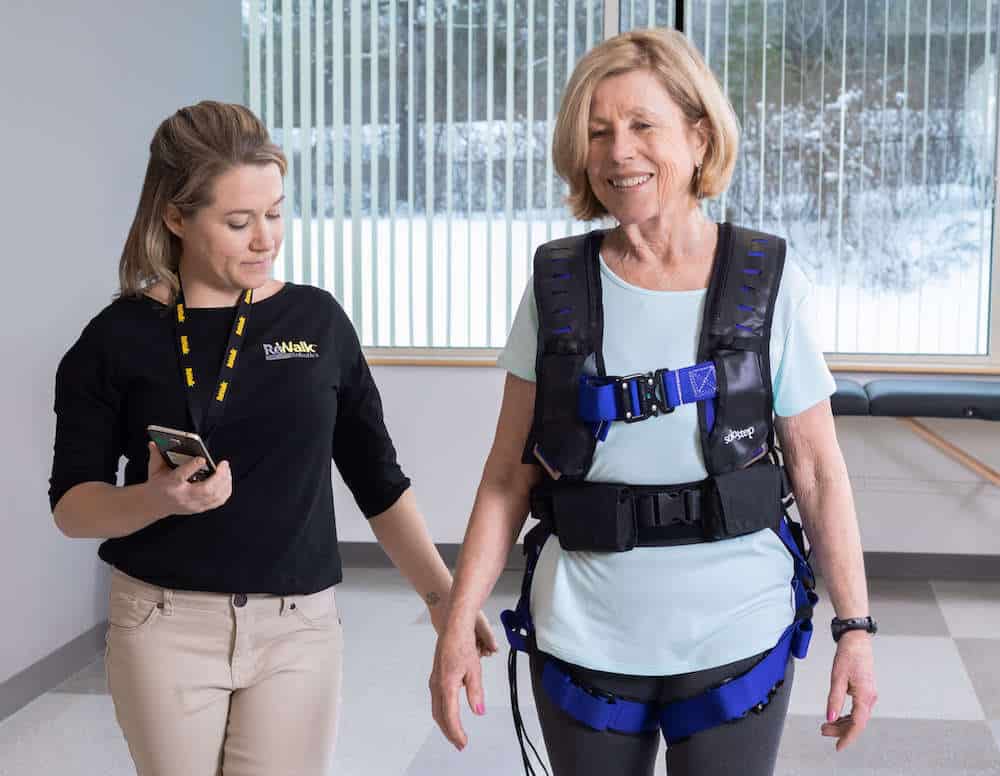
There is a drive for experienced clinicians to utilise their skills and available equipment to help our clients reach their goals. We are always looking at trialling and implementing systems into our practice that we feel will benefit our clients the most. Recently, Stephen Ruffle from ReWalk Robotics spent the day at STEPS providing the team with a training session to outline and demonstrate the capabilities of the Restore system. Stephen was very knowledgeable and passionate about the product and was able to answer all of our questions about the device. The benefits and systems of the device are clearly stated online on the ReWalk website.

By |2024-07-04T17:47:07+01:0024 April 2020|Tech & industry, News|

Predicting potential and the value of hypotheses…

Factors that likely influence rehabilitation potential and recovery and predictions of the same include previous abilities, age at onset/injury, individuality, drive, underlying motivation, health, support, environment, the exact nature of injury and the exact nature of individual pre-morbid neurology. Other influencers include our understanding of the brain, how it works, how it repairs and how it responds in the short, medium and long term after injury. Alongside our developing but yet still poor understanding of how exactly treatments and therapies work, even where we ‘know’ that they do, it is therefore impossible to pinpoint and prescribe a very exact treatment or approach for a specific individual's neurology, type of insult and likely natural recovery.

By |2024-07-04T17:55:01+01:0024 April 2020|Opinion, Insight, News|

A year in the life of a new rehab hospital

Good vibrations are bouncing around the communal room at Cygnet St William’s when NR Times arrives. Partly, it’s down to the surprisingly large quantity of cakes on offer. A local Headway representative is already tucking in, as is Paul, a friendly patient with a beaming smile. Manager Alison King and consultant psychiatrist Dr Tony Perini are also in good spirits. But it’s perhaps not just the iced treats fuelling their positivity.

By |2024-07-04T17:47:08+01:0023 April 2020|Insight, News|

We’ll be soaring again soon

Two of the most powerful ingredients of Accessible Dreams’ work are the very things that are restricted right now. Travelling to exciting horizons, and being able to hang out with friends new and old once there, are at the heart of the experiences the group creates. And at the time of writing, one is currently impossible from the UK, while the other is enabled only in a world of separation, screens and clever apps. But Nicola Cale, who runs Accessible Dreams, sounds surprisingly chipper when NR Times calls her.

By |2024-07-04T17:59:18+01:0023 April 2020|Interviews, Insight, News|

Getting stuck in amid challenging conditions

You can learn a lot about an organisation in a crisis. In the white light of times like these, organisational problems can be exacerbated and the truth really does come out. Take EasyJet for example. The airline recently asked for a government bailout to get it through the coronavirus crisis. No shame in that – if it hadn’t at the same time signed off a £174m payout to its shareholders. For an organisation that claims to “support” and “empower” its staff, it seems it is directors and not workers who top the priorities list.
By |2024-07-04T17:55:01+01:0023 April 2020|Insight, News, Opinion|

The MS secret that sparked a movement

"It’s not the cards you’re dealt that matters, it’s how you play them that counts.” For Jessie Ace, this is a mantra that inspires her every day. It has helped her overcome her career dreams and confidence being shattered by her multiple sclerosis (MS) diagnosis, and underpins the positivity that now enables her to inspire so many others with chronic illness around the world.

By |2024-07-04T17:59:18+01:0023 April 2020|Interviews, Insight, News, Multiple sclerosis|

Brain cell defect linked to social challenges in autism

The study, published in Nature Communications, examined the effects of a set of gene mutations that account for a small percentage of autism disorders. These mutations are known to cause a general overproduction of many proteins in brain cells, but how that overproduction leads to autism behaviors has been a mystery. Scientists found evidence that the most relevant effect of this protein overproduction occurs in brain-based immune cells called microglial cells.

By |2024-07-04T17:47:09+01:0017 April 2020|News|

Drug decision boosts Scotland’s MS options

The Scottish Medicines Consortium (SMC) has accepted fampridine (Fampyra) for MS patients. The medicine, produced by Biogen Inc, is available to people scoring 4-7 on the Expanded Disability Status Scale (EDSS). Scotland is the second UK nation to offer this treatment on the NHS following a decision in Wales to make fampridine available on the NHS for adults with MS.

By |2024-07-04T17:47:09+01:0013 April 2020|News, Multiple sclerosis|

Short term gains of brain training in MS

Around half of all people with MS have difficulties at some time with aspects of thinking such as memory, concentration or problem solving, known as cognitive problems. In this study, (Lincoln, Bradshaw, Constantinescu et al, 2020) a programme designed to improve cognitive skills (CRAMMS) was tested in a large clinical trial. A total of 449 people were recruited from five MS centres in England. Just over half were assigned to the cognitive rehabilitation programme (CR group) and the remaining 204 received standard advice on how to manage cognitive difficulties from an MS nurse or occupational therapist (SA group).

By |2024-07-04T17:47:09+01:0013 April 2020|News, Multiple sclerosis|

High rollers lead MND tech development

Rolls-Royce through its data technology arm, R2 Data Labs, has partnered with the Motor Neurone Disease Association and some of the world’s leading technology companies, including Accenture, Computacenter, Dell Technologies, Intel and Microsoft, to pool technology and expertise to improve the lives of those living with extreme disabilities. For the first time, those living with MND will be able to have a conversation through a computer using their own voice, words, colloquialisms and accent, without pausing to type answers or being restricted to a prescribed set of words. The new technology, called Quips, uses voice-banking and AI to learn a person’s unique language style and use it in conversation.

By |2024-07-04T17:47:09+01:0013 April 2020|Tech & industry, News, MND / ALS|
Go to Top